ProForm vs Horizon Treadmills: Portable Model Care Guide
Compare ProForm vs Horizon treadmills for compact portable cardio. Expert maintenance tips, belt care, and folding hinge longevity for small spaces.

The Unique Wear-and-Tear of Compact Portable Cardio Equipment Options
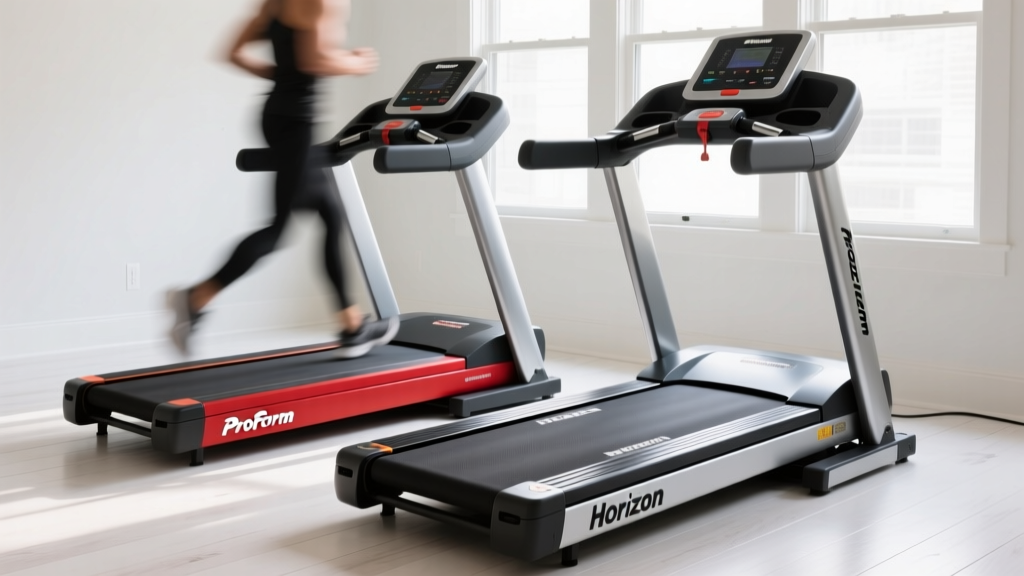
As urban living spaces shrink and home gym layouts evolve in 2026, compact portable cardio equipment options have become essential for maintaining daily fitness routines. However, folding and portable treadmills endure mechanical stresses that their full-size commercial counterparts simply do not face. When analyzing the market leaders in this space, the debate of ProForm vs Horizon treadmills frequently centers on feature sets and price points. Yet, from a longevity and maintenance perspective, the engineering differences between their compact lines—such as the ProForm City L6 and the Horizon FT30—dictate entirely different care regimens.
Portable treadmills feature pivot joints, shorter running decks, and compact motor hoods that restrict airflow. According to Consumer Reports, folding mechanisms and high-friction short belts are the primary failure points in space-saving cardio machines. This guide provides a deep-dive, actionable maintenance framework to maximize the lifespan of your compact treadmill, ensuring your investment survives thousands of folding cycles and miles of footstrikes.
Folding Hinge Longevity: Hydraulic vs. Manual Lock Systems
The defining feature of any portable treadmill is its folding mechanism. Over time, the repetitive stress of lifting and lowering a 120-to-150-pound deck frame can lead to metal fatigue, squeaking, and catastrophic hinge failure if ignored.
Horizon's Hydraulic Drop-Fold System
Models like the Horizon FT30 and T101 utilize a hydraulic-assisted drop-fold mechanism. While this makes lowering the deck safer, the hydraulic cylinder and pivot joints accumulate microscopic dust and debris.
- Maintenance Action: Every 6 months, wipe the hydraulic piston shaft with a lint-free microfiber cloth dampened with isopropyl alcohol to remove abrasive grit.
- Lubrication: Apply a single drop of PTFE (Teflon) based oil to the upper and lower pivot bushings. Do not use grease, which attracts dust and creates a grinding paste.
ProForm's Manual Lock-Pin Systems
ProForm's compact options, including the Carbon TL and City series, often rely on manual locking pins or manual-lift hinges. These place sheer mechanical load directly on the M10 and M12 hinge bolts.
- Torque Check: Every 90 days, use a calibrated torque wrench to check the main hinge bolts. ProForm typically specs these between 15 Nm and 20 Nm. Over-tightening strips the threads in the tubular steel frame; under-tightening causes the deck to wobble laterally during runs, accelerating belt wear.
- Lock-Pin Care: Spray the locking pin mechanism with dry graphite lubricant to ensure smooth engagement without sticky residue.
Belt and Deck Care on Short-Run Surfaces
Compact portable cardio equipment options typically feature shorter running surfaces—ranging from 45 inches on the ProForm City L6 to 50 inches on the Horizon T101. Because the belt loop is shorter, any single square inch of the belt passes under the user's foot approximately 20% more often per mile than on a standard 60-inch commercial deck. This concentrated friction generates excessive heat, which is the number one enemy of treadmill deck longevity.
The 100% Silicone Lubrication Protocol
Both ProForm and Horizon utilize pre-lubricated decks from the factory, but this coating degrades after 150 to 200 miles of use. According to ProForm's official support guidelines, maintaining proper lubrication reduces motor amp draw by up to 30%, preventing the PWM (Pulse Width Modulation) motor controller from overheating.
| Maintenance Task | ProForm Compact Models | Horizon Compact Models |
|---|---|---|
| Belt Lubrication Interval | Every 150 miles / 3 months | Every 150 miles / 3 months |
| Lubricant Type | 100% Silicone Liquid | 100% Silicone Liquid |
| Belt Tension Test | Lift 2-3 inches at center | Lift 2-3 inches at center |
| Replacement Belt Cost | $45 - $65 (1-ply) | $55 - $75 (2-ply) |
Expert Insight: To check if your compact treadmill needs lubrication, perform the 'touch test'. Reach under the belt to the center of the deck. If your fingers come away completely dry, it is time to apply 0.5 oz of 100% silicone lubricant. If you feel a slight oily film, the deck is adequately protected.
Motor Hood Dust and Thermal Throttling
Compact treadmills are designed with a minimalist footprint, which inherently means smaller motor hoods and reduced ventilation grilles. A 2.5 CHP motor in a Horizon T101 or a 1.6 HP motor in a ProForm City L6 relies on a front-mounted cooling fan. When dust, pet hair, and drywall particulate clog the hood, the motor experiences thermal throttling, leading to premature failure of the lower control board.
Step-by-Step Compact Hood Cleaning
- Power Down: Unplug the treadmill from the wall and remove the safety key. Wait 10 minutes for the internal capacitors on the motor control board to discharge.
- Remove the Hood: Use a Phillips #2 screwdriver to remove the 4 to 6 mounting screws. On Horizon models, note that the front roller cover may need to be unclipped first.
- Static-Free Dusting: Use an ESD-safe (anti-static) brush to gently loosen dust from the motor fan blades and the ribbed aluminum heat sink on the lower board. Never use a standard vacuum nozzle directly on the circuit board, as static discharge can fry the microchips.
- Compressed Air: Use short bursts of compressed air (held at least 6 inches away) to blow debris out of the ventilation grilles. Ensure the drive belt is free of rubber dust, which indicates misalignment or excessive tension.
"In small apartment environments, ambient dust and pet dander are concentrated. We recommend vacuuming the floor immediately surrounding the treadmill motor base weekly to prevent the cooling fan from acting as a vacuum itself, pulling debris directly into the electronics housing."
— Fitness Equipment Repair Technicians Association Guidelines
Shock Absorption Degradation in Portable Frames
To save weight, compact portable cardio equipment options utilize smaller, denser elastomer cushions rather than the heavy-duty coil springs found on commercial gym treadmills. Over 1,000 miles, these rubber pucks compress and lose their rebound elasticity, transferring harsh impact back to the user's joints and increasing the structural load on the folding frame's welds.
Horizon's Variable Response Cushioning uses distinct elastomers in the strike, transition, and push-off zones. ProForm's ProShox system relies on uniform rubber grommets. To test for bottoming out, step heavily onto the front third of the deck (the strike zone). If you hear a dull 'clack' or feel the deck physically hit the crossbar beneath it, the elastomers have failed. Replacement cushion kits are highly affordable—typically costing between $15 and $25 via Horizon's support portal or third-party part suppliers—and can be swapped out using a standard socket wrench in under 20 minutes.
Summary Matrix: ProForm vs Horizon Compact Care
When deciding between these two brands, or maintaining the one you already own, understanding the long-term care matrix is vital for preserving your warranty and ensuring a smooth, quiet operation for years to come.
| Longevity Factor | ProForm Compact Series | Horizon Compact Series |
|---|---|---|
| Frame Warranty | Lifetime (Original Owner) | Lifetime (Original Owner) |
| Motor Vulnerability | Moderate (Smaller HP requires strict belt lube) | Low (Higher CHP handles short-deck friction well) |
| Hinge Maintenance | High (Manual torque checks required) | Medium (Hydraulic piston cleaning) |
| Parts Availability | Excellent (iFIT ecosystem integration) | Excellent (Direct-to-consumer support model) |
Final Thoughts on Portable Cardio Longevity
The choice in the ProForm vs Horizon treadmills debate ultimately comes down to how you interact with your space. If you fold and unfold your machine daily, Horizon's hydraulic systems offer a smoother, lower-impact mechanical experience, provided you keep the piston clean. If your compact treadmill remains unfolded 90% of the time and you prioritize a lighter footprint, ProForm's manual lock systems are incredibly durable, provided you adhere to a strict 90-day bolt-torque and 150-mile belt lubrication schedule. By treating your compact portable cardio equipment options with the same rigorous maintenance as a full-size commercial rig, you will easily extend the machine's operational life well past the 5-year mark, protecting both your joints and your wallet.
More gear to consider
All reviews
TrueForm Runner Treadmill: Belt Maintenance & Space Layout

VO2 Max Treadmill Motor Guide: 2026 HP vs CHP Compared
Rowing Machine Technique: Avoid the Shrimp on Treadmill Government Study Trap

Rowing Machine Guide: Better Than Losing Weight on a Treadmill?
Stair Climber Guide: Translating Mile Times on Treadmill