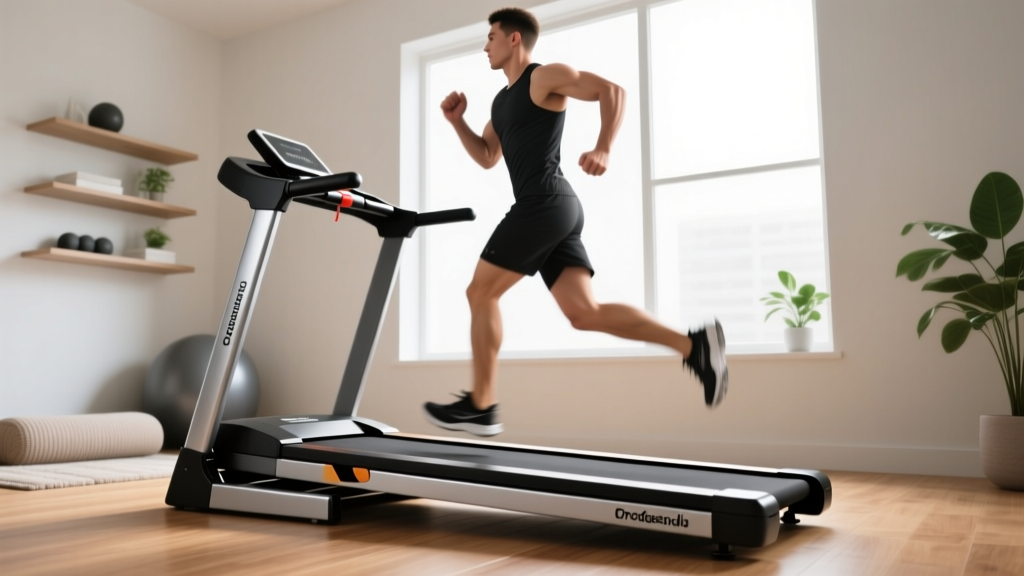
Best Folding Free Running Treadmill for Small Spaces (2026)
Discover the best folding free running treadmill options for small spaces in 2026. We test manual, user-powered models for apartment cardio.

A free run treadmill is a non-motorized, self-powered cardio machine where your foot strike directly drives the belt speed. If you are searching for a folding free run treadmill, you must know that true curved free-run models almost never fold due to their heavy steel chassis. However, flat manual folding treadmills provide an excellent space-saving alternative. This guide is for apartment residents and home-gym enthusiasts who need compact, electricity-free cardio equipment.
Key Takeaways
- True curved free-run treadmills do not fold, but flat manual treadmills do.
- Manual treadmills increase posterior chain activation and calorie expenditure.
- Flat folding models are best for walking and light jogging in small spaces.
What Is a Free Run Treadmill?
A free run treadmill is a non-motorized cardiovascular training device where the user's kinetic energy propels the belt. Unlike motorized versions, these machines require the runner to push off the deck, engaging the posterior chain and allowing instantaneous speed changes without waiting for a mechanical motor to adjust.
The Folding Paradox: Curved vs. Flat Manual Treadmills
Consumers often search for a folding manual curved treadmill, but physics limits this design. Curved models rely on a rigid, 150-pound steel frame to maintain the belt's arc. Hinging this frame compromises structural integrity during high-impact sprints.
Conversely, flat manual treadmills utilize a simpler deck design. This allows engineers to incorporate a central hinge, enabling the machine to fold vertically for storage. While flat models lack the self-propelling curve, they still offer the zero-electricity benefits of a free run system.
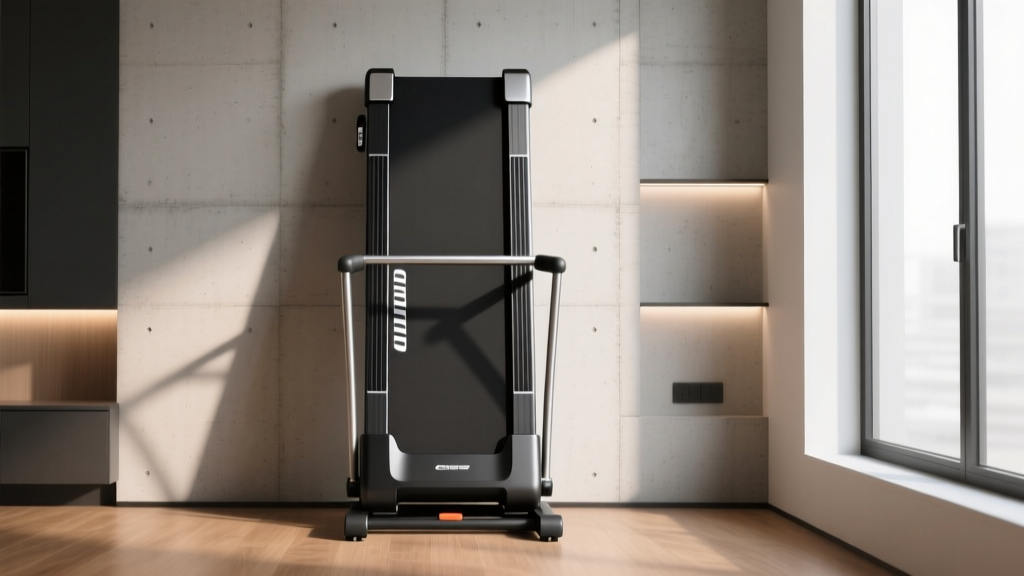
2026 Flat Manual Treadmill Review: Sunny Health & Fitness SF-T7632
For compact spaces, the Sunny Health & Fitness SF-T7632 remains a benchmark in the 2026 market. It features a 15-inch belt width and a 12-degree fixed incline, which is necessary to assist the belt's momentum on a flat manual deck.
The unit boasts a 300-pound maximum user capacity despite its relatively light 135-pound frame weight. When collapsed, it achieves a 4.5-foot folded length, making it easy to slide into a closet or corner.
According to the American Council on Exercise, manual treadmills can increase calorie burn by up to 30 percent compared to motorized equivalents. This is because the user must actively pull the belt backward with every stride, heavily recruiting the hamstrings and glutes.
Folding Free Run Treadmill Comparison Matrix
Use this decision framework to choose between flat folding and curved non-folding manual treadmills based on your spatial and training requirements.
| Feature | Flat Folding Manual | Curved Non-Folding Manual |
|---|---|---|
| Footprint | Compact (Folds vertically) | Large (Fixed footprint) |
| Top Speed Capability | Light jogging (up to 6 mph) | Sprinting (up to 15+ mph) |
| Incline Mechanism | Fixed (usually 10-12 degrees) | Dynamic (Curve dictates resistance) |
| Ideal User | Apartment dwellers, walkers | Athletes, dedicated home gyms |
Frequently Asked Questions
Is a non-motorized folding treadmill good for running?
Flat non-motorized folding treadmills are generally better suited for walking and light jogging. The fixed incline and narrower belt limit high-speed sprinting mechanics compared to curved models.
How does a self-powered treadmill for home save energy?
A self-powered treadmill for home draws zero watts from your electrical grid. By relying entirely on human kinetic energy, it eliminates the 500-to-1,000-watt hourly draw of a standard motorized cardio machine.
Why are manual curved treadmills so expensive?
Manual curved treadmills require precision-engineered slat belts and heavy-duty bearings to handle high-impact forces without a motor. Research indexed by the National Institutes of Health highlights the complex biomechanical load distribution required for curved decks, driving up manufacturing costs.
Final Verdict and Next Steps
If your priority is space conservation, a flat folding manual treadmill is the only viable free run option. While it sacrifices the top-end sprinting capability of a curved model, it successfully delivers the zero-electricity, high-engagement workout you seek in a compact footprint.
Measure your intended storage space and verify the ceiling height to ensure the folded unit fits. Once confirmed, select a flat manual model with at least a 12-degree incline to guarantee smooth belt propulsion.
More gear to consider
All reviews
LifeSmart TM2202 3-in-1 Treadmill vs Dedicated Cardio: Buyer Guide
GoPlus 2-in-1 Folding Treadmill Motor Guide: HP vs CHP Tested

Christopher Gregor Treadmill: Under-Desk Review & Maintenance
Cardio Noise Comparison: ProForm Pro 2000 Treadmill Manual Data

ProForm Pro Treadmill vs Curved Manual: 2026 Showdown
