Air Bike vs Assault Bike: Space & Average Treadmill Dimensions
Compare Rogue Echo and Assault Bike footprints. Learn space optimization, layout design, and how they stack against average treadmill dimensions.

The Space Dilemma: Bikes vs. Average Treadmill Dimensions
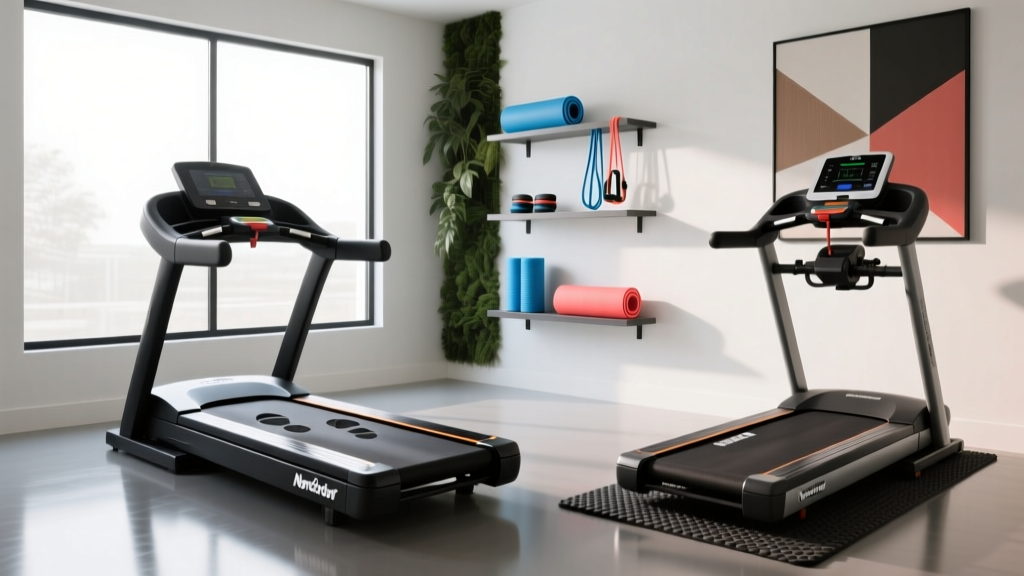
When mapping out a home gym in 2026, maximizing ROI per square foot is the ultimate priority for most lifters. Historically, cardio meant dedicating a massive footprint to a running machine. While the average treadmill dimensions usually demand a sprawling 75 by 32 inches (requiring roughly 25 square feet of dedicated floor space plus user clearance), modern conditioning has shifted toward high-intensity, low-footprint alternatives. Enter the air bike.
Air bikes—specifically the belt-driven Rogue Echo and the chain-driven AssaultBike Pro X—deliver brutal metabolic conditioning without monopolizing your garage. But when choosing between these two titans, space optimization, aerodynamic clearance, and layout design become the deciding factors. This guide breaks down the exact spatial requirements of both machines, benchmarking them against the average treadmill dimensions to help you design a highly efficient home gym layout.
Quick Space Benchmark: The average treadmill dimensions require a minimum 10 x 4 foot zone for safe operation and dismounting. In contrast, an air bike requires a concentrated 6 x 5 foot operational zone, freeing up nearly 40% more floor space for power racks and free weights.Head-to-Head Footprint: Rogue Echo vs. AssaultBike Pro X
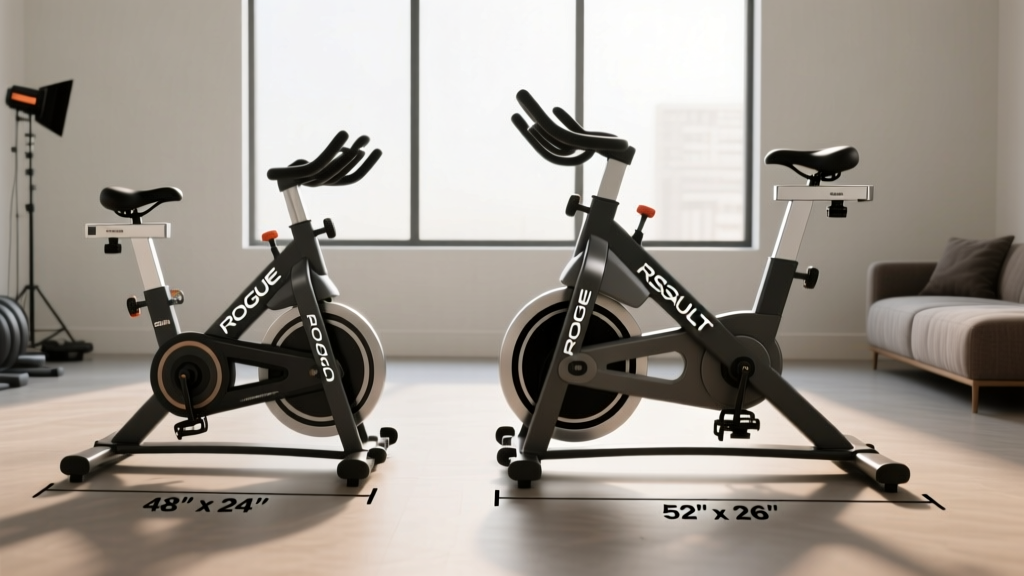
To understand how these machines fit into a tight layout, we must look past the marketing copy and examine the exact chassis measurements. Both bikes are remarkably similar in their static footprint, but their weight distribution and component spread dictate how they interact with your gym's walls and surrounding equipment.
| Specification | Rogue Echo Bike V2 | AssaultBike Pro X | Average Treadmill (Benchmark) |
|---|---|---|---|
| Length (Static) | 52.5 inches | 50.6 inches | 70 - 80 inches |
| Width (Handlebar Span) | 29.5 inches | 29.0 inches | 30 - 35 inches |
| Height (To Console) | 53.0 inches | 52.8 inches | 60 - 70 inches |
| Total Weight | 123 lbs | 145 lbs | 200 - 300 lbs |
| Estimated 2026 Price | $995 | $1,199 | $1,500 - $3,500 |
Factor 1: Length and Wall Proximity
The AssaultBike Pro X is marginally shorter by about two inches, which seems negligible until you are trying to slide it into a tight alcove between a squat rack and a wall. However, static length is only half the battle. The Rogue Echo Bike features a slightly longer wheelbase, which provides superior front-to-back stability during high-RPM sprints, meaning you do not need to anchor it as heavily to the floor to prevent 'walking' forward during use.
Factor 2: Width and Arm Swing Dynamics
Both bikes hover right around the 29-inch width mark. This is a critical data point for space optimization because it means both bikes can easily pass through standard 30-inch interior doorways if you need to move them between rooms. However, you must account for the lateral sway of the user. During max-effort intervals, a rider's elbows and knees will extend beyond the 29-inch chassis. You must leave a minimum of 12 inches of lateral clearance on both sides to prevent knuckle-scraping against adjacent walls or dumbbell racks.
The Aerodynamic Clearance Rule: A Non-Obvious Layout Insight
Here is where most home gym owners make a critical layout error. Unlike magnetic resistance stationary bikes, air bikes rely on a massive front-mounted fan to generate progressive wind resistance. The Rogue Echo utilizes a 27-inch aluminum fan that pulls air directly from the front and exhausts it laterally and rearward.
Expert Warning: If you push an air bike into a corner with only 12 inches of frontal clearance, you create a vacuum effect. This starves the fan of ambient air, artificially capping your maximum resistance and forcing the fan bearings to work harder, leading to premature mechanical failure. Always allow a minimum of 36 inches of frontal clearance for optimal aerodynamics.
Because the AssaultBike Pro X uses a similar fan profile, this aerodynamic rule applies to both. When planning your layout, treat the front of the bike not just as user space, but as an 'air intake zone'. Never face an air bike directly into a flat wall from close range; instead, angle it slightly or face it toward the center of the room or an open garage door.
User Envelope and Mounting Dynamics
When comparing the bikes to the average treadmill dimensions, treadmills require a massive 'dismount zone' behind the machine to prevent users from being thrown into a wall if they lose balance. Air bikes, being stationary, eliminate the rear-dismount hazard. However, they introduce a lateral mounting requirement.
- The Step-Over Height: Both the Echo and the AssaultBike have a bottom bracket height of roughly 13 to 15 inches. This is low enough for most users to step over easily, but users with limited hip mobility will need to swing a leg over the saddle.
- Lateral Swing Space: Ensure you have at least 24 inches of clear space on the non-dominant side of the bike to allow for a wide leg swing when mounting and dismounting, especially when fatigued post-workout.
Flooring, Vibration, and Ceiling Constraints
Space optimization is three-dimensional. While the average treadmill dimensions often include a 65-inch height profile, air bikes sit much lower (around 53 inches). This makes them ideal for basement gyms with low-hanging HVAC ductwork or drop ceilings. You will never clip a handlebar on a 7-foot ceiling, even when standing in the pedals.
However, the vertical space below the bike—your flooring—requires specific attention. The AssaultBike Pro X weighs 145 lbs, and the Rogue Echo weighs 123 lbs. During out-of-the-saddle sprints, the dynamic downward force can easily exceed 300 lbs on the front stabilizer.
- Avoid EVA Foam Tiles: Interlocking foam tiles will compress unevenly under the front stabilizer during sprints, causing the bike to wobble and the fan to rub against the shroud.
- Use 3/4-Inch Horse Stall Mats: A dense rubber mat provides the necessary rigidity. If your floor is slightly uneven, use a thin plywood sub-layer beneath the rubber mat to create a perfectly level footprint, ensuring the bike's belt or chain remains properly tensioned.
- Vibration Dampening: The chain-drive on the Assault Bike generates more low-frequency vibration than the belt-drive on the Rogue Echo. If your gym is on a second floor or above a finished basement, place a dedicated anti-vibration washing machine pad under the front stabilizer to isolate the noise.
Designing the 'Triangle Workflow' Layout
To truly maximize your space, integrate your air bike into a 'Triangle Workflow' layout, a concept heavily favored by elite home gym designers. Instead of pushing the bike into a forgotten corner, position it to minimize transition times during circuit training.
Place the air bike at a 45-degree angle facing your primary power rack, with the dumbbell station forming the third point of the triangle. This layout ensures that the 36-inch aerodynamic intake zone of the bike doubles as your primary walking path between the rack and the weights. By overlapping the bike's required clearance zone with your gym's natural traffic flow, you effectively reduce the bike's dedicated spatial cost to near zero—a spatial efficiency that the average treadmill dimensions simply cannot match.
Final Verdict: Which Bike Wins the Space War?
When strictly analyzing the physical footprint, the AssaultBike Pro X wins by a mere two inches in length, making it the technical choice for micro-gyms and tight apartment corners. However, from a holistic layout and stability perspective, the Rogue Echo Bike V2 offers a superior belt-driven system that requires less maintenance and generates less floor vibration, making it easier to integrate into multi-use living spaces.
Ultimately, both machines represent a massive spatial upgrade over traditional cardio. By respecting the aerodynamic intake zones, reinforcing your flooring, and utilizing the Triangle Workflow, you can achieve elite cardiovascular conditioning while reclaiming the 25 square feet usually held hostage by the average treadmill dimensions.
More gear to consider
All reviews
2026 Market Trends: Translating Treadmill Speed km h Metrics to Stationary Bike Types
Beyond the Treadmill Emoji: Belt Maintenance & Lubrication Costs
NordicTrack Treadmill X11i vs Folding Treadmills: Small Space Review
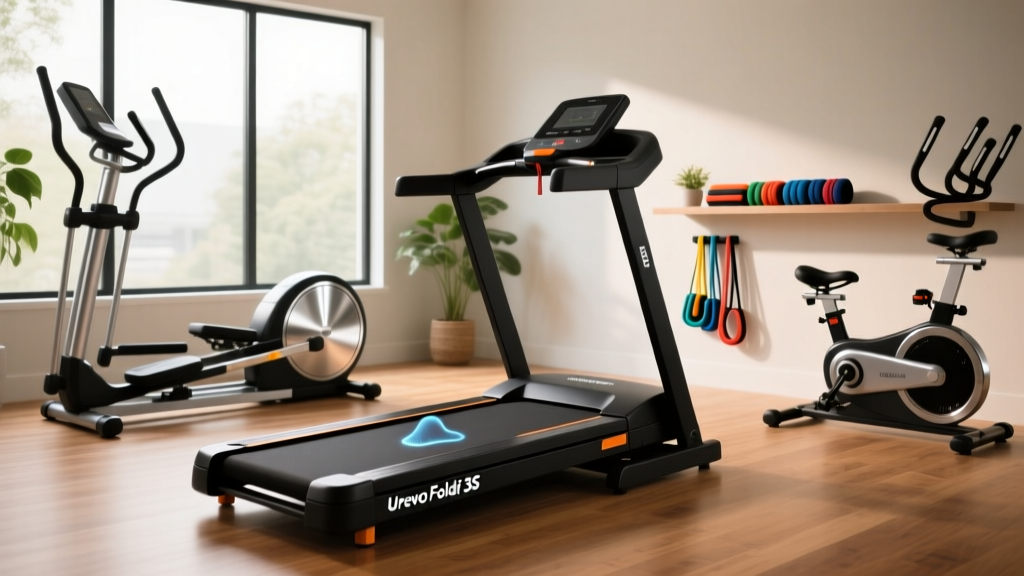
Urevo Foldi 3S Treadmill vs. Quiet Cardio: 2026 Noise Comparison

Troubleshooting a Treadmill Moving Slowly: Motor Size & HP Guide