
Beyond Fixing a Treadmill Belt: 2026 Upright, Recumbent & Spin Bikes
Tired of fixing a treadmill belt? Explore our 2026 market analysis of upright, recumbent, and spin bikes to find the ultimate low-maintenance cardio upgrade.

The High Cost of Treadmill Maintenance (And Why Users Are Fleeing)
For decades, the treadmill was the undisputed king of the home gym. But as we navigate the 2026 fitness equipment landscape, a massive consumer migration is underway. The catalyst? The sheer mechanical burden of treadmill ownership. If you have ever spent a Saturday afternoon fixing a treadmill belt, you know the frustration intimately.
Replacing a standard 20-inch by 55-inch treadmill belt costs between $120 and $250 for the part alone. Then comes the labor: loosening the rear roller, sliding the deck, applying 100% silicone lubricant, and meticulously adjusting the tension bolts (usually exactly two quarter-turns) to prevent edge-curling and seam-splitting. Factor in motor burnout from inadequate lubrication or deck warping, and the average treadmill owner faces $300 to $500 in annual maintenance costs or severe DIY headaches.
⚠️ The 2026 Maintenance Reality Check:According to service data from major fitness repair networks, treadmills account for over 65% of all in-home cardio machine service calls. The most common failure points are belt friction causing control board shorts, incline motor gear stripping, and seam delamination. Stationary bikes, by contrast, account for less than 15% of service calls, primarily limited to console battery replacements or pedal crank tightening.
2026 Market Shift: The Stationary Bike Renaissance
Consumers are voting with their wallets, prioritizing durability and footprint efficiency over the traditional running experience. According to Grand View Research, the stationary bike segment has seen sustained growth, projected to expand at a CAGR of 5.8% through 2028. This surge is heavily driven by former treadmill owners seeking zero-maintenance, high-yield cardiovascular alternatives.
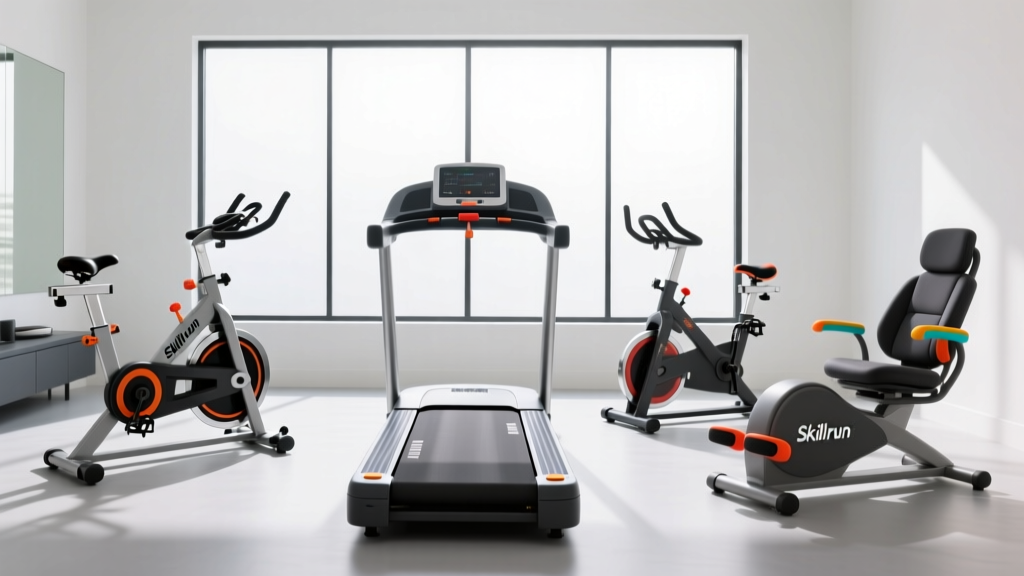
But the 'stationary bike' category is not a monolith. The 2026 market is strictly segmented into three distinct engineering philosophies: Upright, Recumbent, and Spin (Indoor Cycling). Each serves a radically different demographic, biomechanical need, and spatial constraint. Let us break down the market leaders, pricing tiers, and mechanical realities of each type.
Upright Bikes: The Traditionalist’s Low-Maintenance Workhorse
Upright bikes mimic the geometry of a standard outdoor bicycle but feature a heavier flywheel and a fixed base. They are the ultimate 'set it and forget it' machines, utilizing magnetic resistance and poly-V belt drives that require virtually zero maintenance.
Market Leaders & Pricing (2026)
- Schwinn IC4 ($799 - $899): The undisputed value king. It features a 40lb flywheel, dual-sided pedals (SPD and toe cage), and a belt drive that will never need lubrication or tensioning. It connects seamlessly to third-party apps like Zwift and Peloton via Bluetooth.
- Nautilus U618 ($1,199): Targeted at the premium traditionalist. It offers 25 levels of eddy-current magnetic resistance and a fully integrated heart-rate telemetry chest strap. The step-through frame design makes it highly accessible for users with limited hip mobility.
'Upright bikes offer the best compromise between caloric expenditure and mechanical simplicity. Because the user's weight is partially supported by the saddle, joint impact is negligible compared to treadmill running, while the belt-drive system eliminates the mechanical friction that plagues older chain-drive models.'
Recumbent Bikes: Capturing the Aging and Rehab Demographics
The recumbent bike market has exploded in 2026, driven largely by the 'silver economy' and a growing emphasis on at-home physical therapy. By placing the user in a reclined position with a bucket seat and backrest, recumbent bikes eliminate lumbar strain and drastically reduce the center of gravity.
Biomechanical Advantages & Top Models
The American Council on Exercise (ACE) notes that recumbent cycling significantly reduces lumbar shear force and hip flexor impingement compared to upright cycling. This makes them the mandatory choice for users recovering from spinal surgeries or managing severe osteoarthritis.
- Sole R92 ($1,499): Features a massive 32lb flywheel and a 400lb weight capacity. The ergonomic mesh backrest prevents the sweat-pooling common in older plastic-seat models. Its 10-inch articulating screen is a standout feature for users who need to adjust the viewing angle while reclined.
- Horizon Fitness Comfort R ($999): A budget-friendly entry point that does not sacrifice the belt-drive magnetic resistance system. It features a low step-through height of just 12 inches, making it ideal for wheelchair transfers or users with severe knee restrictions.
Spin & Indoor Cycling Bikes: The Connected Fitness Powerhouse
Spin bikes (or indoor cycling bikes) are engineered for high-intensity interval training (HIIT) and out-of-the-saddle climbing. They feature aggressive, road-bike geometry, heavy flywheels (or electromagnetic equivalents), and rigid frames designed to withstand massive wattage output.
The Hardware vs. Subscription Paradigm
The 2026 spin bike market has matured past the 'hardware-locked' era of the early 2020s. Consumers now demand open-ecosystem hardware that allows them to pivot between subscription services without being locked into a single brand's content.
- Peloton Bike+ ($2,495): Still the premium standard. The auto-follow resistance and 360-degree rotating screen remain unmatched for users deeply embedded in the Peloton ecosystem. However, the mandatory $44/month All-Access membership remains a friction point for budget-conscious buyers.
- Keiser M3i ($2,395): The commercial-grade powerhouse. Unlike magnetic flywheels that simulate resistance, the M3i uses eddy-current magnetic braking on a rear flywheel, providing the most accurate wattage data in the industry. It is the preferred choice for serious cyclists who use TrainingPeaks or Strava.
- Echelon EX-5s ($1,299): The aggressive market disruptor. It offers a 32lb flywheel and a rotating screen at nearly half the price of the Bike+, appealing to the growing demographic of 'subscription-fatigued' consumers who prefer free YouTube cycling classes.
Comparative Matrix: Treadmills vs. The Big Three Bike Types
When deciding whether to endure the cycle of fixing a treadmill belt or pivot to a stationary bike, consider this 2026 market comparison matrix:
| Equipment Type | Avg. 2026 Price | Annual Maint. Cost | Footprint (L x W) | Primary Demographic |
|---|---|---|---|---|
| Motorized Treadmill | $1,200 - $3,500 | $150 - $400 | 70' x 32' | Runners, Walkers |
| Upright Bike | $600 - $1,200 | $0 - $20 | 42' x 22' | General Fitness, Space-Constrained |
| Recumbent Bike | $900 - $2,200 | $0 - $20 | 55' x 28' | Seniors, Rehab, Lumbar Issues |
| Spin / Indoor Cycle | $1,000 - $2,500 | $0 - $50 | 48' x 24' | HIIT, Cyclists, Tech-Enthusiasts |
Expert Verdict: Which Bike Type Wins the 2026 Home Gym?
The decision to abandon the treadmill is rarely just about avoiding the hassle of fixing a treadmill belt; it is about optimizing your home gym for longevity, spatial efficiency, and joint health. Here is our 2026 buying framework:
1. Choose an Upright Bike If:
You have a small apartment, a budget under $1,000, and want a reliable, low-impact cardio machine that requires zero mechanical upkeep. The Schwinn IC4 remains the most logical purchase for 80% of home gym owners.
2. Choose a Recumbent Bike If:
You are managing lower back pain, recovering from joint surgery, or purchasing for an aging parent. The safety profile and lumbar support of the Sole R92 justify its premium price tag by potentially saving thousands in physical therapy copays.
3. Choose a Spin Bike If:
You crave high-intensity, community-driven workouts and have the disposable income for premium hardware and monthly subscriptions. If you want commercial-grade wattage accuracy without a screen, the Keiser M3i is an investment that will outlast three separate treadmills.
Ultimately, the 2026 market data is clear: the friction of treadmill maintenance is driving a permanent shift toward pedal-powered cardio. By understanding the distinct engineering and market positioning of upright, recumbent, and spin bikes, you can make an upgrade that guarantees years of uninterrupted, maintenance-free training.
More gear to consider
All reviews
NordicTrack C2270 Treadmill: Small Space Folding Review & Maintenance

Treadmill Motor Guide: Match HP to Your Treadmill Plan
Skillrun Treadmill vs Spin, Upright & Recumbent Bike Budget

Space-Saving Cardio: Livestrong LS10.0T Treadmill Small Space Review

Walking Pad Review & MPH Treadmill Chart: Fix Common Mistakes
