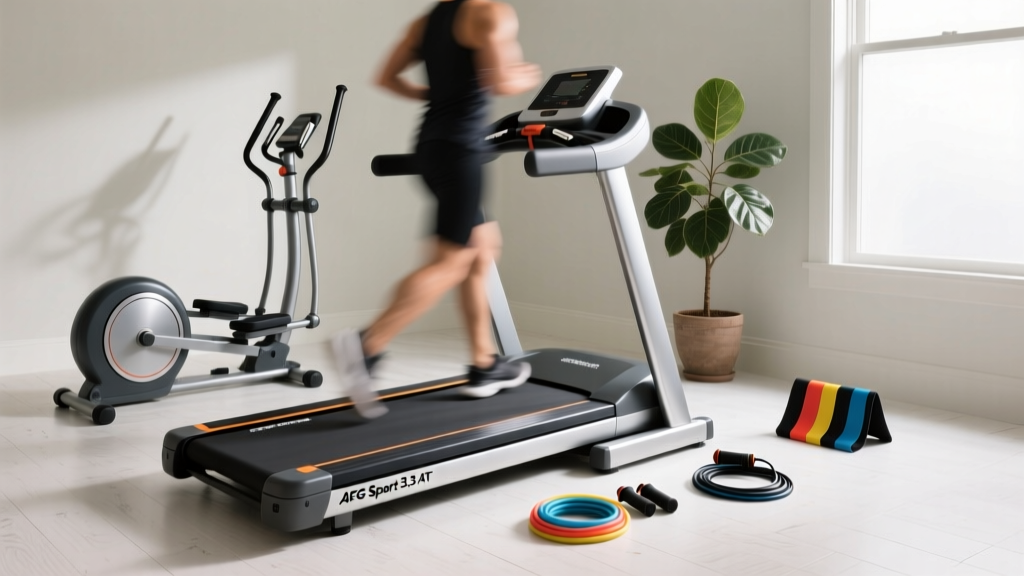
Maintaining Your AFG Sport 3.5 AT Treadmill & Compact Cardio Gear
Maximize the lifespan of your AFG Sport 3.5 AT treadmill and other compact portable cardio equipment with these expert maintenance and longevity tips.

The Evolution of Compact Portable Cardio Equipment Options
As urban living spaces shrink and home fitness routines become more specialized, compact portable cardio equipment options have dominated the market in 2026. Consumers are no longer dedicating entire spare rooms to fitness; instead, they are opting for folding treadmills, under-desk walking pads, and collapsible ellipticals. However, the mechanical reality of portable gear is that folding hinges, compact motor housings, and smaller drive belts introduce unique wear-and-tear profiles that full-sized commercial machines simply do not face.
Among the most popular mid-tier folding units is the AFG Sport 3.5 AT treadmill. Bridging the gap between ultra-thin walking pads and heavy-duty gym runners, this specific model requires a highly targeted maintenance protocol to survive long-term daily use. According to equipment longevity data tracked by Consumer Reports, folding treadmills that lack a strict quarterly maintenance schedule experience motor and deck failures at nearly three times the rate of their non-folding counterparts. Below, we detail the exact, actionable steps required to maintain your AFG Sport 3.5 AT treadmill and extend the life of your portable cardio investment.
Deep Dive: AFG Sport 3.5 AT Treadmill Maintenance Protocol
The AFG Sport 3.5 AT treadmill utilizes a 2.5 Continuous Horsepower (CHP) motor and a 20-inch by 55-inch running belt. Because the motor housing is designed to fold flat, ventilation is inherently restricted compared to upright models, making thermal management and friction reduction your top priorities.
1. Precision Belt Lubrication
Friction is the primary enemy of compact treadmill motors. The AFG Sport 3.5 AT requires 100% pure silicone treadmill lubricant. Never use petroleum-based products or WD-40, as these will degrade the rubber belt and void your warranty.
- Frequency: Every 3 months or every 150 miles of use, whichever comes first.
- Volume: Exactly 15ml of silicone fluid per side of the deck.
- Application Method: Loosen the rear roller bolts by exactly two full turns using a 6mm Allen wrench. Lift the belt, apply the lubricant in a zig-zag pattern directly onto the phenolic resin deck, retighten the bolts, and run the machine at 3.0 MPH for five minutes to distribute the fluid evenly.
2. Motor Compartment Dust Extraction
Because the AFG Sport 3.5 AT folds vertically, the motor compartment acts as a dust trap when stored. Every 60 days, unplug the unit, remove the three Phillips-head screws on the plastic motor cowling, and use a vacuum with a soft brush attachment to clear the cooling fan and lower control board. Dust accumulation on the lower board's heat sink is the leading cause of erratic speed fluctuations in compact treadmills.
Compact Cardio Failure Matrix: What to Watch For
Understanding how different portable machines fail allows you to preemptively address weak points. The table below compares the AFG Sport 3.5 AT treadmill against other popular compact portable cardio equipment options.
| Equipment Type | Primary Failure Point | Avg Repair Cost (2026) | Prevention Strategy |
|---|---|---|---|
| AFG Sport 3.5 AT Treadmill | Drive belt slippage & motor overheating | $65 - $110 | Quarterly silicone lubrication; bi-monthly vacuuming |
| Under-Desk Walking Pads | Seized front/rear micro-rollers | $40 - $80 | Avoid edge-stepping; clean roller axles with compressed air |
| Folding Stationary Bikes | Hinge pin shear & magnetic resistance drift | $35 - $55 | White lithium grease on hinges; recalibrate tension cable |
Longevity Hacks for Portable Hinges and Incline Motors
The defining feature of compact portable cardio equipment options is their ability to fold and roll away. However, the mechanical joints required for this functionality are prime locations for structural fatigue.
Maintaining the Hydraulic Folding Mechanism
The AFG Sport 3.5 AT treadmill utilizes a hydraulic drop-down cylinder to safely lower the deck. Over time, the pivot points where the cylinder attaches to the steel frame can develop micro-corrosion, leading to squeaking and uneven lowering.
- Locate the two main pivot bolts on the hydraulic cylinder.
- Apply a small amount of white lithium grease (approximately $8 per tube) to the bolt threads and the interior of the pivot washer.
- Cycle the folding mechanism up and down three times to work the grease into the joint.
- Wipe away any excess to prevent dust adhesion.
Incline Motor Calibration
Compact treadmills with incline features (the AFG Sport 3.5 AT offers up to a 10% incline) use a small linear actuator. If the treadmill is frequently folded while the deck is still in an elevated position, the actuator gear can strip. Always return the incline to 0% before engaging the folding latch. If you notice the incline stuttering, you can recalibrate the system by holding the 'Speed Up' and 'Incline Down' buttons simultaneously for five seconds to enter the engineering diagnostic mode, allowing the actuator to reset its baseline limit switches.
Environmental Factors: Power Surges and Humidity
The President's Council on Sports, Fitness & Nutrition frequently highlights the importance of safe home exercise environments, but this extends to the electrical safety of your equipment. Compact treadmills draw significant amperage when the motor starts under load.
💡 Pro Tip: Electrical ProtectionNever plug the AFG Sport 3.5 AT treadmill directly into a wall outlet or a standard power strip. Invest in a dedicated surge protector with a Joule rating of at least 2000 and a clamping voltage of 330V. A $35 surge protector can save your $150 lower control board from voltage spikes caused by household appliances like refrigerators or HVAC systems kicking on.
Furthermore, if you store your portable cardio equipment in a garage or basement, ambient humidity will oxidize the exposed steel frame and degrade the electronic console ribbon cables. Maintain a storage environment with a relative humidity below 50%, and consider placing a silica gel desiccant pack inside the console housing if the machine will be unused for more than three months.
Frequently Asked Questions (FAQ)
How do I know if the AFG Sport 3.5 AT treadmill belt needs replacing rather than just lubricating?
Perform the "lift test." Reach under the center of the running belt and pull upward. A healthy belt should lift approximately 2 to 3 inches off the deck. If it lifts more than 4 inches, the belt has stretched and requires tensioning via the rear roller bolts. If the belt material feels rough, brittle, or shows visible fraying on the seams, it must be replaced (typically a $55 to $75 part).
Can I use a walking pad lubricant on my folding treadmill?
While most walking pads use 100% silicone, the viscosity can differ. Walking pads often require a thinner, spray-on silicone to penetrate their micro-rollers. The AFG Sport 3.5 AT treadmill requires a slightly thicker, gel-like 100% silicone liquid designed for wider, high-friction phenolic decks. Stick to treadmill-specific liquid silicone to ensure proper deck adhesion.
Why does my compact treadmill smell like burning rubber after 20 minutes?
A burning rubber odor is an immediate indicator of excessive friction between the belt and the deck, or a slipping drive belt. Stop the machine immediately. Check the belt tension and apply 15ml of silicone lubricant. If the smell persists after lubrication, the motor drive belt (the small ribbed belt connecting the motor to the front roller) may be glazed or loose and requires replacement.
More gear to consider
All reviews
Stair Climber vs ProForm 750 Treadmill: Home Guide

Nordic Track Treadmill Review: 2026 Folding Models for Small Spaces
Stair Climber Home Guide vs HIIT Training on Treadmill for Beginners

The AquaPaws Treadmill & Home Rehab Cardio: 2026 Guide

Arc Trainer vs Treadmill: Top Folding Picks for Small Spaces
