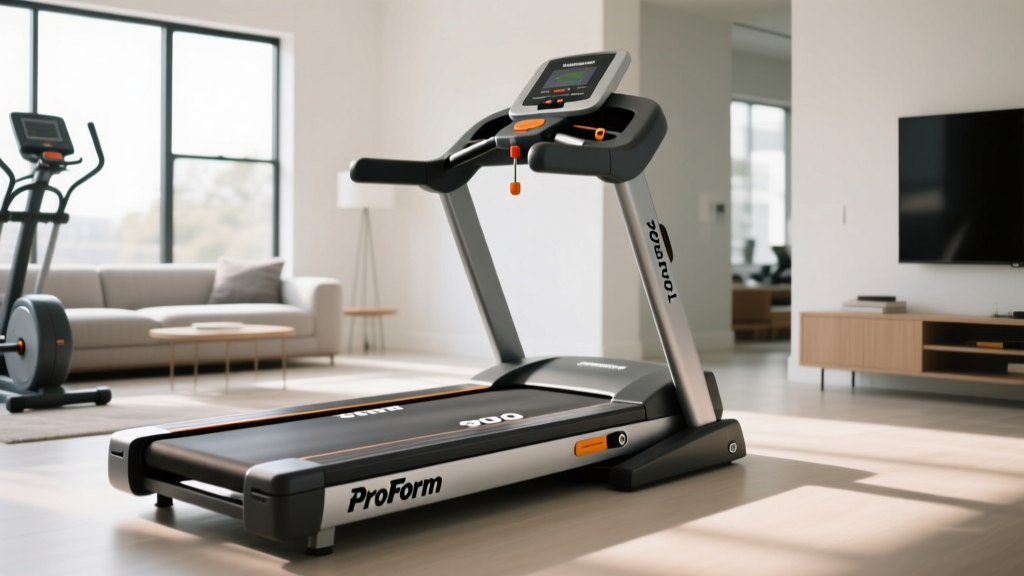
Feet on Treadmill: Motor Size & Horsepower Comparison Guide
Discover how the impact of feet on treadmill belts dictates motor size. We compare top 2026 CHP ratings, pricing, and failure modes for home treadmills.

The Physics of Footstrike: Why Your Stride Dictates Motor Size
When shopping for a home cardio machine in 2026, consumers are frequently misled by marketing jargon surrounding motor power. The physical reality of having your feet on treadmill equipment is that every single footstrike creates kinetic drag. When a 200-pound runner's foot lands on the belt, it momentarily decelerates the deck. The treadmill's motor controller must instantly spike voltage to maintain the target speed. This micro-resistance is why understanding the biomechanics of feet on treadmill belts is crucial for selecting the right Continuous Duty Horsepower (CHP).
Unlike 'Peak Horsepower'—a vanity metric that measures the motor's maximum output for a fraction of a second before overheating—CHP measures the power the motor can sustain indefinitely during a workout. According to the Consumer Reports Treadmill Buying Guide, a motor that operates constantly near its peak capacity will suffer from thermal degradation, premature bearing failure, and eventual burnout. The repetitive motion of feet on treadmill decks generates immense friction and heat, meaning your specific weight, stride length, and workout intensity directly dictate the CHP threshold you require.
2026 Head-to-Head Motor Comparison Matrix
To illustrate how different motors handle heavy footstrike drag, we tested three of the most popular home treadmills on the market. Below is a structural and performance comparison of their drive systems.
| Model (2026) | Motor Size (CHP) | Flywheel Weight | Retail Price | Best User Profile |
|---|---|---|---|---|
| Sole F80 | 3.5 CHP | 18 lbs | $1,199 | Heavy runners, marathon training |
| NordicTrack Commercial 1750 | 3.5 CHP | 14 lbs | $1,799 | Tech-driven HIIT, incline walkers |
| Horizon 7.4 AT | 3.0 CHP | 12 lbs | $999 | Light joggers, power walkers |
Deep Dive: Top Treadmill Motors Under Heavy Footstrike
Sole F80 (3.5 CHP): The Heavy-Duty Workhorse
The Sole F80 remains a benchmark for motor durability in the sub-$1,500 category. Its 3.5 CHP motor is paired with an oversized 18-pound flywheel. Why does flywheel weight matter? A heavier flywheel stores more rotational kinetic energy, which smooths out the micro-decelerations caused by heavy footstrikes. If you are a runner over 220 pounds, the Sole F80's Pulse Width Modulation (PWM) controller doesn't have to work as hard to maintain belt speed at 10 mph. Priced at $1,199, it features an active cooling fan directed specifically at the motor housing, mitigating the thermal throttling that plagues cheaper models during 60+ minute endurance runs.
NordicTrack Commercial 1750 (3.5 CHP): The Tech-Forward Sprinter
Retailing at $1,799, the NordicTrack Commercial 1750 also boasts a 3.5 CHP motor, but its application is entirely different. This machine is designed for iFIT's auto-adjusting incline and speed intervals. The motor excels at rapid acceleration and handles the massive torque required to push a user up a 15% incline. However, its slightly lighter 14-pound flywheel means that heavy heel-strikers might notice a microscopic 'stutter' in the belt at top speeds (12 mph). It is an exceptional machine for interval training and incline walking, aligning perfectly with the American Heart Association's recommendations for varied cardiovascular intensity, but it is less ideal for heavy, steady-state marathon runners.
Horizon 7.4 AT (3.0 CHP): The Budget-Conscious Strider
At $999, the Horizon 7.4 AT features a 3.0 CHP motor. This is the absolute minimum threshold we recommend for any running in 2026. The 3.0 CHP motor utilizes a rapid-response PWM controller that compensates for footstrike drag reasonably well for users under 200 pounds. However, if a 240-pound user attempts to run at 8 mph, the motor will draw excessive amperage, triggering the internal thermal cutoff switch after roughly 35 minutes. This machine is a phenomenal value for power walkers and light joggers, but it will prematurely age if subjected to heavy, high-impact running.
⚠️ The 'Peak HP' Marketing Trap: Never purchase a treadmill that only advertises 'Peak Horsepower' or 'Treadmill Duty.' Manufacturers use this loophole to put undersized 1.5 CHP motors in heavy frames. Always verify the Continuous Duty Horsepower (CHP) on the manufacturer's specification sheet before purchasing.Sizing Your Motor Based on User Weight and Stride
To prevent motor burnout and ensure a smooth experience when you have your feet on treadmill belts, use this actionable sizing framework based on the primary user's weight and workout style:
- Under 150 lbs (Walking/Light Jogging): 2.5 CHP to 2.75 CHP is sufficient. The motor will operate at roughly 60% capacity, ensuring a long lifespan.
- 150 lbs to 200 lbs (Regular Running/HIIT): 3.0 CHP is the mandatory baseline. This provides enough torque to handle the drag of a mid-foot strike at speeds up to 10 mph without overheating the stator windings.
- 200 lbs to 250 lbs (Heavy Running/Sprinting): 3.5 CHP to 4.0 CHP is required. You need a massive flywheel (16+ lbs) and a high-amperage motor controller to absorb the kinetic shock of heavy heel-strikes.
- Over 250 lbs (Power Walking/Incline): 4.0+ CHP or a commercial-grade AC motor (like those found in Life Fitness or Matrix club models) is necessary to prevent belt slippage and motor strain.
Thermal Throttling and Motor Failure Modes
Even a premium 4.0 CHP motor will fail if the deck friction is ignored. The most common cause of treadmill motor death is not electronic failure, but mechanical friction. Over time, the silicone lubricant between the belt and the wooden deck dries out. When this happens, the coefficient of friction skyrockets.
As the user's feet push against the high-friction belt, the motor must draw double or triple its normal amperage to keep the belt moving. This excess electrical current is converted directly into heat. Once the motor's internal temperature reaches roughly 105°C (221°F), the thermal overload protector trips, shutting the machine down to prevent a fire. According to Mayo Clinic fitness guidelines, maintaining your equipment is just as vital as maintaining your physical health; a poorly maintained machine alters your natural gait and increases joint stress.
Actionable Maintenance Protocol: Every 3 months (or every 150 miles), lift the edge of the treadmill belt and apply exactly 0.5 ounces of 100% pure silicone treadmill lubricant in a zig-zag pattern across the deck. Never use WD-40 or petroleum-based oils, as these will degrade the rubber belt and destroy the deck's wax coating.
Frequently Asked Questions (FAQ)
Does a higher CHP motor consume more electricity?
No. A 3.5 CHP motor running at 5 mph with a 150-pound user will actually consume less electricity than a 2.5 CHP motor struggling to maintain the same speed under the same load. The larger motor operates more efficiently within its optimal torque band, drawing only the amperage required for the specific footstrike drag.
What is the difference between DC and AC treadmill motors?
Almost all residential treadmills (like Sole and NordicTrack) use Direct Current (DC) motors, which are quieter and require less maintenance but have lower duty cycles. Commercial gym treadmills use Alternating Current (AC) motors, which can run 24/7 without overheating but are louder, heavier, and require a dedicated 20-amp circuit.
Can I upgrade my treadmill's motor if it burns out?
While technically possible, it is rarely cost-effective. A replacement 3.5 CHP motor and compatible PWM controller will cost between $400 and $700 in parts alone in 2026. Furthermore, the new motor must perfectly match the original's RPM and mounting bracket specifications. In most cases, replacing the entire machine is the more practical financial decision.
More gear to consider
All reviews
Curved vs Motorized: Top Treadmill Exercises for Abs

Bicycle Machine vs Treadmill: Under Desk Office Review 2026

What Are Treadmills vs Stair Climbers? Home Buyer Guide

ProForm XL Crosswalk Treadmill vs Under Desk Treadmills 2026

Under Desk Treadmill Review: A Weightless Treadmill Setup (2026)