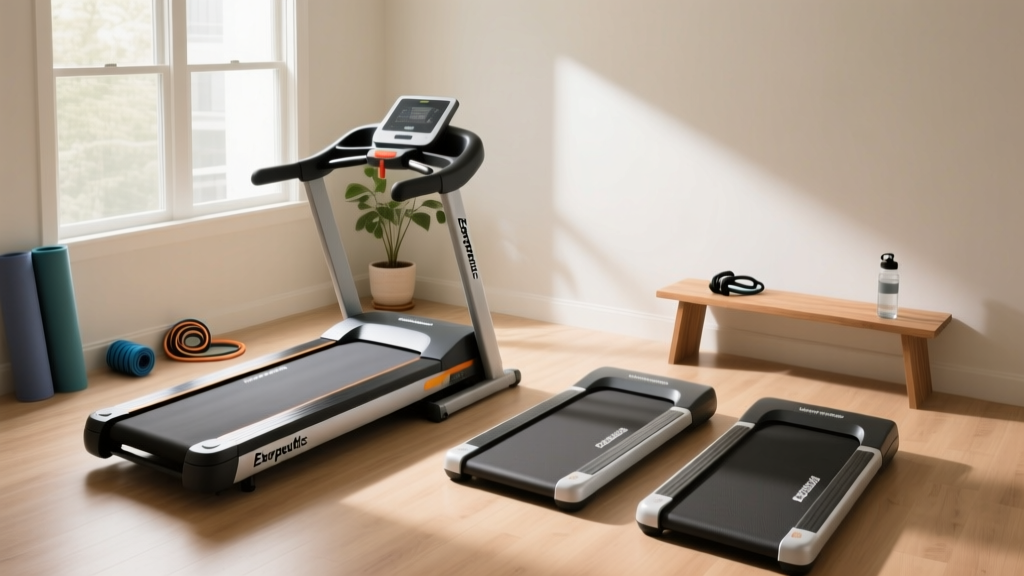
Exerpeutic Treadmill vs Walking Pads: 2026 Beginner Guide
Compare the Exerpeutic treadmill and top walking pads for 2026. Follow our beginner step-by-step guide to choose, set up, and start your cardio journey.

Entering the home fitness space in 2026 can feel overwhelming, especially when trying to decide between traditional budget-friendly treadmills and the ultra-compact walking pads that have flooded the market. For beginners, the choice usually narrows down to a reliable workhorse like the Exerpeutic treadmill (specifically the TF1000 Walk-to-Fit series) versus popular flat walking pads from brands like UREVO or KingSmith. Both promise accessible daily cardio, but their engineering, footprint, and biomechanical impacts are vastly different.
This step-by-step guide will walk you through the exact specifications, spatial requirements, and setup protocols you need to know. We will strip away the marketing fluff and focus on real-world performance, helping you make an informed decision for your home gym.
The 2026 Cardio Dilemma: Exerpeutic Treadmills vs. Flat Walking Pads
The Exerpeutic TF1000 Ultra High Capacity treadmill has long been a staple for budget-conscious walkers. It features a traditional upright frame, safety handrails, and a 400-pound weight capacity. In contrast, modern walking pads (often marketed as 'under-desk treadmills') ditch the handrails and incline motors in favor of a foldable, low-profile deck that can slide under a sofa.
Beginner Insight: Walking pads are engineered strictly for walking (typically 0.5 to 4.0 MPH). Attempting to jog on a standard 1.25 HP walking pad will cause the motor to overheat and the belt to stutter, creating a severe trip hazard. The Exerpeutic treadmill, while not a marathon runner's machine, features a 1.5 HP continuous duty motor that can safely handle brisk walking and light jogging up to 4.0 MPH.Head-to-Head Specification Matrix
Before making a purchase, it is crucial to look at the raw data. Below is a comparison of the Exerpeutic TF1000 against two top-tier 2026 walking pads: the UREVO Strol 2E and the KingSmith WalkingPad R2.
| Feature | Exerpeutic TF1000 | UREVO Strol 2E | KingSmith R2 |
|---|---|---|---|
| 2026 Retail Price | $349 - $399 | $250 - $299 | $499 - $549 |
| Motor (Continuous HP) | 1.5 HP | 1.25 HP | 1.25 HP (2.5 HP Peak) |
| Belt Dimensions | 20" W x 40" L | 16.5" W x 41.3" L | 17.3" W x 43.3" L |
| Max User Weight | 400 lbs | 220 lbs | 240 lbs |
| Incline / Handrails | Fixed / Full Length | None / Foldable | None / Foldable |
Step 1: Matching the Machine to Your Biomechanics
The most common beginner mistake is ignoring belt length relative to user height. According to physical therapy guidelines from the Hospital for Special Surgery, a natural walking stride requires adequate deck length to prevent subconscious gait alterations, which can lead to hip and lower back strain.
The Height Threshold
- Under 5'8" (172 cm): You will comfortably adapt to the 40-inch belt of the Exerpeutic treadmill or the 41-inch belt of the UREVO walking pad. Your natural stride will not clip the front or rear motor housings.
- 5'9" to 6'2" (175 - 188 cm): The 40-inch Exerpeutic belt will feel restrictive. You will likely need to shorten your stride or constantly look down to avoid stepping on the plastic cowl. Walking pads with 43+ inch belts (like the KingSmith R2) are slightly more forgiving, but the lack of handrails at a faster pace can feel unstable for taller users with a higher center of gravity.
- Over 6'2" (188 cm): Neither the budget Exerpeutic nor standard walking pads are recommended. You should look for a mid-tier treadmill with a minimum 55-inch belt length.
Step 2: Space Planning and Electrical Requirements
Walking pads win the footprint battle, but they require specific storage considerations. While an Exerpeutic treadmill takes up a permanent 54" x 28" footprint in your room, a walking pad can be stored vertically. However, storing a walking pad vertically without its dedicated stand can cause the internal silicone lubricant to pool at the bottom of the deck, leading to dry friction at the top of the belt when you next use it.
Electrical Tip: Both machine types draw significant startup current. Never plug your Exerpeutic treadmill or walking pad into a power strip shared with space heaters, air conditioners, or microwaves. Use a dedicated 15-amp wall outlet with a built-in surge protector to prevent motor control board failures.
Step 3: Unboxing and Calibration Protocol
Out of the box, budget cardio machines often suffer from belt drift. The belt may pull to the left or right right out of the factory. Follow this exact calibration protocol before your first workout:
- Level the Deck: Place the machine on a hard, flat surface. If using a carpet, buy a high-density EVA foam treadmill mat (approx. $30). This prevents carpet fibers from entering the motor housing and suffocating the cooling fan.
- The Tension Test: Turn the machine on at 1.0 MPH. Let it run for two minutes. Observe the belt tracking.
- Hex Key Adjustment: If the belt drifts left, insert the provided hex key into the left rear roller bolt. Turn it exactly one-quarter (1/4) turn clockwise. Do the same to the right bolt if it drifts right. Never turn the bolts more than a half-turn at a time, or you will over-tension the belt and burn out the motor.
- Lubrication Check: Lift the center of the belt. It should feel slightly slick. If it feels dry or gritty, apply exactly 15ml of 100% silicone treadmill lubricant in a zig-zag pattern under the belt. Run the machine at 2.0 MPH for three minutes to distribute the oil.
Step 4: Real-World Troubleshooting and Maintenance
Beginners often encounter a 'hesitation' or 'stutter' in the belt when their foot strikes the deck. This is rarely a motor failure; it is almost always a friction or drive-belt issue.
Warning: The Friction TrapIf your walking pad stutters when you step on it, the walking belt is too tight against the deck, or the deck lacks lubrication. The motor is struggling to overcome the static friction. Adding silicone lube solves this 90% of the time. If lubrication fails, the internal drive belt (connecting the motor to the front roller) has stretched and needs to be manually tensioned by removing the front motor hood.
To maintain your machine and keep it aligned with cardiovascular health standards, consistency is key. The American Heart Association recommends at least 150 minutes of moderate-intensity aerobic activity per week. This breaks down to roughly 22 minutes a day on your Exerpeutic treadmill or walking pad. Setting a daily 25-minute timer at 2.5 to 3.0 MPH will easily fulfill this requirement while keeping motor temperatures well within safe operating limits.
Step 5: Joint Health and Impact Considerations
Walking is a low-impact exercise, but the deck construction of your machine dictates how much shock travels up your kinetic chain. The Exerpeutic TF1000 utilizes a basic elastomer cushioning system under the deck. Walking pads, due to their ultra-thin profile (often less than 5 inches thick), have virtually zero shock absorption. They rely entirely on the micro-compression of the belt and your footwear.
According to research highlighted by the Mayo Clinic, proper footwear is essential for walking routines to prevent plantar fasciitis and shin splints. If you choose a flat walking pad, you must wear high-cushion running shoes (like Hoka Clifton or Brooks Glycerin models). Never walk barefoot or in flat socks on a walking pad, as the repetitive strike against the rigid wooden/MDF deck will quickly lead to heel pain.
Expert Verdict: Which Should You Buy?
Your choice between an Exerpeutic treadmill and a walking pad ultimately depends on your living space, body type, and safety requirements.
Choose the Exerpeutic Treadmill If:
- You weigh over 220 lbs and need a machine with a verified 400 lb structural capacity.
- You have balance concerns, require handrails for mounting/dismounting, or are recovering from minor physical therapy.
- You have a dedicated corner in your home where the machine can remain permanently set up.
Choose a Walking Pad (UREVO / KingSmith) If:
- You live in a small apartment and must store the machine under a bed or sofa daily.
- You weigh under 220 lbs and are under 5'10" tall.
- You plan to use the machine primarily while working at a standing desk (walking pads integrate much better into home office workflows due to their lack of a front console mast).
By understanding the mechanical limitations and spatial requirements of both categories, you can invest in a machine that supports your daily movement goals without becoming an expensive clothing rack. Start slow, calibrate your belt, and prioritize daily consistency over speed.
More gear to consider
All reviews
NordicTrack T Series 6.5S Treadmill Review: Belt Lubrication & Value

Gym Bike vs Treadmill: Compact Portable Cardio for Small Spaces

Epic A35T Treadmill Motor Guide: HP vs Modern Rivals

Treadmill HIIT Beginner Buying Guide: 2026 Feature Comparison

What Is the Point of a Curved Treadmill? A Noise & Benefit Guide
