
What Burns More Calories: StairMaster or Incline Treadmill vs. Budget Bikes
We answer what burns more calories: StairMaster or incline treadmill, then analyze if upright, recumbent, and spin bikes offer better budget value.

When outfitting a home gym in 2026, fitness enthusiasts frequently ask a highly debated question: what burns more calories, StairMaster or incline treadmill? The short answer is that a StairMaster (specifically the StepMill series) generally yields a higher caloric expenditure per minute due to the constant vertical lifting of your body weight against gravity. However, focusing solely on peak calorie burn ignores the most critical factor for home gym owners: budget and long-term value.
Dropping $3,500 to $4,500 on premium stair climbers or heavy-duty incline treadmills is a massive financial commitment. This is where analyzing stationary bike types—upright, recumbent, and spin—becomes essential. By pivoting to stationary bikes, you can achieve 85% to 95% of the cardiovascular benefits for a fraction of the upfront cost, footprint, and maintenance. Below, we break down the premium calorie debate, then dive deep into the budget breakdown and value analysis of the three main stationary bike types.
The Premium Calorie Debate: StairMaster vs. Incline Treadmill
According to metabolic data from Harvard Health Publishing, a 155-pound individual using a stair step machine burns approximately 216 calories in 30 minutes of moderate effort, which can spike to over 400 calories during high-intensity intervals. An incline treadmill set to a 15% grade at 3.5 mph burns roughly 350 to 380 calories in the same timeframe.
| Machine Type | Top 2026 Model | Avg. Upfront Cost | 30-Min Calorie Burn (155 lbs) | Footprint (L x W) |
|---|---|---|---|---|
| Stair Climber | StairMaster StepMill 7 | $3,899 | 250 - 420 kcal | 74" x 31" |
| Incline Treadmill | NordicTrack Commercial X32i | $3,999 | 350 - 400 kcal | 76" x 40" |
The Budget Pivot: Stationary Bikes as the Ultimate ROI
If your goal is cardiovascular health and fat loss without bankrupting your home gym budget, stationary bikes are the undisputed champions of ROI. The American Heart Association recommends 150 minutes of moderate-intensity aerobic activity per week. You can easily hit this target on a $700 stationary bike, saving thousands of dollars while drastically reducing joint impact.
Let us break down the three primary stationary bike types—upright, recumbent, and spin—analyzing their specific use cases, 2026 pricing, and long-term value.
1. Upright Bikes: The Traditional Middle-Ground
Upright bikes mimic the geometry of a traditional outdoor bicycle but feature a wider, more cushioned seat and a heavier flywheel for smooth, quiet operation. They engage the core and upper body slightly more than recumbent models due to the lack of a backrest.
Value & Budget Breakdown
- Price Range: $400 (Entry-level) to $1,200 (Premium)
- Top Value Pick: Nautilus U618 (Approx. $699)
- Warranty Standard: 10-year frame, 1-year parts/labor
Real-World Edge Cases & Failure Modes
The most common reason upright bikes become expensive clothes racks is seat discomfort. The standard wide saddle can cause chafing during sessions exceeding 45 minutes. Pro-Tip: Budget $30 for a gel seat cover or swap the stock saddle for a standard outdoor bike seat, as most upright bikes use a universal 7/8" seat post rail.
2. Recumbent Bikes: The Rehabilitation and Comfort King
Recumbent bikes feature a step-through design, a larger bucket seat with full lumbar support, and pedals positioned in front of the body. This shifts the user's weight from the sit bones and lower back to the larger glute and back muscles, virtually eliminating joint strain.
Value & Budget Breakdown
- Price Range: $600 to $2,500
- Top Value Pick: Schwinn 270 Recumbent (Approx. $899)
- Target Demographic: Seniors, physical therapy patients, and users with sciatica or lower back herniations.
"While recumbent bikes often have a slightly lower perceived exertion rate, users can easily match the caloric output of an upright bike by increasing the magnetic resistance and utilizing the built-in heart-rate-controlled interval programs."
Maintenance & Longevity
Recumbent bikes are incredibly durable because they lack the heavy impact forces of treadmills. However, a known failure mode in budget models (under $500) is the stretching of the internal poly-V drive belt after 2 to 3 years of heavy use, resulting in pedal slippage. Investing in a mid-tier model like the Schwinn 270 ensures a higher-grade Kevlar-reinforced belt that will easily last a decade.
3. Spin Bikes (Indoor Cycling): The High-Intensity Value Champion
If you are still chasing the massive calorie burn of the StairMaster, the spin bike (indoor cycling bike) is your best budget alternative. Spin bikes feature a forward-leaning geometry, a heavy perimeter-weighted flywheel (or advanced magnetic resistance), and infinite micro-adjustments for saddle and handlebar height.
Value & Budget Breakdown
- Price Range: $300 (Friction resistance) to $2,500 (Smart magnetic)
- Top Value Pick: Schwinn IC4 / Bowflex C6 (Approx. $799)
- Calorie Burn Potential: 400 - 600+ kcal per 45-minute HIIT class.
Bridging the Calorie Gap
By utilizing High-Intensity Interval Training (HIIT) on a spin bike, you trigger Excess Post-exercise Oxygen Consumption (EPOC), commonly known as the 'afterburn effect.' A 45-minute spin class with heavy resistance sprints will easily rival or exceed the caloric expenditure of a steady-state StairMaster session, but the IC4 costs less than $800 compared to the StepMill's $3,899 price tag.
Crucial Warning: Sweat Corrosion
Spin bikes are designed for high-sweat environments. A major edge case in home gyms is sweat dripping directly onto the bottom bracket and flywheel, causing premature bearing rust and magnetic sensor failure. Always use a sweat guard mat and wipe down the frame with a non-corrosive cleaner after every use.
5-Year Total Cost of Ownership (TCO) Matrix
To truly understand value, we must look beyond the sticker price. The following matrix calculates the 5-year TCO, factoring in average maintenance, required accessories, and estimated energy costs.
| Machine Category | Upfront Cost | 5-Yr Maintenance/Parts | Required Accessories/Mats | 5-Year TCO |
|---|---|---|---|---|
| StairMaster StepMill | $3,899 | $450 (Chain lube, step pad replacement) | $150 (Heavy-duty equipment mat) | $4,499 |
| Incline Treadmill | $3,999 | $300 (Belt alignment, silicone lube) | $150 (Impact mat, surge protector) | $4,449 |
| Premium Spin Bike (IC4) | $799 | $50 (Pedal clip replacement) | $100 (Mat, sweat guard, SPD shoes) | $949 |
| Recumbent Bike (Schwinn 270) | $899 | $0 (Sealed magnetic drive) | $50 (Standard floor mat) | $949 |
Final Verdict: Matching Your Budget to Your Biomechanics
So, what burns more calories: StairMaster or incline treadmill? The StairMaster wins on pure minute-to-minute output, but the financial and spatial cost is immense. When evaluating stationary bike types—upright, recumbent, and spin—through a budget breakdown and value analysis lens, the stationary bike emerges as the smartest investment for 90% of home gym owners.
✅ The FitGearPulse Decision Framework:- Choose a Spin Bike if: You want maximum calorie burn, enjoy HIIT, and want to bridge the gap with premium stair climbers for under $1,000.
- Choose a Recumbent Bike if: You have lower back pain, are recovering from joint surgery, or plan to read/watch TV during long, steady-state cardio sessions.
- Choose an Upright Bike if: You are training for outdoor cycling events or prefer a traditional seated posture with a compact footprint.
By reallocating the $3,000 you save by choosing a high-quality stationary bike over a premium treadmill or stair climber, you can invest in a complete set of adjustable dumbbells, a smart fitness tracker, or simply keep the cash in your pocket—proving that the best cardio machine is the one that fits both your body and your bank account.
More gear to consider
All reviews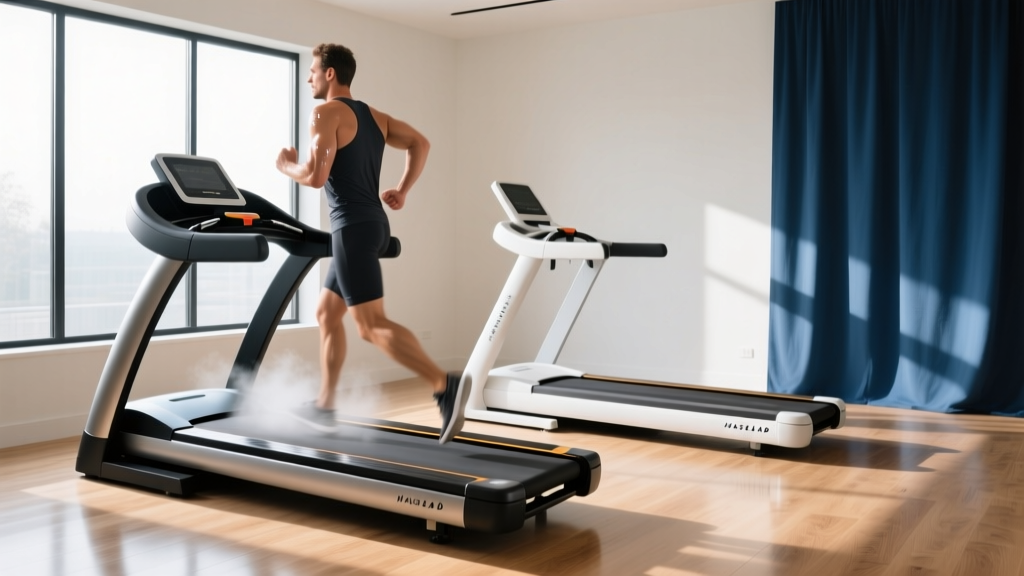
Curved U Treadmill vs Motorized: Mistakes & Fixes

Compact Portable Cardio Equipment: Treadmill Deck Lube Value Analysis

Cardio Treadmill Workouts: 2026 Belt Maintenance & Lubrication Guide

Aesthetic Treadmill vs Stair Climber: Home Use Guide 2026
Electric Bicycle Treadmill Noise Test: Bike vs Walking Pad
