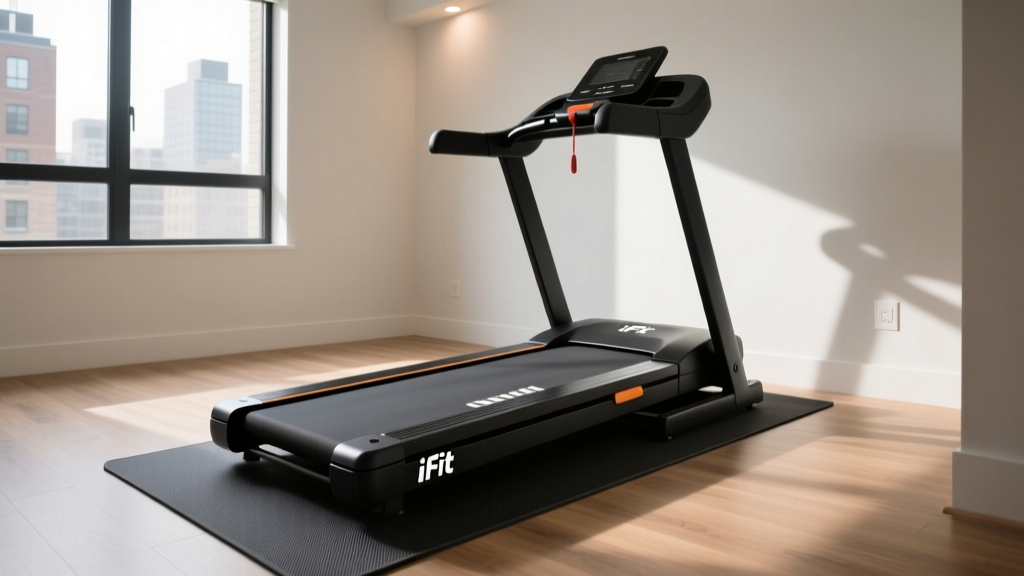
Best Ergonomic Treadmill for Under-Desk Office Layouts (2026)
Discover the best ergonomic treadmill options for under-desk office layouts in 2026. Expert reviews on space optimization, clearances, and acoustics.

The Spatial Geometry of an Ergonomic Treadmill Workstation
Integrating an ergonomic treadmill into a modern home office is rarely just about buying a piece of cardio equipment; it is a complex exercise in spatial geometry, layout design, and biomechanical alignment. As remote work setups shrink to accommodate multi-use living spaces, the under-desk treadmill has evolved from a bulky novelty into a precision tool for space optimization. However, simply sliding a walking pad beneath a desk often leads to postural strain, cable hazards, and acoustic disruptions during virtual meetings.
To design a truly optimized layout, we must evaluate the Z-axis (vertical clearance), the X/Y-axis (floor footprint and swing radius), and the environmental factors (thermal and acoustic output). According to the OSHA Computer Workstations eTool, proper alignment of the keyboard, monitor, and user's elbow is non-negotiable for preventing repetitive strain injuries. When you introduce a 4-to-6-inch treadmill deck beneath the user, the entire spatial ecosystem must shift.
The Z-Axis: Calculating Vertical Clearance
The most common failure mode in under-desk treadmill layouts is inadequate desk elevation. If a user is 5'9" (175 cm), their standing elbow height is roughly 44 inches from the floor. If the treadmill deck is 5 inches thick, the desk surface must elevate to at least 49 inches to maintain a 90-degree elbow angle. Many budget electric standing desks max out at 47 inches, forcing the user into a shrugged, biomechanically compromised posture.
Layout Rule of Thumb: Always measure your required desk height by adding your standing elbow height (from the floor) plus the exact deck height of the treadmill, plus 1 inch for keyboard thickness. Verify that your desk frame's maximum extension exceeds this number before purchasing.2026 Under-Desk Treadmill Reviews: Footprint & Ergonomics
Below, we review the top space-optimized models for 2026, analyzing their physical dimensions, motor placement, and layout compatibility.
1. WalkingPad R2 Foldable: The Micro-Footprint Champion
- Price: $499
- Deck Height: 4.7 inches
- Stored Footprint: 21.5 x 28.5 inches (Folded)
- Motor: 1.25 HP Continuous
The WalkingPad R2 remains the gold standard for severe space constraints. Its 180-degree folding hinge allows it to slide under a standard sofa or stand vertically in a closet, occupying less than 3 square feet of storage space. However, from a layout perspective, the motor is housed at the front, creating a 6-inch high bulge that restricts foot placement. It is best suited for dynamic 'hybrid' layouts where the user alternates between a seated ergonomic chair and walking, as the R2 lacks a traditional heavy-duty console.
2. LifeSpan TR1200-DT5: The Dedicated Zone Workhorse
- Price: $799
- Deck Height: 5.5 inches
- Active Footprint: 20 x 50 inches
- Motor: 2.0 HP Continuous
If your office layout features a dedicated, permanent standing desk zone (minimum 80 sq. ft.), the LifeSpan TR1200-DT5 is the superior choice. Its 5.5-inch deck height requires a premium desk frame (like the Uplift V2-Commercial, which reaches 52 inches). The layout advantage here is the integrated desk console, which eliminates the need to bend down to adjust speeds—a critical ergonomic safeguard. The heavier 75 lb frame also provides acoustic dampening, reducing floor vibration in multi-story homes.
3. UREVO Strol 2E: The Low-Clearance Specialist
- Price: $259
- Deck Height: 3.9 inches
- Active Footprint: 19 x 45 inches
- Motor: 1.0 HP Peak
For fixed-height desks equipped with an articulating keyboard tray, the UREVO Strol 2E's ultra-slim 3.9-inch profile is a layout lifesaver. It easily clears the crossbars of most standard desk frames. The trade-off is a narrower 16-inch walking belt, which demands strict spatial discipline from the user to avoid stepping on the side rails.
Layout Matrix: Matching Equipment to Office Zones
| Office Layout Type | Square Footage | Recommended Treadmill | Desk Requirement |
|---|---|---|---|
| Nook / Closet Office | < 40 sq. ft. | WalkingPad R2 | Fold-away wall desk |
| Standard Bedroom Office | 50 - 80 sq. ft. | UREVO Strol 2E | Fixed desk + keyboard tray |
| Dedicated Executive Suite | > 80 sq. ft. | LifeSpan TR1200-DT5 | Premium Sit-Stand (52"+ max) |
The Hybrid Chair-Treadmill Swing Radius
A frequently overlooked aspect of space optimization is the 'swing radius'—the spatial requirement to transition from a seated ergonomic chair to the treadmill deck without moving furniture. In a poorly planned layout, the user must physically lift and move their chair to access the treadmill, creating friction that reduces daily usage.
To solve this, implement an L-shaped or offset desk layout. Position the monitor and primary work zone on the left, and the treadmill on the right. When transitioning to walking, the user simply swivels their chair 90 degrees and rolls it back into a designated 'parking pocket' (a 24x24 inch void beneath an adjacent counter or bookshelf). This requires a minimum contiguous floor space of 4 feet by 6 feet to execute safely without tripping hazards.
Edge Cases: Acoustic, Thermal, and Cable Failures
Designing an ergonomic treadmill layout extends beyond physical dimensions; it encompasses the invisible architecture of your office environment.
Acoustic Dampening Strategies
The CDC's Active Workplaces Guidelines promote movement, but not at the expense of cognitive load or meeting disruption. A 1.5 HP motor operating at 3.0 mph generates roughly 55-65 decibels. In a small, drywall-enclosed home office, this low-frequency hum transfers directly through the floor joists.
Layout Fix: Never place an under-desk treadmill directly on hardwood or laminate. Use a high-density EVA foam puzzle mat (minimum 5/8" thickness) cut precisely to the treadmill's footprint plus a 6-inch border. This decouples the motor vibration from the subfloor, reducing transmitted noise by up to 40%.Thermal Throttling in Enclosed Zones
When optimizing for space, users often push treadmills flush against walls or enclose them within desk modesty panels. Continuous duty motors require ambient airflow to prevent thermal throttling. If the rear exhaust of the treadmill is placed within 4 inches of a wall or desk panel, the internal temperature will trigger safety shutoffs after 45 minutes of use. Always maintain a minimum 12-inch exhaust clearance in your floor plan.
Cable Management Routing
A treadmill introduces a thick, high-gauge power cable into a zone already crowded with monitor arms, PC towers, and peripheral wires. Routing this cable across the user's walking path is a severe trip hazard. Utilize a flexible under-desk cable spine (like the IKEA Signum) attached to the moving leg of your sit-stand desk, ensuring the treadmill's power cord has enough slack to accommodate the desk's full vertical travel without pulling taut or disconnecting.
Step-by-Step Space Optimization Protocol
- Audit the Z-Axis: Measure your standing elbow height. Add 5.5 inches (average deck height) and 1 inch (keyboard). Ensure your desk frame exceeds this total.
- Map the Swing Radius: Clear a 4x6 foot zone to allow seamless chair-to-treadmill transitions without lifting furniture.
- Decouple the Acoustics: Install high-density EVA foam matting precisely cut to the treadmill dimensions to isolate vibration.
- Establish Exhaust Clearances: Leave 12 inches behind the motor housing; never box the treadmill in with modesty panels.
- Route Dynamic Cables: Use a desk-mounted cable spine to manage the power cord's vertical travel during sit-stand transitions.
References & Biomechanical Standards
Designing an effective workspace requires adherence to established health and safety frameworks. Prolonged sedentary behavior is linked to severe metabolic risks, as outlined by the Mayo Clinic's research on sitting and office ergonomics. By thoughtfully integrating an ergonomic treadmill into your spatial layout, you not only optimize your physical footprint but actively engineer a healthier, more sustainable daily workflow.
More gear to consider
All reviews
2026 Stair Climber Guide: Setup & Treadmill TV Stand DIY Hacks

Treadmill Buying Guide: Best Reading Stand Features (2026)

Hockey Treadmill vs Folding Treadmill: Small Space Review

Treadmill Date: Everything in Our Walking Pad vs. Treadmill Showdown

YMCA Treadmills vs Rowers: 2026 Buying & Technique Guide