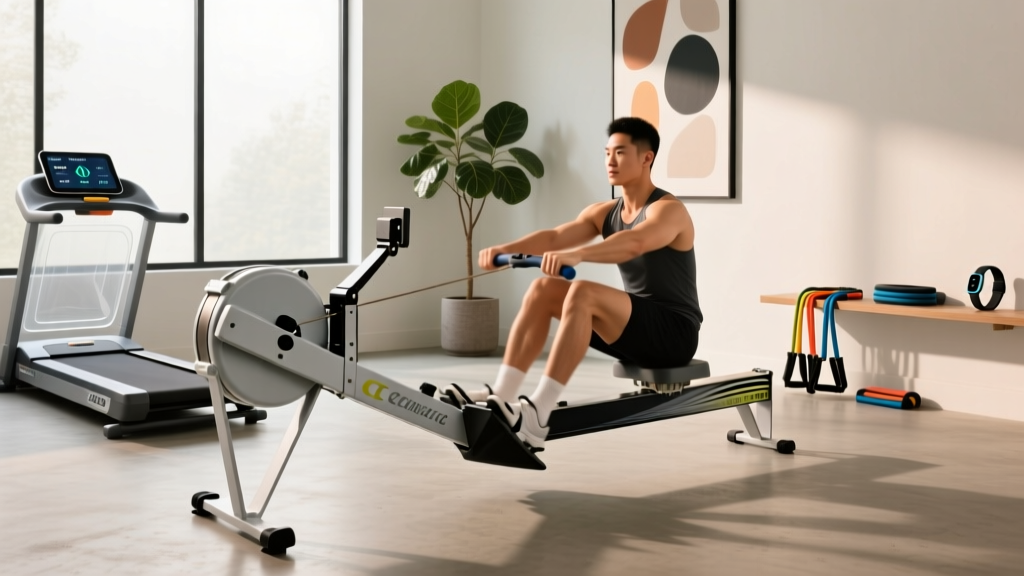
Rowing Machine Buying Guide: Technique vs VR Treadmill Weight Limit
Master rowing machine technique and compare top 2026 models. We analyze rower capacities, pricing, and how they stack against the VR treadmill weight limit.

Building a high-performance home gym in 2026 requires looking past marketing hype and understanding the biomechanical and structural realities of your equipment. Whether you are investing in a traditional ergometer or exploring immersive fitness tech, understanding capacity limits, spatial requirements, and proper form is non-negotiable. This guide breaks down elite rowing technique, compares the top rowing machines on the market, and provides a fascinating structural engineering comparison between traditional rower capacities and the modern vr treadmill weight limit.
The Biomechanics of the Stroke: Mastering Rowing Technique
Before dropping $1,000+ on a rower, you must understand the movement. According to the Cleveland Clinic, rowing engages approximately 86% of the muscles in your body, but only if the kinetic chain is sequenced correctly. The stroke is divided into four distinct phases.
1. The Catch
This is the starting position. Your shins should be completely vertical (or as close as your ankle mobility allows), with your torso hinged forward at roughly 11 o'clock. Your arms must be perfectly straight, lats engaged, and shoulders relaxed. Pro Tip: Do not over-compress. If your heels lift entirely off the footplates, you have slid too far forward, which places dangerous shear force on the lumbar spine.
2. The Drive
The drive is the power phase, and it is strictly a pushing movement, not a pulling one. The power distribution should be 60% legs, 30% core, and 10% arms. Push explosively through the footplates. Only when your legs are nearly fully extended should you swing your torso back to 1 o'clock, followed finally by pulling the handle to your sternum.
3. The Finish
At the finish, your legs are flat and fully extended, your torso is slightly leaned back, and the handle is hovering just below your chest. Your wrists must remain flat—bending your wrists at the catch or finish is a primary cause of forearm tendonitis in novice rowers.
4. The Recovery
The recovery is the exact reverse of the drive and should take twice as long. Extend the arms, hinge forward from the hips, and only bend the knees once the handle has cleared your kneecaps.
⚠️ Warning: Shooting the SlideThe most common technical failure is 'shooting the slide'—where the legs push away but the handle doesn't move, meaning the lower back is taking the entire load. If your hips rise before the handle moves, drop your damper setting to '3' or '4' to force a connection to the flywheel.
2026 Rowing Machine Buying Matrix: Air, Magnetic, and Water
The market has segmented into three distinct resistance profiles. Below is a comparison of the top-tier models dominating home gyms this year.
| Model | Resistance Type | Price (Approx) | Max Capacity | Noise Level |
|---|---|---|---|---|
| Concept2 RowErg | Air | $990 | 500 lbs | High (Whoosh) |
| Hydrow | Electromagnetic | $2,495 | 375 lbs | Very Low |
| WaterRower Natural | Water | $1,595 | 265 lbs | Medium (Slosh) |
For pure data tracking and competitive CrossFit standards, the Concept2 RowErg remains the undisputed king. Its PM5 monitor is the gold standard for accuracy. However, if you live in an apartment with thin walls, the Hydrow's electromagnetic drag system offers a virtually silent, highly immersive screen-based experience.
Structural Engineering: Rower Capacity vs. VR Treadmill Weight Limit
When outfitting a high-tech home gym, many buyers compare traditional linear cardio machines with immersive omni-directional tech. A frequent question we receive involves the structural limits of these machines—specifically, why a $1,000 rower can hold 500 lbs, while the vr treadmill weight limit on premium rigs like the Kat Walk C2 or Virtuix Omni caps out at roughly 286 lbs (130 kg).
The Physics of Linear vs. Multi-Directional Shear
The discrepancy in weight limits comes down to vector forces and structural engineering:
- Linear Horizontal Load (Rowers): A Concept2 utilizes a reinforced steel I-beam monorail. When a 300-lb user rows, the force is directed horizontally along a single, heavily braced axis. The stainless steel chain and dual-rail seat rollers distribute this load efficiently, allowing for a massive 500-lb safety threshold.
- Dynamic Shear Load (VR Treadmills): VR treadmills require the user to wear a suspension harness that locks into an overhead or waist-level ring while their feet slide on low-friction omni-directional bases. When a user changes direction rapidly in a VR game, they generate intense lateral shear forces. If a user exceeds the vr treadmill weight limit, the kinetic energy transferred to the harness ring and the optical tracking sensors can cause structural fatigue, sensor blind spots, or harness failure.
"Immersive cardio tech is advancing rapidly, but the physics of suspending a human's center of gravity while they sprint in place means the vr treadmill weight limit will remain a strict barrier for heavier athletes until localized exoskeleton harnesses become commercially viable."
If you are a heavier athlete (over 285 lbs) looking for high-intensity, gamified cardio, a VR treadmill is currently not a safe or viable option due to these engineering limits. Instead, pairing a high-capacity rower with a VR headset (like the Meta Quest 3) and playing rhythm-based rowing games offers a safer, high-capacity alternative that bypasses the harness requirement entirely.
Spatial Footprint and Tech Integration
Space is the ultimate luxury in home fitness. Here is how the physical footprint compares between the two tech categories:
The Rower Footprint
A standard Concept2 is 96 inches long and 24 inches wide. While it dominates a room when in use, it separates into two pieces or can be stood upright on its end, occupying a mere 25 x 33 inch floor footprint for storage. This makes it ideal for garages and multi-purpose living rooms.
The VR Treadmill Footprint
VR treadmills require a dedicated, permanent footprint. The base is usually around 3 to 4 feet in diameter, but you must account for the overhead harness frame, which extends to roughly 8 feet in height. Furthermore, you need a 6-foot clearance radius around the rig to ensure you do not punch a wall or monitor while immersed in a virtual environment.
Maintenance Realities for 2026
Cardio machines are only as good as their maintenance schedules. Neglect leads to degraded performance and voided warranties.
🔧 Maintenance Checklist: Rowers- Air Rowers: Wipe down the steel monorail with a damp cloth after every session to prevent dust buildup on the seat rollers. Oil the stainless steel chain with purified mineral oil every 50 hours of use.
- Water Rowers: Drop a water purification tablet into the tank every 6 months to prevent algae growth. Never use bleach, which will degrade the polycarbonate tank.
- Magnetic Rowers: Keep the track free of pet hair, which can easily get sucked into the magnetic resistance housing and cause grinding noises.
Final Verdict: Which Cardio Tech Belongs in Your Home?
If your priority is raw athletic conditioning, full-body muscle engagement, and a virtually indestructible machine with a 500-lb capacity, the traditional rowing machine is unmatched. The technique requires a learning curve, but the physiological payoff is immense.
However, if you are building an entertainment-first gaming room, and you fall safely under the vr treadmill weight limit, an omni-directional VR rig offers an unparalleled level of immersion that tricks your brain into doing cardio while you fight virtual zombies or explore digital landscapes. Understand your structural limits, respect the biomechanics, and choose the machine that aligns with your long-term fitness architecture.
More gear to consider
All reviews
Treadmill Motor Size Guide: Setup for a Barry's Treadmill Workout

Stair Climber Setup: What Is the 15-3-25 Treadmill Challenge Alternative?
Stair Climber Home Guide & VacuTherm Treadmill Comparison

XTERRA TRX1000 Treadmill Troubleshooting & Walking Pad Review

Top Compact Portable Picks for a Virtual Treadmill in 2026
