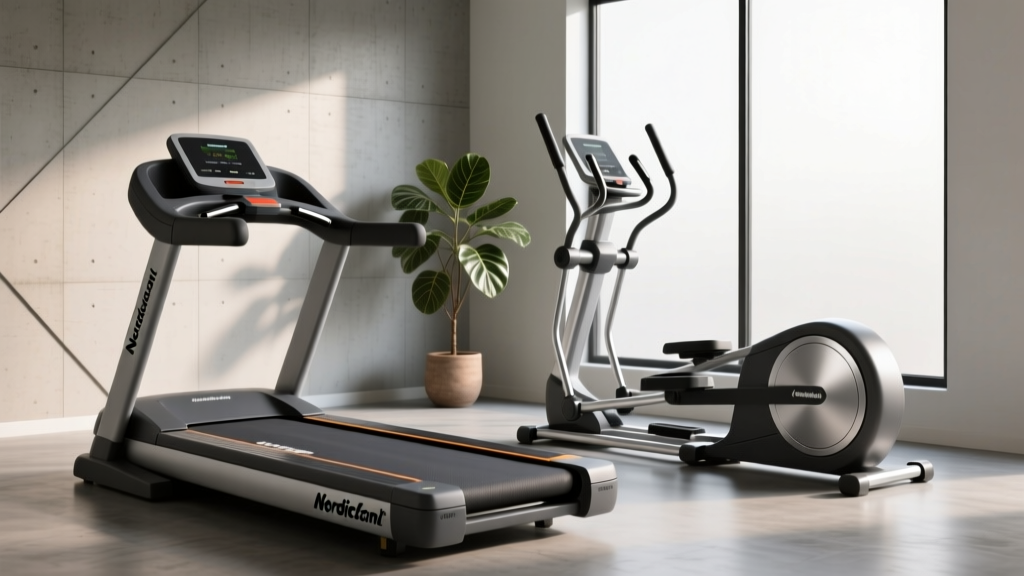
NordicTrack Treadmill 400 lb Capacity vs Elliptical: Longevity Tips
Compare maintaining a NordicTrack treadmill 400 lb capacity vs heavy-duty ellipticals. Expert longevity tips, care schedules, and failure prevention.

The Biomechanical Stress Test: Treadmill vs. Elliptical Wear
When evaluating the elliptical vs treadmill for home cardio debate, most buyers focus exclusively on calorie burn, footprint, or joint impact. However, from a hardware longevity and maintenance perspective, the physics of how these machines handle heavy loads dictates their true lifespan. According to biomechanical analyses referenced by the Mayo Clinic, a runner generates ground reaction forces equal to 2.5 to 3 times their body weight. For a 250 lb user, that translates to 750 lbs of repetitive, localized downward force striking a treadmill deck with every footfall.
Ellipticals, by contrast, eliminate the strike phase entirely. The user's weight is distributed continuously across pivot points, crank arms, and guide rails. As of 2026, if you are investing in premium, high-capacity home cardio equipment—such as a NordicTrack treadmill 400 lb capacity model (like the Commercial X-Series Incline Trainers) or a heavy-duty elliptical like the Sole Fitness E95 (also rated for 400 lbs)—your maintenance protocol must be adapted to the specific mechanical stressors of the machine. Ignoring these nuances leads to premature motor burnout, deck warping, and catastrophic bearing failure.
Information Gain: The 'Heavy User' Multiplier
Manufacturer maintenance manuals are typically written assuming a 150–175 lb user. If you regularly exceed 250 lbs, or if multiple heavy users share the machine, you must double the frequency of all lubrication and belt-tensioning schedules outlined in the standard user manual to maintain warranty compliance and hardware integrity.
Deep Dive: Maintaining Your NordicTrack Treadmill (400 lb Capacity)
High-capacity NordicTrack treadmills feature massive continuous horsepower (CHP) motors—often 4.0 CHP or higher—and reinforced commercial-grade decks. However, the immense friction generated by heavier users requires rigorous, specific care.
1. Belt Tension and Tracking Under Heavy Loads
Heavier users naturally push the running belt further into the deck with each step, increasing the likelihood of belt slip and rear-roller misalignment. If the belt stutters when your foot strikes, do not immediately increase the tension. Over-tightening is the leading cause of premature motor control board failure, as it forces the drive motor to draw excessive amperage.
- The Fix: Use the provided hex key to adjust the rear roller bolts. Turn the left bolt clockwise by exactly one-quarter (1/4) turn, then the right bolt by one-quarter turn.
- Testing: Run the belt at 3.0 MPH without walking on it. If it still slips, repeat the 1/4 turn process. Never exceed a full 360-degree turn from the factory baseline.
2. Deck Lubrication and Static Mitigation
The friction between the belt and the phenolic deck can generate temperatures exceeding 140°F under a 400 lb load. This heat degrades the belt's rubber backing and increases static electricity, which can fry the treadmill's lower control board.
- Schedule: Apply exactly 1 oz of 100% silicone treadmill lubricant under the belt every 130 miles or every 3 months (whichever comes first).
- Warning: Never use WD-40, petroleum-based oils, or aerosol sprays. These will dissolve the factory adhesive bonding the belt layers, resulting in a $200+ replacement cost.
3. Motor Hood and Carbon Dust Extraction
Treadmill motors use carbon brushes that slowly wear down, releasing conductive carbon dust. In high-load scenarios, the motor works harder, accelerating brush wear. Every 6 months, unplug the machine, remove the motor hood screws, and use a vacuum with a soft brush attachment to clear dust from the motor housing and drive board. Compressed air should be avoided, as it can blow conductive dust directly into the solder joints of the logic board.
Heavy-Duty Elliptical Care: Pivot Points and Rail Integrity
While ellipticals spare the deck from impact strikes, they suffer from continuous rotational torque and lateral shear forces. A 400 lb capacity elliptical like the Sole E95 or Life Fitness Club Series relies on heavy-duty polyurethane wheels and sealed bearings, which require a completely different maintenance approach.
1. Joint Bearing and Pivot Lubrication
The shoulder joints, pedal arm pivots, and crank bearings endure constant lateral stress. When these joints dry out, you will hear a rhythmic 'clicking' or 'popping' at the apex of the stride.
- Schedule: Every 6 months, apply a PTFE-based dry lubricant or white lithium grease to all moving pivot points.
- Pro Tip: Avoid wet oils (like 3-in-One). Wet oils attract household dust and pet hair, creating an abrasive paste that will grind down the nylon bushings inside the pivot joints within a year.
2. Rail and Roller Maintenance
Rear-drive and center-drive ellipticals rely on aluminum guide rails coated in a specialized polyurethane layer to ensure smooth wheel tracking. Heavier users compress the polyurethane wheels harder against these rails, making track cleanliness critical.
- Cleaning Protocol: Wipe the rails weekly with a microfiber cloth dampened with a 50/50 mix of distilled water and isopropyl alcohol.
- Critical Warning: Never use ammonia-based glass cleaners (like Windex) or abrasive degreasers. Ammonia strips the polyurethane coating off the aluminum rails, leading to micro-pitting. Once the rail is pitted, it will shave down the elliptical's wheels, requiring a full $150+ track and wheel replacement.
Maintenance Cost & Interval Matrix
Understanding the long-term financial commitment is vital when deciding between an elliptical vs treadmill for home cardio. Below is a comparative breakdown of expected maintenance costs and intervals for heavy-duty (400 lb capacity) machines based on 2026 industry service rates and Consumer Reports reliability data.
| Maintenance Task | NordicTrack Treadmill (400 lb) | Heavy-Duty Elliptical (400 lb) | Frequency |
|---|---|---|---|
| Lubrication | 100% Silicone ($15/bottle) | PTFE / Lithium Grease ($12/can) | Every 3-6 Months |
| Wear Part Replacement | Running Belt & Deck ($250-$450) | Guide Rails & Wheels ($150-$220) | Every 3-5 Years |
| Electronic / Motor | Lower Control Board ($300+) | Reed Switch / Console ($80-$150) | As Needed (Rare) |
| Routine Cleaning | Motor Hood Vacuuming | Rail Alcohol Wipe-Down | Weekly / Bi-Weekly |
Edge Cases: Warning Signs of Impending Failure
According to fitness equipment repair technicians and guidelines from the American Council on Exercise (ACE), catching mechanical degradation early saves hundreds of dollars in secondary damage. Here are the non-obvious edge cases to monitor for high-capacity machines:
Treadmill Red Flags
- The 'E1' Error Code & Speed Sensor Misalignment: If your NordicTrack suddenly stops and throws an E1 or E2 error, the optical speed sensor on the motor flywheel has likely been knocked out of alignment by heavy-deck vibrations. The gap between the sensor and the magnet must be exactly 2mm to 3mm. Realigning it with a feeler gauge takes 5 minutes and prevents an unnecessary $120 control board replacement.
- Burning Rubber Odor: If you smell burning rubber, the belt/deck friction has exceeded 150°F. Stop immediately. This indicates severe lubrication failure or a warped deck. Continuing to run will melt the belt's underside and overheat the motor windings.
Elliptical Red Flags
- Magnetic Resistance Drop-Out: If the resistance suddenly drops to zero or fluctuates wildly during a stride, the reed switch or magnetic eddy-current brake gap has shifted. Heavy user weight can cause the chassis to flex, pulling the brake magnet away from the flywheel. Check that the gap remains under 3mm.
- Lateral Crank Play: Grab the pedal arms and push them side-to-side. If there is more than 2mm of lateral wobble, the main crank bearings are failing. Continuing to use the machine will score the steel crank shaft, turning a $30 bearing replacement into a $200 full crank assembly replacement.
Final Verdict for Home Cardio Longevity
Choosing between a NordicTrack treadmill 400 lb capacity model and a heavy-duty elliptical ultimately comes down to your willingness to perform specific maintenance routines. Treadmills demand rigorous friction management (lubrication, belt tracking, and static control) but offer unparalleled bone-density benefits and running specificity. Ellipticals require meticulous joint and rail care to prevent lateral shear degradation but offer a vastly superior lifespan for the deck and impact components. By adhering to the heavy-user multipliers and precise measurement tolerances outlined above, your home cardio investment will easily survive the 10-year mark, regardless of which modality you choose.
More gear to consider
All reviews
Aussie Fitness Treadmill Review: Folding Models for Small Spaces

Elliptical vs Treadmill Care: Is an HSA Eligible Treadmill Best?

IN10CT Treadmill: How to Use, Maintain, and Maximize Longevity

Before Disposing of Treadmill: Motor Size & Horsepower Guide
Walking Pad Setup & Review: What Does METs Mean on a Treadmill?
