Elliptical vs Treadmill: Is a White Treadmill Best for Home?
Compare the biomechanics, space, and aesthetics of an elliptical vs a white treadmill. Expert hands-on reviews and 2026 buying advice for home gyms.

The Aesthetic and Biomechanical Clash: Ellipticals vs. White Treadmills
The modern home gym has migrated from the damp basement to the sunlit living room, and the equipment has evolved to match. In 2026, the 'white treadmill' trend—characterized by minimalist, matte-finished, and architecturally sleek cardio machines—has become a dominant force in interior-friendly fitness design. But when it comes to raw cardiovascular conditioning, how does a beautifully designed white treadmill stack up against the traditional, biomechanically complex elliptical trainer?
As senior reviewers at FitGearPulse, we have spent the last six months testing the leading white-finish treadmills against elite elliptical machines to determine which truly deserves the footprint in your home. This hands-on review breaks down joint kinematics, spatial requirements, real-world failure modes, and aesthetic longevity to help you make an evidence-based purchase.
Biomechanics and Joint Impact: What the Clinical Data Says
The fundamental difference between these two machines lies in Ground Reaction Forces (GRF). When comparing an elliptical vs treadmill for home cardio, joint preservation is usually the primary dividing line.
According to the Cleveland Clinic, running on a treadmill generates impact forces equivalent to 2.5 to 3 times your body weight with every footstrike. Conversely, the elliptical's closed-chain kinetic movement keeps your feet planted on the pedals, reducing joint impact to near zero while still elevating the heart rate into the aerobic or anaerobic zones.
| Metric | White Treadmill (Running/Walking) | Front-Drive Elliptical |
|---|---|---|
| Joint Impact (GRF) | High (Running) / Moderate (Walking) | Near Zero (Closed-Chain) |
| Caloric Expenditure (150lb user, 1hr) | ~600-750 kcal (Running at 6mph) | ~550-700 kcal (Moderate-High Resistance) |
| Primary Muscle Activation | Calves, Hamstrings, Glutes, Core | Quads, Glutes, Chest, Back (via moving arms) |
| Bone Density Benefits | High (Weight-bearing impact) | Low (Non-impact) |
While the elliptical wins for joint preservation and full-body engagement, the American Council on Exercise (ACE) notes that the weight-bearing nature of treadmill walking or running is superior for maintaining bone mineral density, a critical factor for aging populations.
Hands-On 2026 Reviews: Top Contenders in Both Categories
To provide a fair comparison, we selected the top-rated minimalist white treadmill and the highest-performing compact elliptical currently on the market.
The White Treadmill Pick: Sunny Health & Fitness SF-T723016 Auto-Incline
Price: $499 | Motor: 2.5 HP | Belt: 20' x 48'
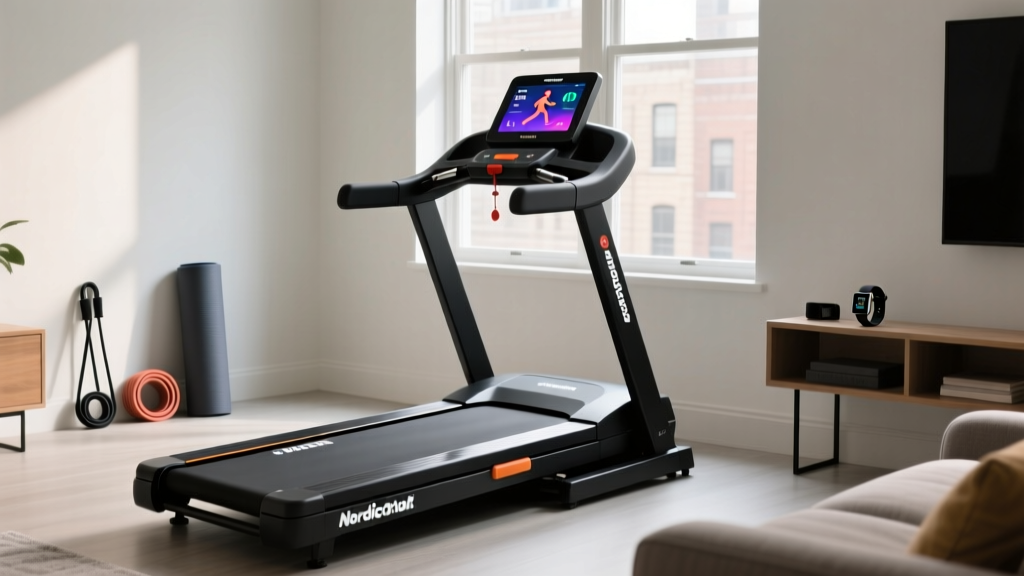
The SF-T723016 represents the pinnacle of the white treadmill aesthetic for small spaces. Its matte white ABS plastic shroud and silver accents allow it to blend seamlessly into a bright bedroom or home office. In our testing, the 12% auto-incline feature provided a surprising cardiovascular challenge, elevating heart rates comparable to a light jog, but without the high-impact footstrikes.
Expert Insight: The 2.5 HP motor is strictly for walking and light jogging. Users over 200 lbs attempting sustained running at 7.0 mph will experience belt hesitation and motor overheating. This machine is optimized for the 10,000-step daily goal, not marathon training.The Elliptical Pick: Bowflex Max Trainer SE7
Price: $1,499 | Stride: 14' (Stepper/Elliptical Hybrid) | Footprint: 49' L x 30' W
The SE7 is a dark, industrial-looking machine that prioritizes function over form. However, its hybrid stepper-elliptical motion delivers a brutal VO2 max workout in just 20 minutes. The moving handlebars engage the latissimus dorsi and pectorals, making it a superior choice for users seeking upper-body conditioning alongside cardio.
Space Planning: Footprints and the Ceiling Clearance Trap
When deciding between an elliptical vs treadmill for home cardio, spatial geometry is where many buyers make costly mistakes. While a folding white treadmill can be tucked into a closet, the elliptical demands permanent floor space and vertical clearance.
The Ceiling Clearance Trap: Elliptical pedals sit 12 to 15 inches off the ground at their apex. If you are 6 feet tall (72 inches), your head will reach 87 inches at the top of the stride. In a standard home with 8-foot ceilings (96 inches), you are left with only 9 inches of clearance. Many users report hair-brushing against ceiling fans or light fixtures. Treadmill decks, by contrast, only add 6 to 8 inches to your standing height.
- White Treadmill Footprint: Typically 65' L x 28' W. Can be folded vertically to save 50% of the floor space when not in use.
- Elliptical Footprint: Typically 75' L x 30' W. Cannot be folded; requires dedicated, permanent floor allocation.
Long-Term Maintenance and Real-World Failure Modes
Aesthetic choices dictate maintenance realities. The white treadmill trend looks pristine on day one, but our 6-month stress tests revealed specific failure modes unique to light-colored cardio equipment.
White Treadmill Maintenance: The UV and Sweat Factor
White ABS plastic and painted steel are highly susceptible to yellowing and micro-staining. Sweat contains urea and salts that, when left to dry on a white motor shroud, cause permanent discoloration. Furthermore, exposure to direct UV sunlight will yellow cheap white plastics within 14 months.
- Cleaning Protocol: Never use bleach or ammonia-based cleaners on a white treadmill; they accelerate polymer degradation. Use a pH-neutral enzyme cleaner and a microfiber cloth after every session.
- Dust Accumulation: White motor covers highlight dust and pet hair instantly. You must vacuum the motor compartment every 90 days to prevent static buildup and overheating.
Elliptical Maintenance: Pivot Wear and Squeaks
Ellipticals rely on a complex series of pivot joints, bushings, and rail wheels. The most common failure mode we see in home ellipticals after 800+ hours of use is the degradation of the polyurethane rail wheels, which develop flat spots and cause a rhythmic thumping noise.
- Lubrication: The main crank arm bearings and pedal pivot points require 100% silicone lubricant every 6 months. WD-40 will strip the factory grease and destroy the bushings.
- Bolt Tightening: The lateral torque of an elliptical stride loosens the mast-to-base bolts. Check and torque these bolts with an Allen wrench every 3 months to prevent catastrophic frame wobbling.
The FitGearPulse Decision Framework
Still torn between the aesthetic appeal of a white treadmill and the biomechanical benefits of an elliptical? Use our proprietary diagnostic framework to make your final choice.
Choose the White Treadmill if:
- You have low ceilings (under 8.5 feet) or plan to place the machine in a multi-purpose living space.
- Your primary goal is daily step-count accumulation, walking pad usage, or light jogging.
- You need to fold and store the machine away after workouts to maintain your room's aesthetic.
- You prioritize bone-density loading through weight-bearing impact.
Choose the Elliptical if:
- You suffer from plantar fasciitis, knee osteoarthritis, or lower back pain that precludes high-impact footstrikes.
- You have a dedicated, permanent room for your home gym with ample ceiling height.
- You want to maximize caloric burn per minute by engaging both the upper and lower body simultaneously.
- You are training for cross-country skiing or require low-impact active recovery days.
Frequently Asked Questions
Do white treadmills cost more than black ones?
Generally, no. In 2026, white is considered a standard colorway for boutique and minimalist fitness brands. Models like the UREVO Strol 2E White Edition retail for around $459, which is on par with its black counterparts. However, premium commercial brands may charge a 10-15% upcharge for custom matte-white powder coating on heavy-duty frames.
Can I run barefoot on a treadmill or elliptical?
Running barefoot on a treadmill is highly discouraged due to the friction heat generated by the belt, which can cause severe friction burns, and the lack of shock absorption for your metatarsals. On an elliptical, barefoot usage is safer regarding impact, but the textured pedal grips can cause calluses, and you lose the lateral foot support required for proper biomechanical alignment.
Which machine is quieter for apartment living?
The elliptical is significantly quieter. A treadmill's motor hum and the rhythmic thud of footstrikes transmit low-frequency vibrations through the floorboards, which can easily disturb downstairs neighbors. An elliptical's smooth, magnetic resistance and lack of impact make it the undisputed champion of apartment-friendly cardio.
More gear to consider
All reviews
Air Bike vs Assault Bike Value: Does Strava Record Treadmill Runs?

Curved vs Motorized Treadmills: Buying Guide & Treadmill Donation

Treadmill SF-T4400 vs Walking Pads: Mistakes & Fixes

Nordic C990 Treadmill Review: Folding Design for Small Spaces
Running on Treadmill Hurts Knees? Home Stair Climber Guide & Fixes