Elliptical vs Treadmill Space Guide & NordicTrack Treadmill Parts
Compare elliptical vs treadmill footprints for home gyms. Plus, expert layout tips and a guide to sourcing genuine NordicTrack treadmill parts.

The Spatial Showdown: Footprint and Clearance Metrics
Designing a home cardio zone in 2026 requires a delicate balance between biomechanical performance and architectural reality. When deciding between an elliptical and a treadmill, most buyers focus solely on joint impact or calorie burn. However, from a space optimization perspective, the decision hinges on static footprints, dynamic clearance, and the often-ignored 'maintenance envelope.' According to the Centers for Disease Control and Prevention (CDC), adults need at least 150 minutes of moderate-intensity aerobic activity weekly, making a dedicated, well-optimized home space essential for long-term adherence.
Ellipticals generally offer a more compact width, making them ideal for narrow galley-style home gyms or converted walk-in closets. Treadmills, conversely, demand a wider stance for safe running mechanics and require significant length to accommodate natural stride overhang. Below is a spatial comparison of top-tier 2026 home cardio models.
| Machine Type | Model Example | Footprint (L x W) | Weight | Folding Capability |
|---|---|---|---|---|
| Treadmill | NordicTrack Commercial 1750 | 81' x 38' | 340 lbs | Yes (Vertical Pivot) |
| Treadmill | Sole F63 | 82' x 35' | 280 lbs | Yes (Hydraulic Drop) |
| Elliptical | NordicTrack SpaceSaver SE | 76' x 30' | 210 lbs | Yes (Fold-In-Place) |
| Elliptical/Climber | Bowflex Max M9 | 49' x 30' | 150 lbs | No (Ultra-Compact) |
As the data illustrates, if your primary constraint is room length, a compact vertical climber or elliptical like the Bowflex Max M9 saves over 30 inches of linear floor space compared to a standard commercial treadmill. However, if you require the biomechanical specificity of outdoor running, you must accommodate the 80+ inch length of a treadmill deck.
Vertical Real Estate: Ceiling Height and Incline Dynamics
Floor space is only half the spatial equation; vertical clearance is where most home gym layouts fail. When a treadmill is set to a 15% incline, the rear of the deck elevates, but the user's head remains relatively stable. The critical measurement is the deck height (typically 8 to 10 inches off the ground) plus the user's height, plus a 4-inch safety buffer.
Ellipticals present a different vertical challenge. Because the user stands on elevated pedals that rotate through an elliptical path, the apex of the stride can add 10 to 15 inches to the user's total height. If you are placing an elliptical in a basement with low-hanging ductwork or a sloped ceiling, you must measure the pedal height at its absolute peak. A standard 8-foot ceiling is generally sufficient, but users over 6 feet tall should aim for a minimum ceiling height of 9 feet to prevent psychological claustrophobia and physical hazard during high-intensity interval training (HIIT) sessions.
Pro Layout Tip: Never place a folding treadmill directly under a ceiling fan or low-mounted light fixture. When folded vertically, the deck of a machine like the Sole F63 extends up to 70 inches high, creating a severe overhead strike hazard in poorly planned spaces.
The Maintenance Envelope: Designing for Repair and Longevity
When optimizing a room for cardio equipment, most homeowners only measure the static footprint. However, true spatial optimization requires accounting for the 'maintenance envelope'—the physical space needed to service the machine over its lifespan. Treadmills, unlike magnetic-resistance ellipticals, rely on high-friction moving parts that require regular intervention. If you wedge a treadmill into a tight alcove, you will be forced to move the entire 300+ lb unit just to access the motor hood or replace a deck.
This is why understanding the spatial requirements for servicing and sourcing NordicTrack treadmill parts is a critical, yet frequently overlooked, component of home gym layout design. According to Consumer Reports, treadmill maintenance is the leading factor in long-term machine survival, and spatial accessibility dictates how easily that maintenance can be performed.
Sourcing and Installing NordicTrack Treadmill Parts
NordicTrack dominates the premium home treadmill market, but their advanced incline motors and commercial-grade decks require specific spatial clearances for repair. When planning your layout, ensure you have at least 18 inches of clearance at the head of the treadmill (where the motor hood is located) and 12 inches on both lateral sides. This allows you to remove the motor hood and access the drive belt without moving the machine.
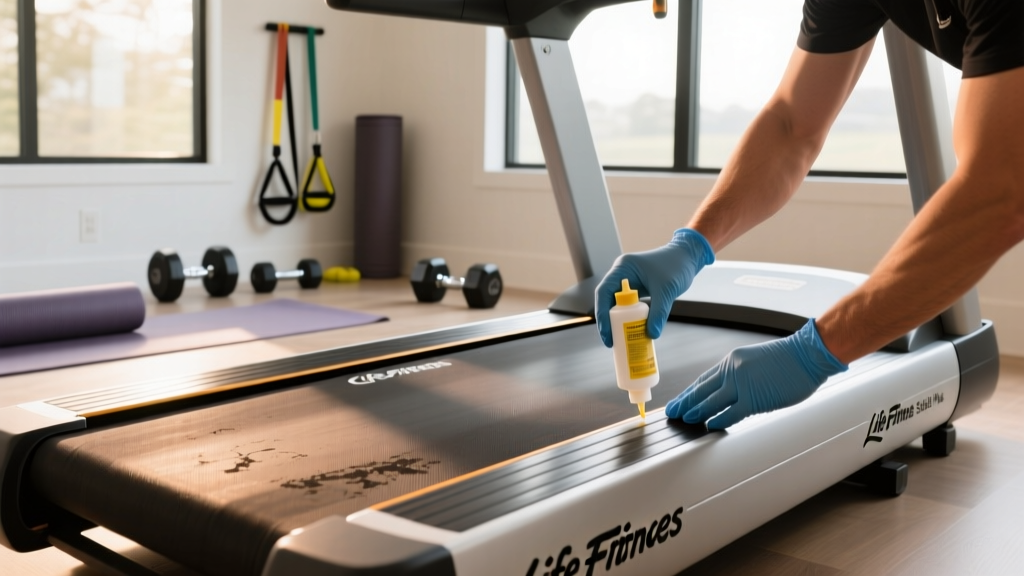
When the time comes to replace worn components, sourcing authentic NordicTrack treadmill parts is vital for preserving the machine's warranty and structural integrity. Here are the most common spatial and maintenance considerations for specific parts:
- Walking Belts and Decks (e.g., 22' x 60' Commercial Belts): Over time, friction degrades the walking belt and the wooden composite deck beneath it. Replacing a deck requires loosening the tension bolts, sliding the old deck out laterally, and sliding the new one in. If your treadmill is pushed flush against a side wall, this lateral extraction is impossible. Always maintain a 12-inch side clearance.
- Drive Motors and Motor Controllers: The 3.0 to 4.0 CHP motors found in 2026 NordicTrack models generate significant heat. If the motor hood is suffocated by a wall, the internal thermal sensor will trip, or worse, the motor controller board will fry. Replacement motor controllers (often costing between $150 and $250) are located directly beneath the hood. Adequate frontal clearance ensures proper airflow and easy diagnostic access.
- Incline Lift Motors: If your treadmill fails to elevate, the incline motor or the optical sensor may need replacement. Accessing the incline gear requires tilting the treadmill on its side. You must design your layout with enough central floor space to safely lay the machine on its side without striking drywall or adjacent equipment.
Power, Ventilation, and the 2026 Layout Flow
Beyond physical dimensions, spatial optimization must account for electrical and environmental infrastructure. Treadmills draw massive amperage, particularly during the initial startup surge or when a heavy user is running at a steep incline.
- Dedicated Circuits: Every commercial-grade treadmill (like the NordicTrack 2450 or 1750) requires a dedicated 20-amp circuit. Sharing a circuit with a space heater, air conditioner, or even a high-draw elliptical will result in tripped breakers. Plan your home gym layout so that the treadmill is within 6 feet of a dedicated 20-amp outlet to avoid using extension cords, which are a severe fire hazard and violate UL safety standards.
- Elliptical Power Needs: Most modern ellipticals, especially self-generating models or those with low-draw magnetic resistance, only require a standard 15-amp circuit. This makes them much more flexible for placement in older homes with limited electrical panel capacity.
- Climate Control and Sweat Zones: Treadmills generate more ambient heat and user sweat than ellipticals due to the higher impact and full-body engagement. Position your treadmill facing a window or a wall-mounted fan, ensuring the airflow does not blow directly onto the machine's electronic console, which can cause condensation damage to the PCB over time.
Final Verdict: Choosing Your Spatial Champion
If your home gym is a narrow space with standard ceilings and limited electrical capacity, the elliptical is the undisputed spatial champion. It offers a lower profile, minimal maintenance envelope, and forgiving power requirements. However, if you have a spacious basement or a dedicated bonus room with 20-amp wiring, the treadmill provides unmatched biomechanical transfer to outdoor sports. Just remember that buying a treadmill is not just about the floor it sits on; it is about designing a layout that accommodates the inevitable maintenance, ensuring you have the physical clearance to access and install genuine NordicTrack treadmill parts when the miles inevitably take their toll.
More gear to consider
All reviews
Stair Climber Setup: Elliptical vs Treadmill for Weight Loss
Rowing Technique & Buying Guide: The Treadmill Was Invented in 1818

ProForm GTS Crosswalk Treadmill: Elliptical vs Treadmill 2026 Trends

Under-Desk Treadmill Workout Office Value Analysis 2026

Setup Guide: Does Holding Onto the Treadmill Make a Difference?