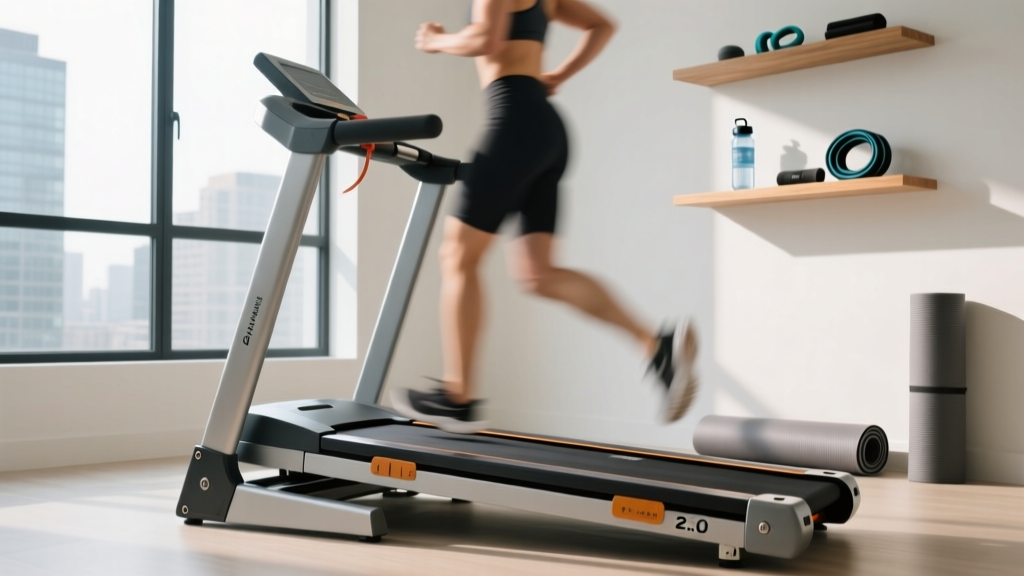
Small Space Folding Treadmill Review: 2.0 Incline on Treadmill Care
Discover how a 2.0 incline on treadmill models affects folding hinge wear. Read our small-space treadmill review and expert maintenance guide.

Living in a compact apartment or a small home no longer means sacrificing serious cardiovascular training. The latest generation of folding treadmills offers impressive biomechanical features, including adjustable gradients that mimic outdoor terrain. However, combining a space-saving folding hinge with an active incline motor introduces unique mechanical stresses. When you regularly set a 2.0 incline on treadmill models designed for small spaces, the physics of weight distribution and motor strain change dramatically compared to flat running.
In this comprehensive 2026 guide, we review the top folding treadmills for small spaces through the lens of long-term durability. More importantly, we break down the exact maintenance protocols required to keep the incline gears, folding hydraulics, and drive motors running smoothly for years.
The Unique Strain of Compact Folding Treadmills
According to Consumer Reports, the most common failure point in budget folding treadmills is not the main drive belt, but the incline lift mechanism and the deck folding hinge. Non-folding treadmills utilize a solid, welded steel base that absorbs the downward force of footstrikes. Folding models, by necessity, rely on a pivot point and a telescoping lift motor to adjust the deck angle.
When a user operates at a 2.0 incline on treadmill setups, their center of gravity shifts backward. This transfers up to 15% more impact force to the rear third of the deck—exactly where the folding hinge and the incline lift screw are mounted. Over hundreds of miles, this localized stress can cause micro-fractures in the deck, strip the incline gear teeth, or cause the hydraulic folding shock to lose pressure.
Top Small-Space Treadmills: A Longevity & Review Matrix
Not all folding treadmills are built to withstand continuous incline training. Below is our expert review of three popular compact models available in 2026, graded specifically on their mechanical resilience and ease of maintenance.
| Model (2026) | Motor & Deck Specs | Incline Mechanism | Price Range | Longevity Rating |
|---|---|---|---|---|
| Sole F63 | 3.0 CHP, 20" x 60" belt, 18mm deck | Heavy-duty steel lift screw, 15% max | $1,199 | 9.2 / 10 (Excellent) |
| Horizon 7.0 at | 3.0 CHP, 22" x 60" belt, 20mm deck | FeatherLight folding, 15% max | $999 | 8.5 / 10 (Very Good) |
| ProForm Carbon TL | 2.6 HP, 20" x 55" belt, 15mm deck | Standard push-rod, 10% max | $599 | 6.8 / 10 (Fair) |
The Sole F63 remains our top pick for users who frequently use incline settings. Its thicker 18mm phenolic deck resists the micro-flexing that plagues thinner decks, and its incline lift screw is easily accessible for annual greasing. The Horizon 7.0 at is a close second, offering a wider belt that is great for small spaces, though its proprietary folding shock requires professional replacement if it fails. The ProForm Carbon TL is a decent budget walking pad alternative, but its 15mm deck and smaller motor make it unsuitable for heavy, continuous incline running.
How a 2.0 Incline on Treadmill Setups Affects Motor & Deck Wear
Understanding the biomechanical and mechanical realities of incline training is crucial for preventative maintenance. Maintaining a steady 2.0 incline on treadmill machines built for small spaces triggers two specific wear patterns that owners must actively manage.
The Lift Motor: Failure Modes and Amperage Draw
The main drive motor (the one that turns the belt) and the incline lift motor (the one that raises the deck) are two separate entities. When you set a 2.0 incline, the main drive motor experiences an increased amperage draw—typically spiking by 1.5 to 2.5 extra amps to fight gravity. However, the real victim of neglect is the lift motor's gear assembly.
Most compact treadmills use a DC lift motor connected to a threaded steel worm gear, which turns a plastic drive nut to raise the deck. If this steel screw is not lubricated, the friction generates excessive heat and physical resistance. The lift motor will overwork, eventually stripping the teeth off the plastic drive nut. This results in a loud "clicking" sound when the treadmill tries to adjust its gradient, leading to a $150 to $250 repair bill. As noted by the experts at Sole Fitness, regular lubrication of the incline screw is the single most overlooked maintenance task in home cardio equipment.
⚠️ Warning Signs of Incline Motor Failure:- The deck stutters or moves in "jerks" rather than a smooth glide when changing gradients.
- A grinding or high-pitched whining noise emanates from the front motor cover during elevation.
- The treadmill console displays an "E07" or "Incline Error" code after attempting to calibrate.
Deck Flex and Belt Friction Physics
At a 2.0 incline, the user's footstrike lands harder on the posterior section of the belt. In small-space treadmills with thinner decks (15mm to 18mm), this causes the deck to bow slightly downward against the belt. This increased friction generates excess heat, which dries out the factory silicone lubricant much faster than flat running. If the belt dries out, the friction coefficient spikes, forcing the main drive motor to pull over 10 amps continuously, which will eventually fry the motor controller board.
Step-by-Step Maintenance Routine for Hinges and Incline Gears
To protect your investment and ensure your folding treadmill survives years of incline training, follow this exact maintenance schedule. You will need 100% pure silicone treadmill lubricant (never use WD-40 or petroleum-based oils), a tube of white lithium grease, and a standard socket wrench set.
- Lubricate the Belt and Deck (Every 150 Miles or 3 Months): Loosen the rear roller bolts exactly two full turns using an Allen wrench. Slide the silicone applicator tube under the belt to the center of the deck. Squeeze exactly 1 oz of 100% silicone fluid in a zig-zag pattern. Retighten the bolts and walk on the treadmill at 2.0 MPH for three minutes to distribute the oil.
- Grease the Incline Lift Screw (Annually): Unplug the machine. Remove the plastic motor hood (usually 4 to 6 Phillips-head screws). Locate the threaded steel incline screw near the front roller. Wipe away old, black debris with a microfiber cloth. Apply a generous bead of white lithium grease directly to the threads. Run the treadmill's manual incline calibration mode to work the grease into the plastic drive nut.
- Inspect the Folding Hinge and Gas Shock (Every 6 Months): Fold and unfold the deck five times. Listen for metallic popping. If your model uses a hydraulic gas shock to assist in lifting the heavy deck, check the cylinder for oily residue. A leaking shock means the internal seals have blown, and the piston must be replaced to prevent the deck from slamming down unexpectedly.
- Check Belt Tension and Alignment: With the machine off, lift the edge of the walking belt in the center. It should have exactly 2 to 3 inches of deflection (lift). If it is tighter than 2 inches, the excess friction will destroy the incline motor's ability to push the deck upward against the tightened belt's resistance.
Final Verdict on Space-Saving Cardio Longevity
Folding treadmills are engineering marvels that make home fitness accessible, but they require a more rigorous maintenance mindset than their commercial gym counterparts. The physical realities of utilizing a 2.0 incline on treadmill decks in compact spaces mean that lift gears, hinges, and rear-deck friction points are under constant, magnified stress.
By choosing a structurally sound model like the Sole F63 or Horizon 7.0 at, and committing to a strict regimen of silicone belt lubrication and white lithium gear greasing, you can easily extend the lifespan of your machine from a mere three years to well over a decade. Treat your folding hinge and incline motor with the same respect you give your drive belt, and your small-space gym will serve you flawlessly for thousands of miles.
More gear to consider
All reviews
ProForm 380 E Treadmill Maintenance & Folding Space-Saver Review
Treadmill Boobs & Noise: Quiet Cardio Comparison

NordicTrack T Series 10 Treadmill Review & Compact Cardio Picks 2026

Stair Climber Troubleshooting: Is a Walking Treadmill Worth It?

Vision T600 Treadmill vs Portable Cardio: 2026 Market Trends
