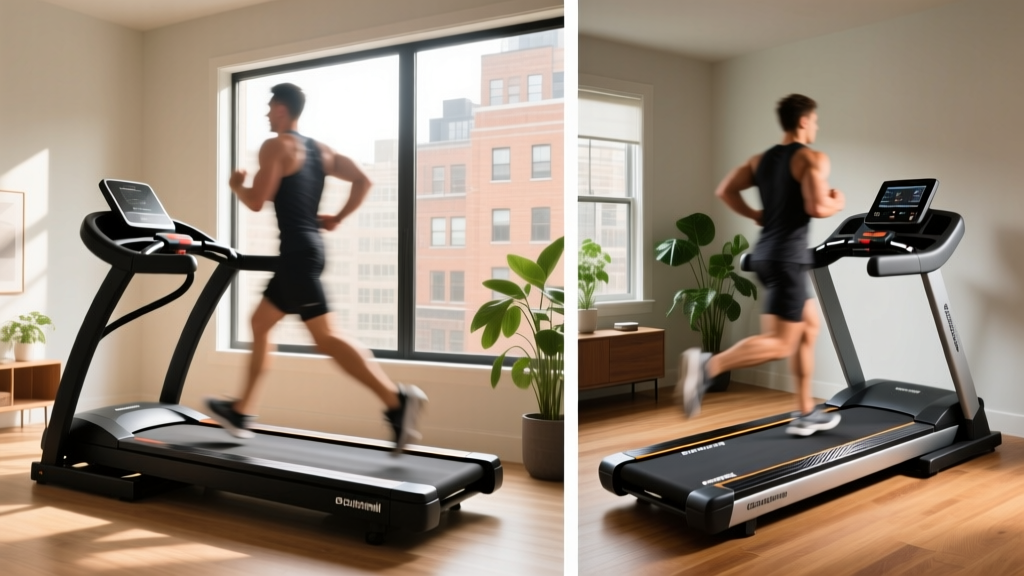
Elliptical vs Treadmill: Designing an Orange Theory Treadmill Space
Compare ellipticals and treadmills for home cardio through a spatial design lens. Learn how to replicate an Orange Theory treadmill layout at home.

The Studio-at-Home Dilemma: Chasing the Orange Theory Treadmill Vibe
When designing a high-performance home gym, many fitness enthusiasts aim to replicate the unparalleled motivation of a boutique studio class. Specifically, the quest to recreate the signature orange theory treadmill layout—a setup characterized by stadium-style rows, mirrored walls, and high-intensity interval training (HIIT) zones—has become a major trend in residential fitness design. However, translating this commercial studio aesthetic into a standard spare bedroom, basement, or garage requires a rigorous approach to space optimization. The fundamental debate often begins with a critical choice: elliptical vs treadmill for home cardio. While both machines deliver exceptional cardiovascular benefits, their spatial footprints, safety clearances, and environmental requirements differ drastically. According to the American Heart Association, achieving the recommended 150 minutes of moderate-to-vigorous aerobic activity per week is entirely possible on either machine, but your floorplan will ultimately dictate which one fits your studio vision.
Spatial Footprint: Elliptical vs. Treadmill Dimensions
Before purchasing equipment, you must map the exact volumetric footprint of the machine. Commercial studios utilize heavy-duty models like the FreeMotion 1120, which demand significant real estate. For home use in 2026, buyers typically look at premium consumer models. Below is a spatial comparison matrix of top-tier home cardio machines to help you plan your layout.
| Machine Type | Model Example (2026) | Physical Footprint (L x W) | Required Safety Clearance | Max Ceiling Height Req. |
|---|---|---|---|---|
| Treadmill | Sole F80 / NordicTrack 1750 | 82" x 35" | 39" rear, 24" sides | User Height + 18" |
| Elliptical | Sole E95 / NordicTrack FS14i | 82" x 33" | 24" all sides | User Height + 15" |
| Treadmill (Compact/Folding) | ProForm Smart Pro 9000 | 76" x 32" | 39" rear, 24" sides | User Height + 15" |
Chasing the Studio Vibe: The Treadmill Layout
The hallmark of the orange theory treadmill experience is the 'studio row.' In a commercial setting, treadmills are spaced exactly 48 inches apart from center-console to center-console, allowing users to sprint without feeling claustrophobic. To replicate this at home, you are likely installing one or two premium treadmills. If you choose a treadmill like the NordicTrack Commercial 1750 (priced around $2,499), you must account for the incline mechanics. When elevated to a 15% grade, the rear of the deck remains on the floor, but the front console rises significantly.
Mirror Placement and Visual Psychology
Studio layouts rely heavily on mirrors not just for form-checking, but for spatial expansion. If your treadmill faces a wall, mounting a large, shatterproof acrylic mirror at eye level (starting 48 inches from the floor to account for the console) will visually double your room's depth. However, you must ensure the treadmill's console does not block your line of sight when seated or walking at an incline. Measure the console height at max incline before purchasing your mirror glass.
Electrical Routing for a Clean Aesthetic
Nothing ruins a high-end studio aesthetic like a tangled power cord. Treadmills with 4.0 Continuous Horsepower (CHP) motors draw significant amperage, especially during the acceleration phases of HIIT sprints. To achieve a clean layout, hire an electrician to install a dedicated 20-amp circuit with a recessed floor box or a wall outlet placed exactly 18 inches above the floor behind the machine's motor hood. This allows the cord to drop straight down, eliminating trip hazards and maintaining the sleek lines of your workout zone.
The Elliptical Alternative: Vertical Space and Swing Radius
If your designated cardio zone features low ceilings (such as a basement with HVAC ductwork) or narrow width constraints, the elliptical emerges as a formidable alternative. According to the Mayo Clinic, ellipticals offer a low-impact, closed-chain kinetic movement that drastically reduces stress on the knees, hips, and lower back compared to the repetitive ground-reaction forces of treadmill running.
The Lateral Clearance Factor
While an elliptical like the Sole E95 ($1,399) has a similar length to a treadmill, its spatial challenge lies in the swing radius. The moving arm levers require lateral clearance. If you plan to place the elliptical flush against a wall, you must leave at least 18 inches of lateral space on both sides to prevent the handles from scraping the drywall or wainscoting during high-resistance pushes. Furthermore, the user's center of gravity elevates during the stride cycle. As noted by Harvard Health Publishing, the elliptical engages both upper and lower body musculature, meaning your spatial design must accommodate a full range of arm motion without striking overhead lighting fixtures or ceiling fans.
Designing the Environmental Ecosystem
Replicating a boutique studio isn't just about the machine; it's about the micro-climate and flooring. Both treadmills and ellipticals generate massive amounts of kinetic energy and user sweat, which must be managed through intelligent interior design.
- Subfloor Protection: Commercial studios use 3/8-inch vulcanized rubber flooring. For a home gym, lay down interlocking 3/8" rubber tiles over a moisture barrier. This absorbs the acoustic shock of a 4.0 CHP treadmill motor and prevents sweat from warping hardwood subfloors.
- Targeted Airflow: Studio treadmills are positioned directly beneath high-velocity HVAC vents. In a home layout, supplement your central air with a wall-mounted or floor-based air circulator (like a Vornado Whole Room Circulator) positioned at a 45-degree angle, 4 feet in front of the machine. This mimics the studio wind-tunnel effect, crucial for thermoregulation during Zone 5 heart-rate intervals.
- Acoustic Dampening: Treadmill belt slap can transmit low-frequency vibrations through floor joists. If your studio layout is on a second floor, place a specialized equipment isolation mat (specifically designed for vibration dampening, not just sweat protection) beneath the treadmill's front motor housing.
Decision Framework: Which Machine Wins Your Floorplan?
Use this rapid spatial audit to finalize your equipment choice for your home studio layout:
Choose the Treadmill if: You have a minimum room depth of 14 feet (82" machine + 39" ASTM safety clearance + 36" walking path). You have standard 8-foot or 9-foot ceilings, and your primary fitness goal involves replicating the exact sprint-and-incline intervals of an orange theory treadmill class. You can install a dedicated 20-amp electrical circuit.
Choose the Elliptical if: Your room depth is under 12 feet, or you are designing a layout in a basement with low-hanging obstructions (ducts, beams). You require a machine that can be positioned closer to a rear wall without violating safety codes, and you prioritize joint preservation while still demanding a high-caloric-burn, full-body studio experience.
Final Thoughts on Home Studio Optimization
Ultimately, the debate between an elliptical and a treadmill for home cardio is won or lost on the blueprint. The orange theory treadmill layout is a masterpiece of motivational spatial design, but it demands strict adherence to safety clearances, electrical foresight, and volumetric planning. By accurately measuring your swing radius, ceiling heights, and rear egress zones, you can build a home cardio sanctuary that rivals any commercial franchise, ensuring your fitness environment is as optimized as your workout regimen.
More gear to consider
All reviews
Sole F63 Treadmill Assembly: Small Space Folding Review

Incline vs Speed Treadmill: A Beginner's Walking Pad Comparison
What's Better Walking Outside or Treadmill? The Rowing Machine Setup
Bowflex T6 Treadmill vs Stair Climber: Home Guide

Stationary Bike Types & Gold's Gym Trainer 410 Treadmill Review