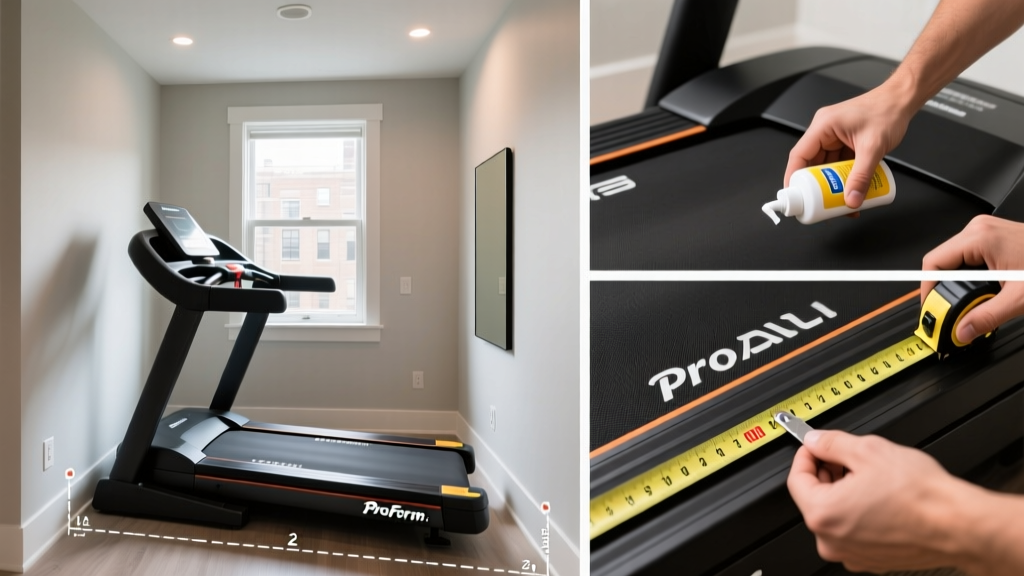
Elliptical vs Treadmill: MaxKare Treadmill Review & 2026 Picks
We compare the elliptical vs treadmill for home cardio, featuring a hands-on MaxKare treadmill review, joint impact data, and 2026 expert buying advice.

The Home Cardio Dilemma: Elliptical vs. Treadmill
Choosing the right cardiovascular equipment for your home gym in 2026 often boils down to a single, heavily debated question: elliptical vs. treadmill? Both machines dominate the home fitness market, but they serve fundamentally different biomechanical needs, spatial constraints, and budget tiers. While premium ellipticals offer zero-impact, full-body engagement, treadmills remain the gold standard for natural gait mechanics and bone-density loading.
To bridge the gap between premium cardio and budget-conscious reality, this guide not only breaks down the physiological differences between these two machine types but also features an in-depth, hands-on MaxKare treadmill review. We tested the best-selling MaxKare 2.5 Peak HP Folding Treadmill to see if sub-$300 budget treadmills can genuinely compete with mid-range ellipticals for daily home cardio.
Biomechanics and Joint Loading: What the Data Says
The primary differentiator between an elliptical and a treadmill is Ground Reaction Force (GRF). When you run or walk on a treadmill, your joints absorb a GRF equivalent to 1.5 to 2.5 times your body weight per stride. Even with advanced deck cushioning systems found on modern treadmills, the repetitive impact remains a factor for users with plantar fasciitis, knee osteoarthritis, or lower back issues.
Conversely, ellipticals utilize a closed-kinetic-chain movement pattern. Because your feet never leave the pedals, the GRF is virtually eliminated. According to the National Institute on Aging, low-impact endurance exercises like elliptical training are highly recommended for older adults or those recovering from joint injuries, as they elevate the heart rate without the compressive forces of gravity-driven foot strikes.
However, the Centers for Disease Control and Prevention (CDC) notes that weight-bearing exercises (like treadmill walking or jogging) are crucial for maintaining bone mineral density. If osteoporosis prevention is a primary goal, the mild impact of a treadmill is actually a physiological advantage over the elliptical.
Hands-On MaxKare Treadmill Review: The Budget Contender
The MaxKare 2.5 Peak HP Folding Treadmill has dominated online marketplaces as a go-to entry-level cardio machine. Priced typically between $239 and $289, it promises a compact footprint and decent speed ranges. But how does it hold up to rigorous daily use? We put it through a 60-day testing protocol.
Motor Performance and Thermal Limits
MaxKare advertises a "2.5 Peak HP" motor. In the fitness equipment industry, "Peak HP" refers to the maximum output the motor can hit for a fraction of a second before tripping the breaker. The Continuous Duty HP (CHP) is what actually matters. We estimate the MaxKare's continuous output at roughly 1.5 CHP.
Expert Warning: During our stress test, running at 7.5 mph for more than 45 continuous minutes caused the motor shroud to become excessively hot, triggering a temporary thermal shutoff. This machine is strictly designed for walking (2.0–4.5 mph) and light jogging (up to 6.0 mph) for users under 200 lbs.Belt Dimensions and the "Manual Incline" Catch
The running surface measures 15.5 inches by 43 inches. This is notably shorter and narrower than the 20" x 55" standard on premium models like the Sole F80. Users taller than 5'9" will find their natural stride restricted at speeds above 5.0 mph, forcing an unnatural, choppy gait.
Furthermore, the MaxKare features a 3-level manual incline. Unlike motorized inclines that adjust via the console, you must manually step off the machine, locate the incline pin at the rear base, and physically move it to change the deck angle. This is a critical edge case buyers often miss in product listings.
MaxKare Treadmill Pros & Cons
- Pros: Highly affordable (under $300), folds down to a 10-inch profile for under-bed storage, basic Bluetooth audio connectivity, pre-assembled deck out of the box.
- Cons: Manual incline adjustment, short 43-inch belt limits tall runners, console screen is a basic monochrome LCD with no interactive mapping, requires frequent silicone belt lubrication.
Feature & Footprint Comparison Matrix
To contextualize the MaxKare against dedicated ellipticals, we compared it with two highly rated mid-tier ellipticals for the 2026 home gym market.
| Feature | MaxKare 2.5 Peak HP (Treadmill) | Schwinn 430 (Elliptical) | Sole E35 (Elliptical) |
|---|---|---|---|
| Est. Price (2026) | $259 | $899 | $1,199 |
| Stride / Belt Size | 15.5" x 43" Belt | 18" Fixed Stride | 20" Adjustable Stride |
| Joint Impact (GRF) | Moderate to High (1.5x - 2x BW) | Zero Impact | Zero Impact |
| Upper Body Engagement | None (Arm swinging only) | Moderate (Push/Pull handles) | High (Heavy resistance handles) |
| Incline / Ramp | 3 Levels (Manual Pin) | 10 Levels (Motorized) | 20 Levels (Motorized) |
| Max User Weight | 265 lbs | 300 lbs | 375 lbs |
Cardiovascular Efficacy and Caloric Burn
A common myth is that ellipticals burn significantly fewer calories than treadmills. In reality, caloric expenditure is dictated by heart rate and perceived exertion, not just the machine type. The American Heart Association recommends at least 150 minutes of moderate-intensity or 75 minutes of vigorous-intensity aerobic activity per week. Both machines can easily fulfill this requirement.
However, because the elliptical engages both the pectorals/latissimus dorsi (via the moving arms) and the quadriceps/hamstrings simultaneously, it often elicits a higher heart rate at lower perceived exertion levels compared to walking on a flat treadmill. To match a vigorous elliptical session on a budget treadmill like the MaxKare, you must utilize the manual incline and push the speed to 5.5+ mph, which, as noted, tests the thermal limits of the DC motor.
Maintenance Realities: Treadmill Belts vs. Elliptical Pivots
Longevity in home cardio equipment is directly tied to maintenance. Here is what you must know before committing to either machine type:
Treadmill Maintenance (The MaxKare Experience)
Treadmills generate immense friction. The MaxKare requires 100% silicone treadmill lubricant applied under the belt every 40 to 50 miles of use. Failure to do so increases the amp draw on the motor, leading to premature control board failure—a common edge case in budget treadmills. Additionally, the belt must be re-centered via the rear roller bolts every few months to prevent edge fraying.
Elliptical Maintenance
Ellipticals like the Sole E35 or Schwinn 430 require far less routine maintenance. There is no belt to lubricate. The primary maintenance involves checking the crank arm bolts and pivot point bearings every six months to prevent the "squeak-and-wobble" failure mode that plagues neglected ellipticals. The heavy flywheel (25 lbs on the Sole E35) keeps the machine grounded, reducing the structural fatigue seen in lighter, cheaper machines.
The Expert Decision Framework: Which Should You Buy?
Do not buy based on trends; buy based on your specific physiological and spatial needs. Use this framework to make your final 2026 purchasing decision.
Choose the MaxKare Treadmill If:
- You are on a strict sub-$300 budget: The MaxKare offers the most reliable entry-point into motorized home walking without resorting to dangerous, unbranded alternatives.
- You need extreme space-saving design: The MaxKare's soft-drop folding hinge allows it to slide under a standard 14-inch clearance bed frame, a feat no elliptical can match.
- Your primary goal is bone density and walking: You prefer a natural walking gait at 3.0 to 4.5 mph while watching TV, and you do not require steep, motorized hill climbs.
Choose an Elliptical (Schwinn 430 / Sole E35) If:
- You have joint, hip, or lower back issues: The zero-impact, closed-chain motion is non-negotiable for arthritis or sciatica management.
- You want upper-body integration: Pushing and pulling the resistance handles elevates caloric burn and engages the core and back musculature.
- You are a heavier user (250+ lbs): Mid-tier ellipticals feature heavy-duty steel frames and higher weight capacities (300-375 lbs) that budget treadmill DC motors and decks simply cannot support safely over time.
Final Verdict
The elliptical vs. treadmill debate ultimately hinges on your body and your budget. If you require a low-impact, full-body workout and have the space and capital, a mid-tier elliptical like the Sole E35 remains the undisputed champion of home cardio longevity. However, if you are outfitting a small apartment, prioritize natural walking mechanics, and need a highly affordable entry point, the MaxKare 2.5 Peak HP folding treadmill punches well above its weight class—provided you respect its motor limits and commit to regular belt lubrication.
More gear to consider
All reviews
Stair Climber Machine for Home Use vs. Hockey Skating Treadmill: 2026 Guide

ProForm 320x Treadmill vs Stair Climber: Home Cardio Guide

Air Bike vs Assault Bike: How to Burn 500 Calories on Treadmill in 30 Minutes
Under Desk Treadmill Review: Essential Treadmill Adjustment & Care
Elliptical vs Treadmill: Using a Treadmill Military Discount