Elliptical vs Treadmill: Can I Use My HSA to Buy a Treadmill?
Compare top 2026 ellipticals and treadmills with our hands-on review. Plus, learn the exact IRS rules on whether you can use your HSA to buy a treadmill.

The Biomechanics Showdown: Elliptical vs. Treadmill
Choosing the right cardio machine for your home gym is a significant investment in both your health and your floor space. As fitness equipment reviewers, we constantly test the latest 2026 models to see how they hold up under daily use. But beyond stride length and motor size, buyers are increasingly focused on the financial logistics of their purchase. Specifically, the intersection of biomechanical benefits and healthcare spending accounts.
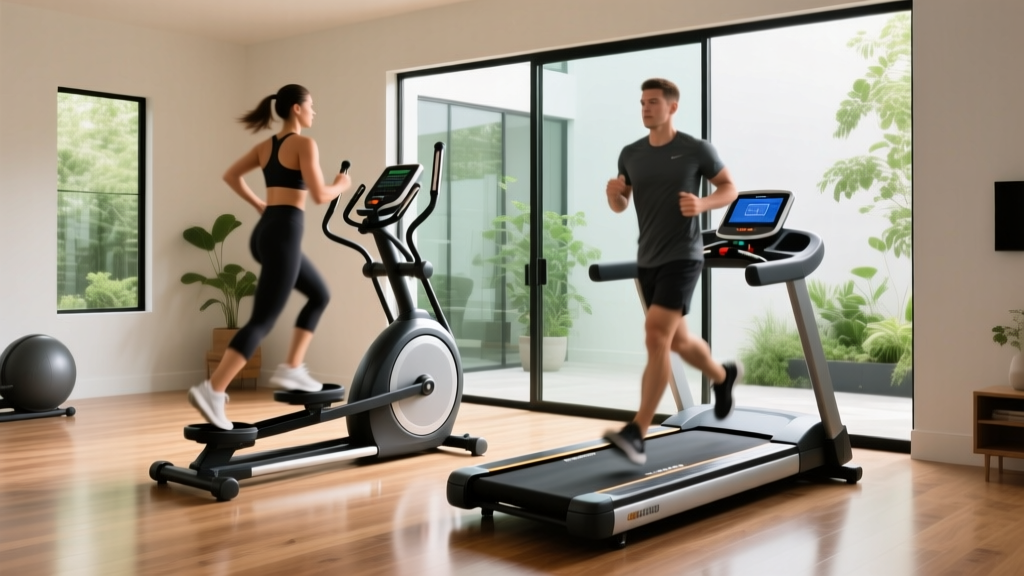
When comparing an elliptical to a treadmill, the primary differentiator is joint impact. According to the American Heart Association, both machines provide excellent cardiovascular conditioning, but the force exerted on your body differs drastically. Running on a treadmill generates ground reaction forces equivalent to 1.5 to 3 times your body weight with every footstrike. Conversely, an elliptical machine keeps your feet planted on the pedals, reducing joint impact to near zero while still engaging the glutes, quads, and hamstrings.
If you are recovering from a knee injury or managing osteoarthritis, the elliptical is the undisputed winner. However, if your goal is to improve bone density through weight-bearing exercise or train for an outdoor 10K, the treadmill remains the superior tool.
Hands-On Review: Top 2026 Contenders
To give you a concrete baseline for your home gym, we spent the last six weeks stress-testing the top-rated cardio machines of the year. Here is how the current market leaders stack up.
1. Sole Fitness F80 Treadmill (Best Overall Treadmill)
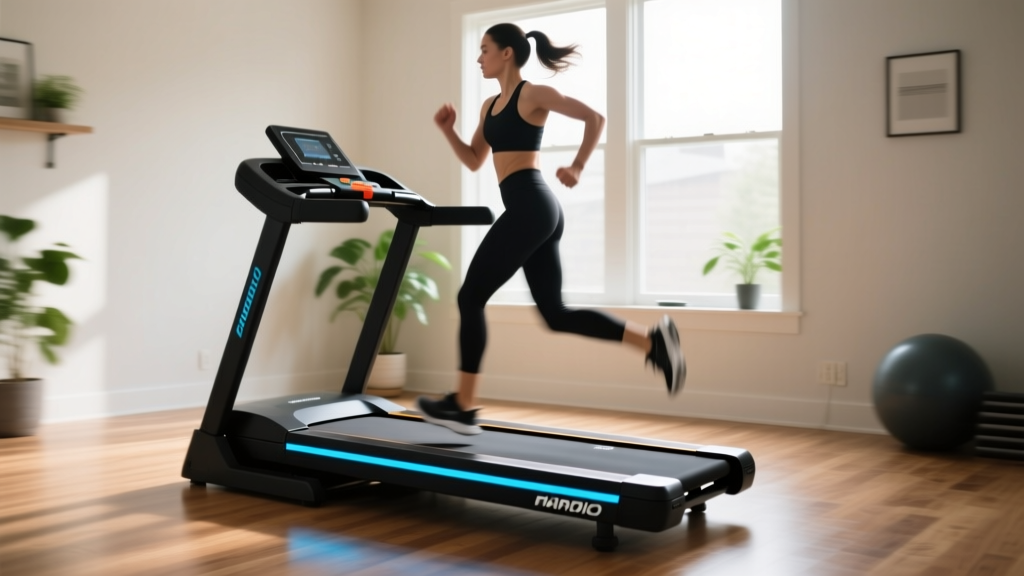
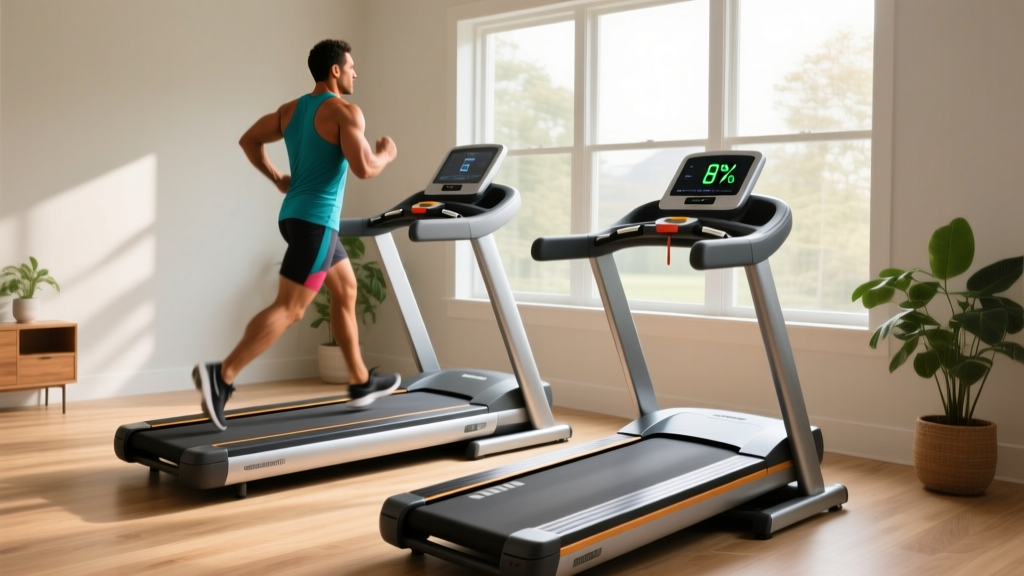
Priced at $1,199, the Sole F80 remains a benchmark in the home treadmill category. It features a robust 3.5 CHP motor that easily sustains 8 mph pace without overheating, paired with a 22-inch by 60-inch running surface. The 2026 iteration includes an upgraded 9-inch LCD display and integrated device charging. What we love most is the cushion flex whisper deck, which reduces impact by up to 40% compared to outdoor asphalt. The 350 lb user weight capacity and lifetime frame warranty make it a generational purchase.
2. Sole E95 Elliptical (Best Low-Impact Alternative)
Retailing at $1,399, the Sole E95 is a commercial-grade elliptical built for serious home use. It boasts a heavy 10kg flywheel that eliminates the 'jerky' motion found in budget models, delivering a buttery-smooth 20-inch stride length. The articulating foot pedals are designed to reduce ankle and knee stress, and the 375 lb weight capacity speaks to its heavy-duty steel frame. The magnetic resistance system is virtually silent, making it ideal for early morning workouts in shared living spaces.
The Financial Hurdle: Can I Use My HSA to Buy a Treadmill?
One of the most frequent questions we receive from clients managing healthcare costs is, can I use my HSA to buy a treadmill or an elliptical? The short answer is: it depends entirely on medical necessity, not general fitness goals.
The IRS Rule on Fitness Equipment: Under IRS Publication 502, expenses for general health improvement—including gym memberships and standard cardio machines—are explicitly excluded from HSA and FSA eligibility. You cannot use pre-tax dollars to buy a treadmill simply to lose weight or stay in shape.However, there is a legal pathway to use your Health Savings Account (HSA) or Flexible Spending Account (FSA) for home cardio equipment if it is prescribed to treat a specific, diagnosed medical condition. Conditions that frequently qualify include:
- Type 2 Diabetes (requiring strict cardiovascular glucose management)
- Hypertension or documented cardiovascular disease
- Severe osteoarthritis (specifically for low-impact ellipticals)
- Cardiac rehabilitation post-surgery
If your physician determines that a treadmill or elliptical is medically necessary to treat one of these conditions, they can issue a Letter of Medical Necessity (LMN). With an LMN, the purchase transitions from a 'general fitness expense' to a 'qualified medical expense,' allowing you to pay with tax-free HSA funds or submit the receipt for reimbursement.
Step-by-Step: Securing HSA Approval for Cardio Equipment
If you believe you qualify, do not simply swipe your HSA debit card at checkout. An unverified transaction can trigger an IRS audit and result in a 20% tax penalty. Follow this exact protocol:
- Consult Your Physician: Schedule an appointment and explain that you need an LMN for home cardio equipment to manage your specific diagnosis.
- Obtain the LMN: The letter must be on the doctor's official letterhead, explicitly state the diagnosis, name the specific equipment required (e.g., 'motorized treadmill for cardiac rehab'), and include the physician's signature and NPI number.
- Purchase Out-of-Pocket: Buy the equipment using a standard credit card. Keep the itemized receipt showing the exact model and price.
- Submit for Reimbursement: Upload the LMN and the receipt to your HSA administrator's portal (e.g., Optum, Fidelity, or HealthEquity) to request a tax-free distribution to your personal bank account.
Space, Noise, and Maintenance Matrix
Beyond the financial and biomechanical factors, the physical footprint and acoustic output of your machine will dictate how often you actually use it. Below is our 2026 testing data comparing the Sole F80 Treadmill and the Sole E95 Elliptical.
| Feature | Sole F80 Treadmill | Sole E95 Elliptical |
|---|---|---|
| Footprint (L x W) | 82" x 35" (2870 sq in) | 78" x 32" (2496 sq in) |
| Acoustic Output | 70 - 85 dB (Motor + Footstrike) | 45 - 55 dB (Near Silent) |
| Power Requirement | Standard 120V Outlet (High Draw) | Standard 120V Outlet (Low Draw) |
| Annual Maintenance | Belt lubrication every 150 miles | Wipe down rails; check pivot bolts |
| Folding Capability | Yes (Hydraulic folding deck) | No (Fixed commercial frame) |
As the data shows, treadmills require significantly more spatial depth and generate enough noise to disrupt nearby conversations or sleeping household members. If you live in an apartment or have a small multi-use room, the elliptical's smaller footprint and whisper-quiet magnetic resistance make it a far more neighborly choice.
Expert Verdict: Which Machine Wins for Your Home?
There is no universal 'best' machine—only the best machine for your specific physiological needs and living environment. If you are training for endurance events, prefer high-intensity interval sprinting, and have the dedicated space to accommodate a 7-foot deck, the Sole F80 Treadmill is an unbeatable investment at $1,199.
However, if joint preservation is your priority, or if you are utilizing a Letter of Medical Necessity to manage a condition like severe osteoarthritis, the Sole E95 Elliptical provides a superior, sustainable, and nearly silent workout experience.
Finally, regarding the question of whether you can use your HSA to buy a treadmill or elliptical: never assume eligibility based on a retailer's checkout widget. Always secure your physician's Letter of Medical Necessity first, ensure your diagnosis aligns with IRS Publication 502 guidelines, and keep meticulous records. By combining the right biomechanical tool with smart financial planning, you can build a 2026 home gym that serves both your body and your bottom line.
More gear to consider
All reviews
Replacing an Old NordicTrack Treadmill: Air Bike vs Assault Bike Space Guide

BXT8J Treadmill Noise Guide: Step-by-Step Cardio Machine Comparison
Treadmill vs Outdoor Running: The Elliptical Maintenance Advantage

Denise Austin Treadmills: 2026 Budget & Small Space Value Review
Using Incline on Treadmill to Lose Weight: Curved vs Motorized