
Elliptical vs Treadmill Care: What Weslo Treadmill Reviews Teach Us
Compare elliptical vs treadmill maintenance and longevity. We analyze Weslo treadmill reviews to reveal essential care tips for your home cardio gear.

The True Cost of Home Cardio: Beyond the Purchase Price
When shoppers debate the merits of an elliptical vs treadmill for home cardio, the conversation almost exclusively revolves around stride length, screen interactivity, and joint impact. However, as fitness equipment technicians and long-term reviewers, we know that the real differentiator between these two cardio giants emerges in year three of ownership. The battle isn't just about calorie burn; it is about mechanical longevity, friction management, and maintenance overhead.
To understand the real-world degradation of home cardio machines, we don't just look at flagship $3,000 models. We look at high-volume, budget-to-mid-tier user feedback. Specifically, analyzing Weslo treadmill reviews provides a masterclass in how entry-level and mid-range treadmills fail when maintenance is neglected, offering a stark contrast to the mechanical wear patterns of standard ellipticals. Here is your definitive, technician-level guide to maintaining both machines for maximum longevity.
The Mechanical Reality: Friction vs. Joint Stress
Treadmills and ellipticals operate on fundamentally different mechanical principles, which dictates their unique failure modes.
- Treadmills (The Friction Battle): A treadmill is essentially a high-friction conveyor belt driven by an electric motor. The primary enemies are heat, dust, and belt-to-deck friction. If friction increases, the motor works harder, draws more amperage, and eventually triggers a thermal shutdown or burns out the drive board.
- Ellipticals (The Joint Stress Battle): Ellipticals rely on a network of pivot points, bearings, and a heavy flywheel. There is minimal surface friction, but immense mechanical stress on the joints. The primary enemies are bearing degradation, metal-on-metal wear, and drive-belt stretching.
What Weslo Treadmill Reviews Reveal About Motor and Belt Wear
Weslo, an ICON Health & Fitness brand, produces some of the most popular budget treadmills on the market, such as the Cadence G 5.9. When you dig deep into Weslo treadmill reviews, a recurring complaint emerges: "The belt stutters, slips, or the machine just shuts off mid-run."
While users often blame the manufacturer for a "weak motor," the reality is usually a failure to manage deck friction. Budget treadmills typically feature 2.25 to 2.5 HP continuous-duty motors. These motors have very little thermal headroom. When the silicone belt lubricant dries out, the coefficient of friction between the belt and the wooden/MDF deck spikes.
Technician Insight: The Amp-Draw Test
Don't wait for your treadmill to stutter. You can measure belt friction using a multimeter with an AC amp clamp.
- Unplug the treadmill and remove the motor hood.
- Clamp the multimeter around one of the main motor wires.
- Run the treadmill at 3.0 MPH with no user on it. A healthy belt should draw between 2 to 4 Amps.
- Have a 150 lb user walk at 3.0 MPH. The draw should remain under 10 to 12 Amps.
- The Verdict: If the amp draw spikes above 15 Amps under load, your belt and deck are starving for lubrication, or the deck is permanently warped and requires replacement.
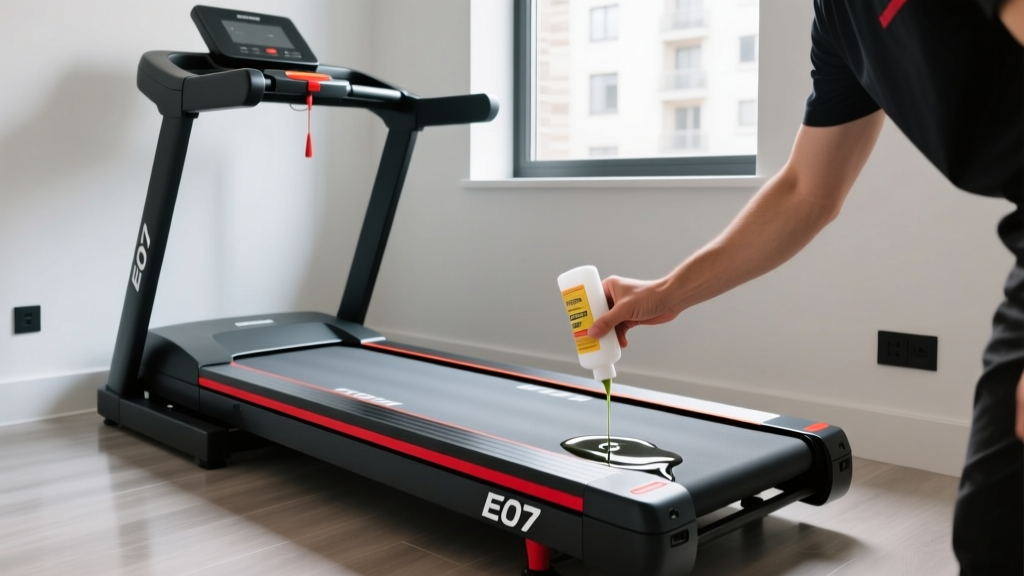
To prevent the premature motor death frequently cited in budget treadmill reviews, you must apply 100% pure silicone treadmill lubricant (never WD-40 or petroleum-based oils, which destroy the belt backing) every 3 months or every 150 miles of use.
Elliptical Longevity: Pivot Points and Bearing Maintenance
Conversely, if you opt for an elliptical like the Sole E35 or NordicTrack FS14i, you eliminate the motor-friction problem but introduce the pivot-point problem. According to biomechanical analyses by the Mayo Clinic, ellipticals provide excellent low-impact cardio, but the physical forces transferred through the pedal arms into the machine's chassis are immense.
The most common elliptical failure is a rhythmic squeaking or grinding noise originating from the pedal arm bearings. Many owners make the fatal mistake of spraying aerosol lubricants onto the joints. This attracts microscopic dust, creating an abrasive paste that destroys the needle bearings inside the pivot joints within months.
Proper Elliptical Joint Care Protocol
- Identify the Grease Type: Check your manual. Most modern ellipticals require PTFE (Teflon) grease or white lithium grease, not liquid oils.
- Clean Before Lubricating: Use a microfiber cloth and a mild degreaser to wipe away old, blackened grease from the pivot joints and the flywheel track.
- Apply Sparingly: Apply a pea-sized amount of PTFE grease directly into the bearing housing. Over-greasing will cause drips that ruin your flooring and attract more debris.
- Check the Drive Belt: Once a year, remove the side shroud and check the ribbed drive belt connecting the crank to the flywheel. If it shows signs of fraying or slipping, it needs tension adjustment or replacement (a $25 part that saves a $400 service call).
The Ultimate Home Cardio Maintenance Matrix
To help you decide which machine fits your lifestyle—and your willingness to perform upkeep—review this maintenance matrix. Data compiled from industry repair standards at Treadmill Doctor and manufacturer service guidelines.
| Maintenance Task | Treadmill | Elliptical |
|---|---|---|
| Weekly | Wipe down console and handrails to prevent sweat corrosion on electronic contacts. | Wipe down moving arms and pedal tracks to remove dust and pet hair. |
| Monthly | Inspect belt alignment. Adjust rear roller bolts (quarter-turn) if belt drifts left or right. | Check all chassis bolts. The harmonic vibration of ellipticals loosens frame bolts rapidly. |
| Quarterly | Apply 100% silicone lubricant under the walking belt. Vacuum under the motor hood. | Inspect pivot joints for play. Re-apply PTFE grease to the flywheel track if squeaking begins. |
| Annually | Perform the Amp-Draw test. Inspect deck for deep grooves. Check power cord for fraying. | Inspect the internal drive belt for tension and fraying. Check pedal arm bearings for lateral play. |
Environmental Factors: The Silent Machine Killers
Whether you choose an elliptical or a treadmill, your home environment dictates its lifespan. Two critical factors are often ignored until a catastrophic failure occurs:
1. Floor Leveling and Belt Drift
Treadmills are incredibly sensitive to uneven floors. If your home gym floor has even a 2-degree lateral tilt, gravity will constantly pull the walking belt toward the lower side. The motor and tracking bolts will fight this lateral force continuously, leading to frayed belt edges and premature roller bearing failure. Always use a machinist's level on the treadmill deck and adjust the rear leveling feet until perfectly flat.
2. The Dust and Sweat Corrosion Loop
Human sweat is highly saline and corrosive. On ellipticals, sweat drips directly onto the lower pivot joints and the magnetic resistance eddy-brake assembly, causing rust that seizes the moving parts. On treadmills, dust mixes with belt lubricant to form a black sludge that acts like sandpaper against the deck.
Critical Warning: Never place your cardio machine directly on a thick, plush carpet. Carpets trap heat, blocking the treadmill's motor cooling fan, and restrict the airflow required to keep the internal electronics below their 104°F (40°C) thermal threshold. Always use a dense, non-porous PVC equipment mat.
Repair Costs and Expected Lifespans: The Financial Verdict
When evaluating the elliptical vs treadmill debate from a purely financial and longevity standpoint, the repair costs tell a definitive story. Here is what you can expect to pay for out-of-warranty repairs in 2026:
- Treadmill Motor Replacement: $350 - $600 (Plus $150+ for labor)
- Treadmill Belt & Deck Combo: $150 - $250
- Treadmill Control Board: $200 - $400
- Elliptical Pivot Bearing Kit: $40 - $85 (DIY friendly)
- Elliptical Drive Belt: $25 - $50
- Elliptical Console/Alternator: $150 - $300
Because treadmills rely on high-voltage motors and high-friction surfaces, their catastrophic failure points are significantly more expensive to rectify. An elliptical, lacking a high-voltage drive motor (using instead a simple magnetic brake and a small alternator for console power), generally suffers from cheaper, more localized mechanical wear.
Final Thoughts: Matching the Machine to Your Maintenance Willingness
If you are willing to commit to a strict quarterly lubrication schedule, regularly vacuum the motor compartment, and monitor your amp-draw, a treadmill remains an unparalleled tool for bone-density building and high-intensity interval training. The insights gleaned from budget Weslo treadmill reviews aren't a reason to avoid treadmills; rather, they are a roadmap of what not to ignore regarding friction management.
However, if you want a "set it and forget it" machine where annual maintenance consists of wiping down the rails and tightening four chassis bolts, the elliptical is the undisputed champion of home cardio longevity. It demands less from your electrical grid, generates less heat, and requires zero chemical lubricants to keep the primary drive system functioning smoothly for a decade or more.
More gear to consider
All reviews
Curved vs Motorized Setup and Life Fitness Treadmill Maintenance

Curved Manual vs Motorized Treadmill: Schwinn 810 Treadmill Guide
E07 Treadmill Belt Maintenance for Small Space Layouts
Inventor of Treadmill Died at What Age? A Stair Climber Guide
Manual vs Motorized: WalkingPad X25 Double Fold Running Treadmill Review
