
Rowing Technique & Buying Guide: Rower vs ProForm T10 Treadmill
Explore our rowing machine buying guide and technique breakdown, comparing the Concept2 RowErg head-to-head against the ProForm T10 treadmill.

The Ultimate Cardio Showdown: Full-Body Rower vs. Walking Treadmill
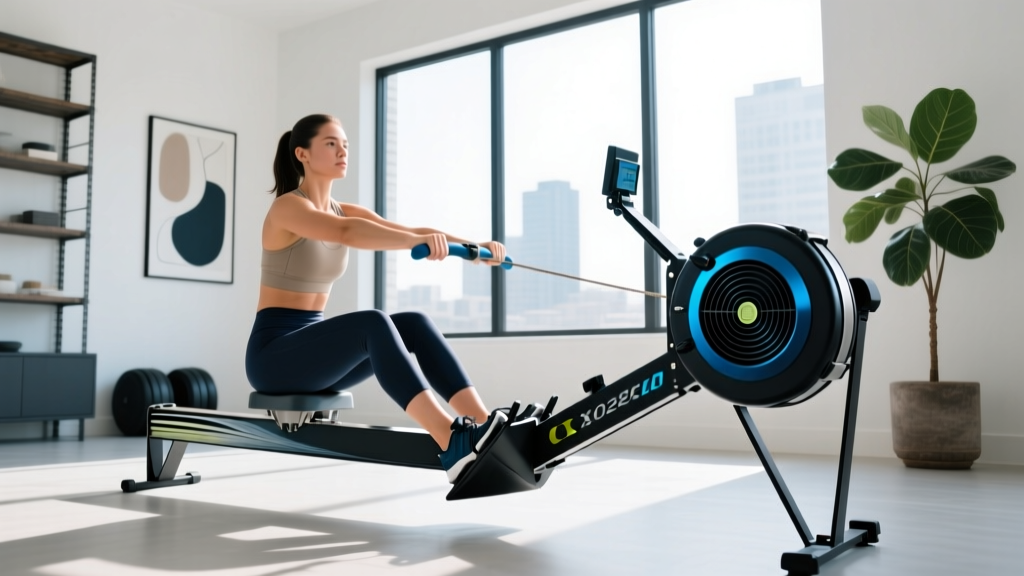
As home gym layouts evolve in 2026, the battle for floor space has intensified. Fitness enthusiasts are constantly weighing the value of traditional walking machines against high-yield, full-body ergometers. On one side of the spectrum, we have the budget-friendly, space-saving ProForm T10 treadmill, a staple for casual walkers and those recovering from lower-body injuries. On the other side sits the gold standard of cardiovascular conditioning: the air-resistance rowing machine, specifically the Concept2 RowErg.
While the ProForm T10 treadmill offers a familiar, low-learning-curve experience for daily step counts, it fundamentally lacks the upper-body engagement and posterior chain activation that rowing provides. This comprehensive head-to-head comparison and rowing machine buying guide will dissect the biomechanics, hardware specifications, and long-term maintenance realities of both modalities to help you make an informed, data-driven decision for your home gym.
Head-to-Head Comparison Matrix
Before diving into rowing technique, it is crucial to understand how the hardware stacks up. Below is a direct specification comparison between the industry-leading rower and the ProForm T10 treadmill.
| Feature | Concept2 RowErg (Standard) | ProForm T10 Treadmill |
|---|---|---|
| Retail Price (Approx.) | $990.00 | $499.00 - $599.00 |
| Resistance / Propulsion | Air Resistance (Variable) | 1.5 CHP Motor (Belt-driven) |
| User Weight Capacity | 500 lbs | 265 lbs |
| Footprint (In Use) | 96" L x 24" W | 68" L x 28" W |
| Primary Muscle Engagement | 86% of total body musculature | Lower body (Calves, Quads, Glutes) |
| Impact on Joints | Zero-impact (Seated) | Low to Moderate (Walking/Jogging) |
Rowing Machine Buying Guide: What to Look for in 2026
If you are pivoting away from treadmills like the ProForm T10 and entering the rowing market, you must understand the mechanics that separate a premium ergometer from a cheap, friction-based knockoff. When evaluating rowing machines, focus on three critical pillars: resistance type, monitor telemetry, and rail ergonomics.
1. Resistance Mechanics: Air vs. Magnetic vs. Water
While magnetic rowers offer whisper-quiet operation, air resistance remains the undisputed champion for serious cardiovascular adaptation. Air rowers utilize a flywheel with fan blades; the harder you pull, the more air is displaced, creating infinite, accommodating resistance. This mimics the hydrodynamics of moving a shell through water. When shopping, ensure the machine features an adjustable damper. On the Concept2, this 1-10 lever alters the aerodynamic drag, allowing you to simulate a heavy, slow-moving boat (Setting 10) or a sleek, fast racing shell (Setting 3-5).
2. The Importance of Drag Factor
Expert Insight: Do not confuse damper setting with drag factor. Dust accumulation in the flywheel housing lowers the drag factor over time. Premium machines allow you to calibrate and view the exact drag factor on the monitor (aim for 110-130 for standard workouts), ensuring your baseline metrics remain consistent year over year.3. Rail Length and Seat Ergonomics
Taller athletes (over 6'2") must verify the slide rail length. A standard 54-inch rail accommodates up to a 38-inch inseam. Furthermore, the seat contour matters; a poorly molded plastic seat will cause sciatic nerve compression during 40-minute steady-state pieces, an issue you will never face on a cushioned treadmill deck.
Mastering the Slide: Rowing Technique Breakdown
Unlike walking on the ProForm T10 treadmill, which requires zero technical instruction, rowing demands strict biomechanical sequencing. Improper form not only caps your power output but invites lumbar spine injuries. According to the official Concept2 technique guidelines, the stroke is divided into four distinct phases. The power distribution should always follow the 60-20-20 rule: 60% legs, 20% core, 20% arms.
Phase 1: The Catch
The catch is the starting position. Your shins should be vertical (perpendicular to the floor), with your torso leaned forward at roughly 11 o'clock. Your arms must be completely straight, gripping the handle loosely with your fingers rather than a white-knuckled death grip. Common Failure Mode: 'Shooting the slide'—initiating the drive with the hips before the shoulders engage, which places immense shear force on the L4/L5 vertebrae.
Phase 2: The Drive
This is the power phase. Push explosively through your mid-foot and heels. Your arms remain straight until your legs are nearly fully extended. Only when the handle passes your knees do you begin to hinge your torso back to the 1 o'clock position, followed finally by the arms pulling the handle to your lower rib cage.
Phase 3: The Finish
The handle touches your lower sternum. Your legs are fully extended, core braced, and elbows are drawn back past your torso. This position should be held for a microsecond to allow the flywheel to register peak wattage before the reversal.
Phase 4: The Recovery
The recovery is active rest. Reverse the sequence exactly: arms extend first, torso hinges forward past the hips, and finally, the knees bend to slide back to the catch. The recovery should take twice as long as the drive (a 1:2 ratio), allowing your heart rate to stabilize between strokes.
Caloric Expenditure and Joint Health
When comparing the metabolic demand of the ProForm T10 treadmill against a rower, the data heavily favors the ergometer for time-efficiency. According to Harvard Health Publishing, a 155-pound individual rowing at a vigorous pace will burn approximately 369 calories in 30 minutes. That same individual walking at a brisk 3.5 mph on a treadmill will burn roughly 133 calories. To match the caloric output of a 30-minute row, you would need to walk on the treadmill for nearly 90 minutes.
Furthermore, joint preservation is paramount for aging athletes. The Mayo Clinic emphasizes that low-impact aerobic exercises are critical for maintaining cardiovascular health without degrading articular cartilage. While the ProForm T10 offers a softer deck than outdoor asphalt, the repetitive ground-reaction forces of walking or jogging still transmit shock through the meniscus and hip labrum. Rowing is entirely closed-chain and zero-impact, making it the superior choice for users with osteoarthritis or prior meniscus repairs.
Maintenance Realities: Chain Oiling vs. Belt Tensioning
Every piece of cardio equipment has a failure mode. Understanding these edge cases is vital for long-term ownership.
- ProForm T10 Treadmill Maintenance: The primary failure point for budget treadmills is the walking belt. If the belt is not lubricated with 100% silicone fluid every 3 months, friction increases. This friction forces the 1.5 CHP motor to draw excess amperage, eventually tripping the thermal breaker or burning out the motor control board. Additionally, the T10's folding hinge mechanism requires periodic tightening, as vibration loosens the locking pins over time.
- Rowing Machine Maintenance: Air rowers require significantly less electrical maintenance but demand mechanical diligence. The nickel-plated steel chain must be wiped down and lubricated with purified mineral oil every 50 hours of use. Failure to oil the chain results in 'chain stretch' (wear on the roller pins) and erratic catch feedback. The polycarbonate pulleys and shock cord, however, are virtually indestructible under normal residential use.
"The ProForm T10 is an excellent, low-cost entry point for achieving 10,000 daily steps while watching television. However, if your goal is to increase VO2 max, build posterior chain endurance, and maximize caloric burn per square foot of gym space, a high-quality air rower is an unmatched investment." — FitGearPulse Editorial Team
Final Verdict: Which Machine Earns Your Floor Space?
If your primary objective is casual, low-intensity steady-state (LISS) movement, rehabilitation from a lower-body injury, or simply pacing while on conference calls, the ProForm T10 treadmill remains a highly practical, budget-conscious choice. Its compact folding footprint and simple interface lower the barrier to daily movement.
However, if you are seeking a comprehensive, time-efficient cardiovascular and muscular endurance tool, the rowing machine is the undisputed victor. By mastering the four phases of rowing technique and investing in an air-resistance model with accurate telemetry, you unlock a modality that builds power, spares your joints, and delivers elite-level conditioning right in your living room.
More gear to consider
All reviews
Reebok Z-Tech Treadmill Noise Test vs. Top 2026 Cardio Machines

YMCA Treadmills vs Rowers: 2026 Buying & Technique Guide

Air vs Assault Bike: What Burns More Calories, Treadmill or Elliptical?

What Speed and Incline on Treadmill to Burn Fat? 2026 Buyer Guide
2026 Rowing Machine Buying Guide: Beat the 45-Minute Treadmill
