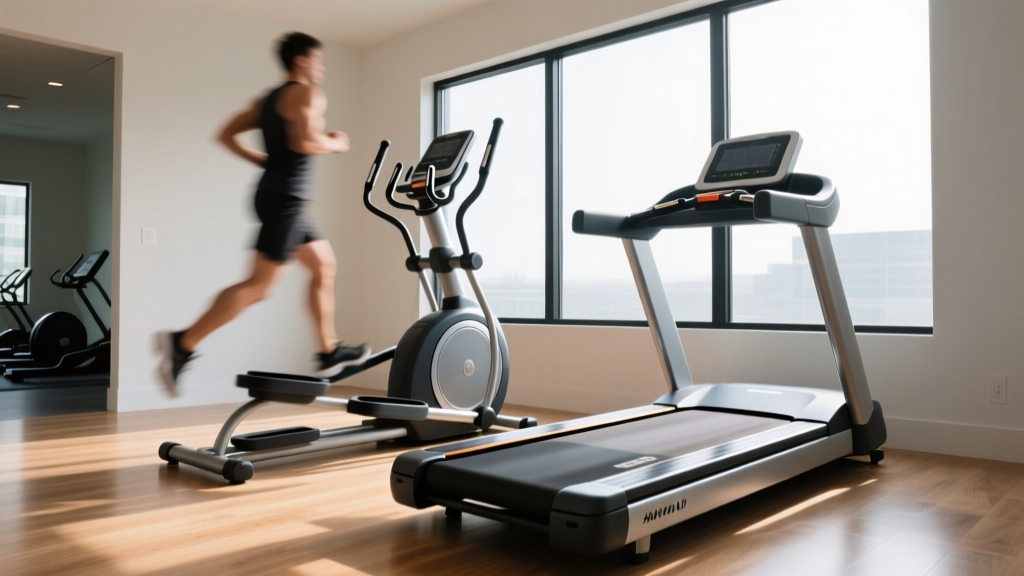
Elliptical vs Treadmill Care: Why Does Running on a Treadmill Feel Harder
Discover essential elliptical vs treadmill maintenance tips and the biomechanical science behind why running on a treadmill feels harder than outdoor running.

The Biomechanics of Exertion: Why Does Running on a Treadmill Feel Harder?
When outfitting a home gym in 2026, the debate between an elliptical vs treadmill for home cardio remains a cornerstone of fitness planning. While both machines offer exceptional cardiovascular benefits, users frequently report a distinct difference in perceived exertion. Specifically, many athletes and casual users alike ask: why does running on a treadmill feel harder than running outdoors or using an elliptical?
The answer lies in a combination of biomechanics, thermodynamics, and mechanical friction. According to research highlighted by the American Council on Exercise (ACE), treadmill running alters the recruitment pattern of your hamstrings and glutes. Because the motorized belt pulls your foot backward, your body must constantly stabilize against a moving surface, which increases localized muscle fatigue compared to the continuous, closed-chain kinetic movement of an elliptical.
The Thermodynamics of Indoor Cardio
Beyond muscle recruitment, the lack of convective cooling (wind resistance) indoors causes your core temperature to rise much faster. This thermoregulatory strain forces your heart to pump blood to the skin's surface for cooling, stealing oxygen delivery from working muscles. Consequently, your heart rate—and your Rate of Perceived Exertion (RPE)—spikes faster on a treadmill than on an elliptical or an outdoor run, making the workout feel objectively 'harder' even at matched paces.
Understanding this physical toll on the user is crucial because it directly mirrors the mechanical toll on the machine. The high-impact, repetitive striking forces of a treadmill require a vastly different maintenance regimen than the rotational torque and pivot stress endured by an elliptical. Let us break down the exact maintenance care and longevity tips for both machines to ensure your investment survives the decade.
Treadmill Maintenance: Managing High-Impact Wear and Tear
A 180-pound runner generates roughly 2.5 to 3 times their body weight in impact force with every footstrike. Over a 30-minute run at a 10-minute mile pace, that equates to roughly 5,000 individual impacts. This immense kinetic energy is absorbed by the treadmill's deck, belt, and motor. Neglecting this system leads to catastrophic failure modes, such as MDF (medium-density fiberboard) deck delamination or PWM (Pulse Width Modulation) motor controller burnouts.
1. Belt Lubrication and Deck Friction Mitigation
The most common cause of treadmill motor failure is a dry running belt. When the belt lacks lubrication, friction increases, causing the motor to draw excess amperage to maintain speed. This amperage spike overheats the lower control board, frying the circuitry—a repair that typically costs between $150 and $300 for parts alone.
- The Fix: Lubricate the belt every 130 miles or every 3 months using 100% pure liquid silicone (never use WD-40 or petroleum-based products, which degrade the rubber).
- Procedure: Unplug the machine. Loosen the rear roller adjustment bolts (usually a 6mm Allen key) by exactly three full turns. Slide the applicator tube under the belt, squeeze 0.5 oz of silicone in a zig-zag pattern, retighten the bolts, and run the treadmill at 3.0 MPH for 5 minutes to distribute the fluid.
2. Motor Hood Dust Mitigation
Treadmill motors rely on internal fans for cooling. In a home environment, static electricity from the moving belt acts as a magnet for dust, pet hair, and drywall particulate. This debris clogs the motor's air intake, leading to thermal shutdowns.
- Procedure: Every 90 days, remove the 4 to 6 Phillips-head screws securing the front motor hood. Use a vacuum with a soft brush attachment to clear the fan blades and the surrounding chassis. Wipe the drive motor casing with a slightly damp microfiber cloth to remove static-clung dust.
Elliptical Maintenance: Combating Rotational Torque and Pivot Stress
Ellipticals, such as the popular Sole E35 or NordicTrack SE7i, operate on a completely different mechanical principle. Instead of absorbing vertical impact, ellipticals manage continuous rotational torque and lateral shear stress across multiple pivot joints and track wheels. While the Mayo Clinic frequently recommends ellipticals for joint preservation due to their low-impact nature, the machine's internal bearings take the brunt of the mechanical abuse.
1. Rail and Wheel Track Cleaning
The polyurethane wheels that glide along the aluminum or steel rails are highly susceptible to micro-debris. Dust mixed with ambient humidity creates a gritty paste that acts like sandpaper, eventually causing flat spots on the wheels and resulting in a rhythmic 'thumping' noise during use.
- The Fix: Wipe down the entire length of the guide rails twice a month using 70% isopropyl alcohol and a lint-free microfiber cloth. The alcohol evaporates quickly and leaves no residue.
- Warning: Never apply wet lubricants, oils, or silicone sprays to the rails. These will attract dust and accelerate wheel degradation. If the wheels squeak, the issue is usually the internal bearing, not the rail surface.
2. Pivot Point and Bearing Lubrication
An elliptical features up to 12 distinct pivot points connecting the pedals, crank arms, and upright handles. Over time, the factory-applied grease dries out, leading to metal-on-metal wear and the dreaded 'elliptical squeak.'
- Procedure: Annually, inspect the crank arm bearings and pedal arm bushings. Apply a small dab of white lithium grease or a PTFE-based dry lubricant to the pivot bolt threads and bushings. Avoid petroleum jelly (Vaseline), as it breaks down the rubber and nylon bushings used in modern 2026 elliptical models.
- Torquing: Use a torque wrench to ensure pivot bolts are tightened to the manufacturer's specification (typically between 15 Nm and 25 Nm). Overtightening will crush the nylon bushings; undertightening will cause lateral wobble and premature bearing failure.
Longevity Showdown: Component Lifespans and Replacement Costs
When comparing the long-term financial upkeep of an elliptical vs treadmill, the treadmill generally requires more frequent, albeit cheaper, consumable maintenance, while the elliptical demands less frequent but more labor-intensive part replacements. Below is a data matrix outlining expected lifespans and costs for mid-range to premium home cardio equipment (e.g., $1,000 - $2,500 price bracket).
| Component | Machine Type | Expected Lifespan | Replacement Cost (Avg) |
|---|---|---|---|
| Running Belt | Treadmill | 4 - 7 Years | $75 - $150 |
| Phenolic / MDF Deck | Treadmill | 5 - 10 Years | $120 - $250 |
| Drive Motor | Treadmill | 10+ Years | $200 - $400 |
| Track Wheels | Elliptical | 6 - 9 Years | $40 - $90 (Set) |
| Crank Arm Bearings | Elliptical | 8 - 12 Years | $30 - $60 |
| Alternator / Generator | Elliptical | 10+ Years | $150 - $300 |
The Cost of Neglect: Real-World Failure Modes
Ignoring the distinct maintenance needs of these machines leads to specific, predictable failure modes. Industry technicians and commercial fitness maintenance guidelines from leaders like Precor consistently highlight the following edge cases in home gyms:
- The 'Dry Belt' Thermal Trip (Treadmill): If a treadmill belt is not lubricated, the friction coefficient spikes. The user will notice the belt momentarily hesitating or 'stuttering' under their foot upon impact. This is the motor browning out. If ignored, the thermal overload switch on the motor will permanently trip, or the lower control board will short out.
- Deck Warping and Delamination (Treadmill): Sweaty runners often allow moisture to drip between the belt and the deck. If the deck is made of MDF rather than phenolic resin, this moisture causes the wood fibers to swell and delaminate. This creates a permanent 'bump' in the running surface that cannot be sanded out, requiring a full deck and belt replacement.
- The Lateral Wobble (Elliptical): When users mount an elliptical by stepping aggressively onto the pedals from the side, immense lateral shear stress is placed on the crank arm bearings. Over time, this widens the bearing housing, resulting in a side-to-side wobble that cannot be fixed by simply tightening the bolts. The entire crank assembly must be replaced.
Expert Verdict: Which Machine Lasts Longer?
When maintained properly, a high-quality elliptical generally boasts a longer mechanical lifespan than a treadmill. The absence of high-impact vertical striking forces means the structural frame and internal electronics of an elliptical are subjected to significantly less violent stress. However, the treadmill remains the undisputed king of bone-density building and sport-specific training.
If your primary concern is minimizing long-term maintenance and avoiding the physiological reality of why running on a treadmill feels harder, the elliptical is your optimal choice. If you require the biomechanical specificity of running, invest in a treadmill with a continuous-duty motor (minimum 3.0 CHP) and a reversible phenolic deck, and commit to a strict 90-day lubrication and vacuuming schedule. By aligning your maintenance habits with the mechanical realities of your chosen machine, you will secure a decade of reliable home cardio.
More gear to consider
All reviews
Under Desk Treadmill Reviews: How to Calibrate Garmin Watch Treadmill

T101 07 Treadmill vs Top Walking Pads: 2026 Comparison Guide

Budget Guide: 28 Day Treadmill Challenge PDF & Walking Pads

Air Bike vs Assault Bike Value: Does Strava Record Treadmill Runs?
Bifanuo Treadmill E 7 & Air Bike Assault Bike Comparison
