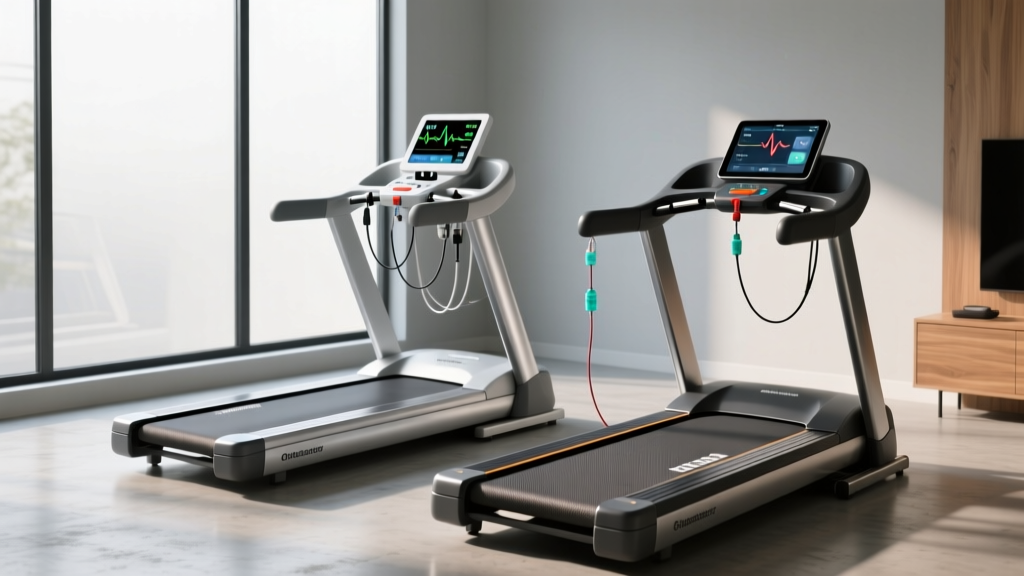
Curved vs Motorized: Horizon Fitness 7.4 AT Treadmill Reviews
Compare curved manual and motorized treadmills. Read our Horizon Fitness 7.4 AT treadmill reviews, troubleshooting tips, and common user mistakes.

The Biomechanical Divide: Curved Manual vs. Motorized Treadmills
Transitioning between a traditional motorized treadmill and a curved manual treadmill fundamentally alters your running biomechanics, energy expenditure, and equipment maintenance requirements. As home gym setups evolve in 2026, runners are increasingly cross-training on both platforms. However, failing to understand the mechanical differences leads to poor form, premature equipment wear, and frustrating troubleshooting cycles. According to Runner's World, the kinematic chain shifts drastically when the belt is no longer pulling your foot backward, requiring a complete recalibration of your stride and posture.
Energy Expenditure Insight: Studies show that running on a curved non-motorized treadmill increases caloric burn and heart rate by up to 30% compared to a motorized treadmill at the exact same perceived pace. This is due to the manual propulsion required to drive the slat belt backward.Horizon Fitness 7.4 AT Treadmill Reviews: The Motorized Benchmark
When evaluating the motorized side of the spectrum, the Horizon Fitness 7.4 AT remains a dominant force in the mid-tier incline trainer market. Priced consistently around $1,299 to $1,399 in 2026, the 7.4 AT features a robust 3.0 Continuous Horsepower (CHP) motor, a 20-inch by 55-inch tread belt, and a 0-15% power incline. Our analysis of extensive Horizon Fitness 7.4 AT treadmill reviews reveals that while the machine is exceptionally durable for daily 10K training, users frequently encounter specific operational bottlenecks that require targeted troubleshooting.
Common Mistakes with the Horizon 7.4 AT
- Ignoring Incline Calibration: The 7.4 AT utilizes a high-torque lift tube. If the machine is moved or subjected to uneven floor settling, the incline sensor can lose its zero-point baseline. Users often ignore minor incline stuttering until the console throws an 'E02' error code, which indicates an incline calibration failure. Fix: Hold the 'Speed Up' and 'Incline Up' buttons simultaneously for 5 seconds to force a full-sweep recalibration.
- FTMS Bluetooth Pairing Errors: A frequent complaint in modern Horizon Fitness 7.4 AT treadmill reviews involves the FTMS (Fitness Machine Service) Bluetooth protocol dropping connections with third-party apps like Zwift or Kinomap. Fix: Do not pair the console via your phone's native Bluetooth settings menu. Open the Zwift/Kinomap app first, and allow the app's internal sensor menu to handshake directly with the 7.4 AT's console broadcast.
- Over-Lubricating the Deck: The 7.4 AT ships with a pre-lubricated, low-friction deck. Users mistakenly apply aftermarket silicone sprays every few months, causing the belt to slip over the drive roller during high-speed sprints, triggering an 'E04' motor overcurrent error as the system compensates for the slip.
Troubleshooting Matrix: Motorized vs. Curved Manual Failures
Because the drive mechanisms are entirely different, the symptoms of failure and their respective solutions require distinct diagnostic approaches. The Consumer Reports Treadmill Buying Guide emphasizes that misdiagnosing a belt issue can lead to unnecessary motor replacements on motorized units or ruined slat belts on manual units.
| Symptom | Motorized (Horizon 7.4 AT) | Curved Manual (Slat Belt) |
|---|---|---|
| Belt Slipping / Hesitation | Drive belt tension is loose, or deck is over-lubricated. Tighten the rear roller adjustment bolts by 1/4 turn. | User is overstriding, causing a braking effect. Shift center of mass slightly forward to engage the downward curve. |
| Loud Rhythmic Thumping | Deck delamination or a failing front roller bearing. Inspect the phenolic deck for uneven wear grooves. | Debris trapped in the lateral guide wheels, or a single urethane slat has cracked at the mounting screw. |
| Sudden Deceleration | Motor overheating due to AMP draw spike. Clean the motor hood ventilation grates and check for dust buildup on the flywheel. | User has drifted too far back on the curve, moving past the apex and into the braking zone. |
| Belt Tracking Off-Center | Rear roller is misaligned. Adjust the left/right tension bolts unevenly to steer the PVC belt back to center. | Lateral guide wheels are dry or worn. Apply PTFE dry lubricant to the wheel tracks; never use wet silicone. |
Curved Treadmill Troubleshooting: Slat Belts and Bearings
Curved manual treadmills, such as the AssaultRunner Elite or TrueForm Trainer (typically priced between $3,000 and $5,500), eliminate the motor, controller board, and drive belt. However, they introduce a complex array of slat belts, ball bearings, and guide wheels. The most common mistake owners make is applying standard treadmill silicone lubricant to a curved slat belt. This attracts dust, creates a grinding paste, and destroys the urethane guide wheels.
Step-by-Step Slat Belt Realignment
If your curved treadmill's belt is rubbing against the side chassis, do not attempt to adjust the rear tensioner as you would on a motorized Horizon 7.4 AT. Instead, follow this protocol:
- Identify the Friction Point: Spin the belt manually by hand and listen for the exact location where the rubber slat edges scrape the aluminum side rails.
- Locate the Guide Wheels: Flip the treadmill or access the lateral guide wheels located on the inside of the curve. These small polyurethane wheels keep the 100+ individual slats tracking straight.
- Clean and Lubricate: Wipe the guide wheel tracks with isopropyl alcohol to remove oxidized rubber dust. Apply a light coat of PTFE (Teflon) dry lubricant spray. Allow it to flash-dry for 5 minutes.
- Check Slat Tension: If the belt still tracks poorly, check the tensioning bolts at the rear axle. On curved treadmills, these bolts adjust the overall circumference tension of the slat loop, not the lateral tracking. Adjust both sides equally in 1/8th turn increments.
Biomechanical Mistakes: Adapting Your Stride
Beyond mechanical troubleshooting, the most critical errors occur in human biomechanics. According to the Mayo Clinic's guidelines on aerobic exercise, improper joint loading during cardio can lead to chronic tendinopathy. When switching from a motorized treadmill to a curved manual treadmill, runners often maintain a 'motorized stride'—characterized by a heavy heel strike and a forward lean.
"On a motorized treadmill like the Horizon 7.4 AT, the belt pulls your foot back, allowing for a slightly longer ground contact time. On a curved treadmill, you must actively pull your foot off the deck using your hip flexors and hamstrings. Failing to adapt this muscle recruitment pattern leads to severe Achilles and calf strain within the first two weeks of use."
Posture and Positioning Framework
- The Apex Zone: On a curved treadmill, you must run at the very bottom apex of the curve. If you drift backward, the curve acts as a brake. If you drift forward, the treadmill accelerates uncontrollably.
- Upper Body Alignment: Unlike the 15% incline walking you might do on the Horizon 7.4 AT where you lean into the console, curved running requires a tall, neutral spine. Keep your eyes forward, not down at your feet, to prevent cervical strain and anterior pelvic tilt.
- Cadence Over Stride Length: To increase speed on a manual curve, do not reach out with your lead foot. Instead, increase your cadence (steps per minute) while keeping your feet directly beneath your center of mass.
Preventative Maintenance Protocols for 2026
To ensure longevity across both machine types, implement a strict quarterly maintenance schedule. For the motorized Horizon 7.4 AT, vacuum beneath the motor hood every 90 days to prevent thermal shutdowns, and check the deck-to-belt friction using the 'stomp test' (the belt should not slip when you plant your foot and push the console to 3 MPH). For curved manual treadmills, inspect the urethane slats for micro-fractures near the screw mounts, and ensure the floor beneath the machine is perfectly level; even a 2-degree floor pitch will cause the slat belt to continuously drift to one side, wearing down the lateral guide wheels prematurely. By respecting the distinct engineering of both platforms, you can optimize your cardiovascular output while minimizing equipment downtime.
More gear to consider
All reviews
Air Bike vs Assault Bike Care & How to Log Treadmill on Strava

Elliptical vs Treadmill: The Cosmic Treadmill Free Play Space Guide

Curved vs Motorized Treadmill: Upkeep & How to Fix Treadmill Belts
Elliptical vs Treadmill Layout: Can a Treadmill Go on Carpet?

Hamster Wheel Treadmill Noise: Curved vs Motorized Guide