Deer Run Treadmill Z10 & Motor Size Guide: What HP Do You Need?
Learn how to choose the right treadmill motor size. We break down CHP vs HP and analyze the Deer Run Treadmill Z10 to help beginners pick the perfect fit.

The Heartbeat of Your Workout: Understanding Treadmill Motors
When shopping for your first home cardio machine, the sheer volume of technical specifications can be overwhelming. Belt length, incline percentage, and console features often steal the spotlight, but the true determining factor of a machine's lifespan and performance is hidden beneath the hood: the motor. Choosing the wrong motor size leads to frustrating belt stalls, loud operational noise, and premature mechanical failure. Conversely, overbuying on horsepower wastes your hard-earned money.
In this beginner-friendly, step-by-step guide, we will demystify treadmill motor sizing. To ground these concepts in reality, we will use one of the most popular entry-level compact machines on the market today—the Deer Run Treadmill Z10—as a real-world case study to help you understand exactly how motor specs translate to your daily workouts in 2026.
Step 1: Demystifying Horsepower (Peak HP vs. Continuous Duty)
The most common trap beginners fall into is looking solely at the "Peak Horsepower" advertised on the box. Marketing departments love peak HP because the numbers look impressive. However, as experts at Consumer Reports consistently highlight, Peak HP only measures the maximum output the motor can hit for a few seconds before potentially burning out.
What you actually need to look for is Continuous Duty Horsepower (CHP). CHP measures the power the motor can sustain continuously over a long, grueling 5K run or a multi-hour walking session without overheating.
Expert Rule of Thumb: Always base your purchasing decision on the CHP rating. If a treadmill only lists "Peak HP" and hides the CHP rating, it is usually an indicator of a low-quality, underpowered motor designed for very light use only.Step 2: Calculate Your True Motor Requirement
Your body weight and your target speed directly dictate how hard the motor has to work. A motor doesn't just move the belt; it moves you. To calculate your baseline requirement, follow this simple framework:
- For Walking (2.0 to 4.0 mph): Minimum 2.0 CHP
- For Jogging (4.0 to 6.0 mph): Minimum 2.5 CHP
- For Running (6.0+ mph): Minimum 3.0 CHP
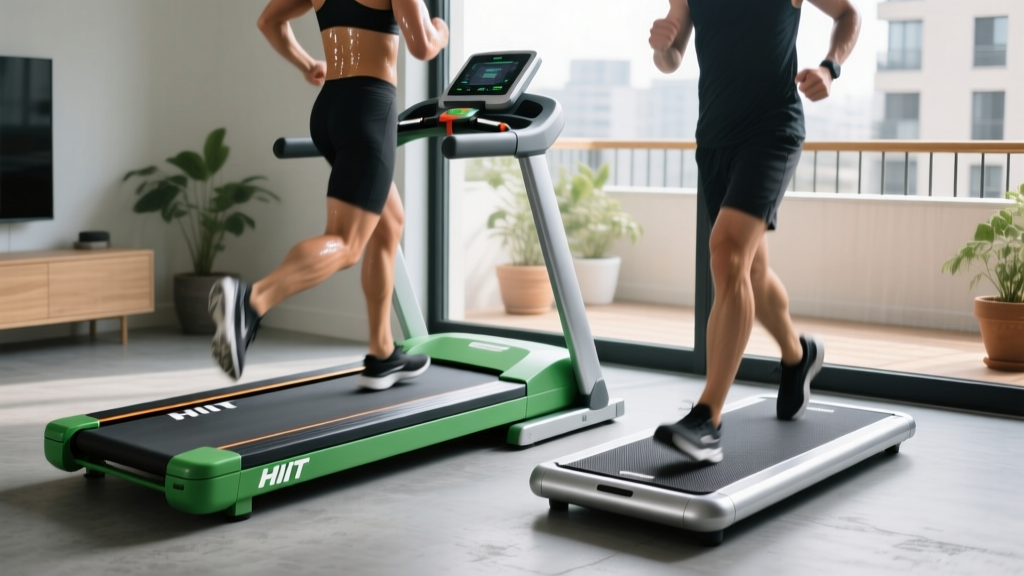
The 50-Pound Buffer Rule: If you weigh over 200 pounds, or if you plan to do high-intensity interval training (HIIT) with sudden speed changes, you must add at least 0.5 CHP to your baseline requirement. Sudden acceleration demands massive torque, which strains smaller motors and can trip the machine's internal circuit breaker.
Step 3: Real-World Case Study – The Deer Run Treadmill Z10
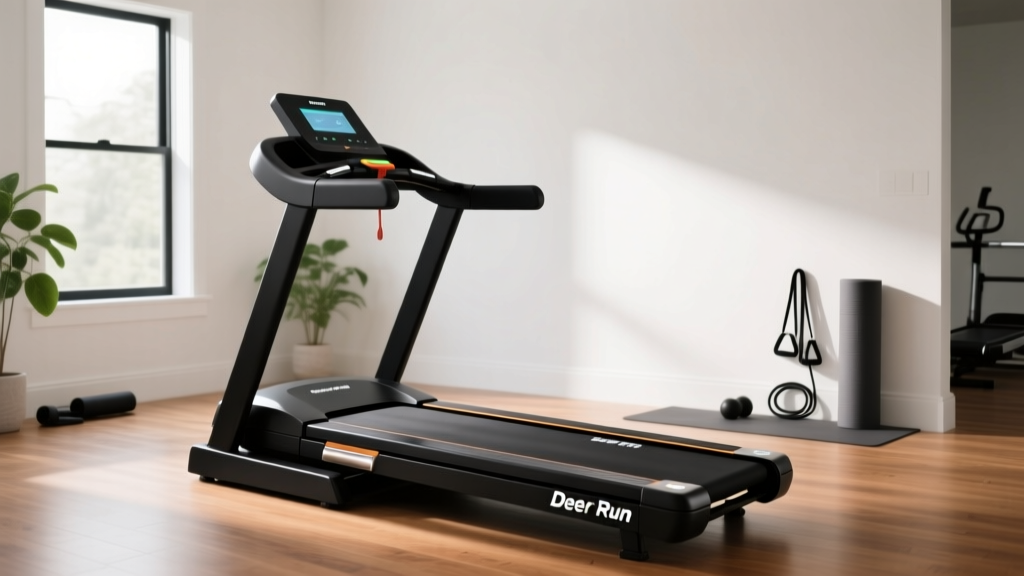
To see how these rules apply in the real world, let us examine the Deer Run Treadmill Z10. In 2026, the Z10 remains a highly sought-after compact treadmill and walking pad, typically priced between $180 and $250. It is designed for small apartments, under-desk setups, and beginners transitioning into a daily walking routine.
Analyzing the Z10 Motor Specs
The Deer Run Treadmill Z10 is generally equipped with a 1.5 CHP (2.5 Peak HP) DC motor. Because it utilizes a Direct Current (DC) motor, it operates quietly and smoothly at lower speeds, making it perfect for indoor residential use. However, this specific motor size dictates a very specific user profile.
| User Profile | Activity on Z10 | Motor Performance & Edge Cases |
|---|---|---|
| Under 160 lbs | Walking (2-4 mph) | Excellent. Motor runs cool, quiet, and efficiently. |
| 160 - 200 lbs | Brisk Walking / Light Jog | Good. Motor works harder; ensure belt is lubricated to reduce drag. |
| Over 200 lbs | Jogging / Running | Not Recommended. High risk of thermal shutoff and PWM controller strain. |
Failure Mode Insight: If a 220-pound user attempts to run at 7 mph on the Z10, the 1.5 CHP motor will draw excessive amperage. The machine's Pulse Width Modulation (PWM) controller will detect the heat spike and trigger a thermal cutoff switch, abruptly stopping the belt to prevent a fire hazard. This is not a defect; it is a safety feature. Understanding this prevents you from blaming the manufacturer when you simply bought a machine outside of its engineered parameters.
Step 4: Matching Motor Size to Your Fitness Goals
According to guidelines discussed by fitness professionals at the American Council on Exercise (ACE), aligning your equipment with your actual physiological output is vital for long-term adherence to a fitness routine. Use this matrix to find your ideal motor class:
- The Casual Walker (Budget/Compact Pads): 1.5 to 2.0 CHP. (e.g., Deer Run Z10, generic under-desk pads). Best for 1-3 miles a day at low speeds.
- The Fitness Jogger (Mid-Range Foldables): 2.5 to 2.75 CHP. Best for users up to 220 lbs doing 3-5 mile runs.
- The Serious Runner (Premium/Commercial): 3.0 to 4.0+ CHP. Required for marathon training, heavy users (250+ lbs), and sustained speeds over 8 mph.
Step 5: Hidden Motor Killers (Friction and Maintenance)
Even a massive 4.0 CHP commercial motor will die prematurely if neglected. The number one enemy of a treadmill motor is belt friction. When the walking belt rubs against the wooden or MDF deck beneath it, it creates immense physical drag. The motor must work twice as hard to pull the belt, generating excess heat and degrading the internal copper windings.
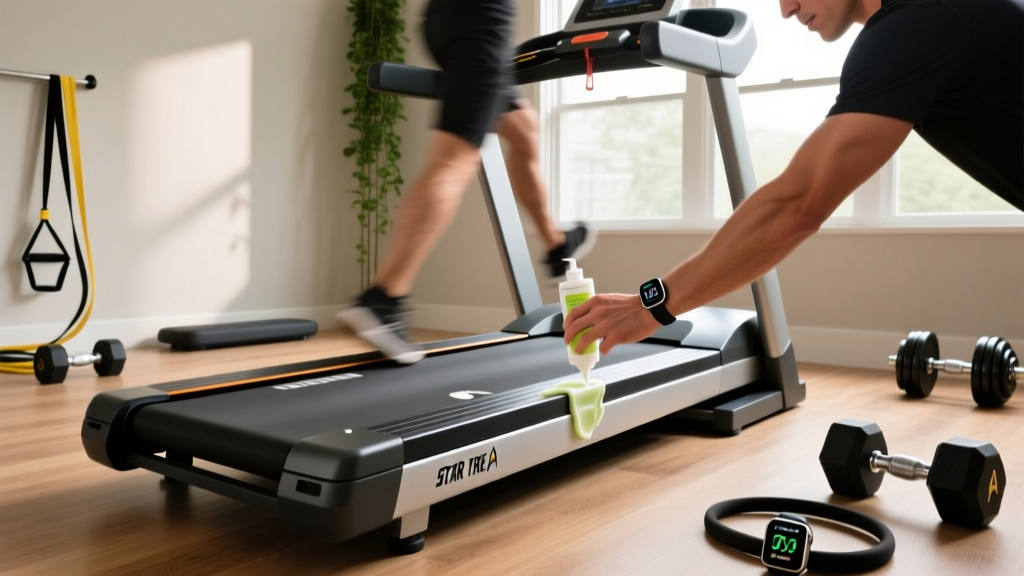
Maintenance Warning: You must apply 100% silicone treadmill lubricant to the deck every 3 months or every 130 miles. If you notice the treadmill motor sounding "whiny" or the belt stuttering when your foot strikes the deck, your motor is suffocating from friction. A $10 bottle of silicone lube can save a $400 motor replacement.Furthermore, always check the motor warranty. While budget treadmills like the Z10 typically offer a 1-year motor warranty, premium brands offer lifetime motor warranties. As noted in Runner's World treadmill buying guides, a lifetime motor warranty is often a strong indicator that the manufacturer trusts the thermal dissipation and build quality of their internal components.
Frequently Asked Questions (FAQ)
Can I upgrade the motor on my Deer Run Treadmill Z10 later?
No. Treadmill motors are matched to specific PWM control boards, flywheel sizes, and belt roller diameters. Attempting to wire a larger 3.0 HP motor into a compact walking pad frame will blow the control board and void all warranties. Always buy the correct motor size on day one.
Why does my treadmill motor smell like burning plastic during the first week?
A slight "hot" odor during the first few hours of use is normal as factory coatings and lubricants cure and burn off. However, if the acrid smell of melting plastic persists past the third workout, immediately unplug the machine. This indicates severe belt friction or a failing motor capacitor.
Is an AC motor better than a DC motor for home use?
For 95% of home users, a DC motor is actually preferable. DC motors are quieter, offer smoother torque at low walking speeds, and draw less power from standard residential wall outlets. AC motors are incredibly powerful and durable but are loud and typically reserved for commercial gym treadmills that run for 12+ hours a day.
Final Thoughts for Beginners
Choosing the right treadmill motor does not require an engineering degree, just a realistic assessment of your body weight and fitness goals. If you are a beginner looking to establish a daily walking habit in a small space, a compact machine with a 1.5 CHP motor like the Deer Run Treadmill Z10 is a fantastic, budget-friendly entry point. However, if your goal is to train for a half-marathon or you weigh over 220 pounds, you must step up to a 3.0 CHP machine to ensure your equipment supports your journey safely and reliably.
More gear to consider
All reviews
Arc Trainer vs Treadmill: Top Folding Picks for Small Spaces

Air Bike vs Assault Bike: Track Treadmill Workouts & Cardio ROI

Air Bike vs Assault Bike: Beating Treadmills 350 lb Weight Capacity
Star Trek Treadmill Belt Maintenance & Lubrication Guide
Does Walking on a Treadmill Build Leg Muscle? Pad vs Treadmill Guide