Elliptical vs Treadmill: Space & NordicTrack Treadmill Problems
Designing a home gym? We compare elliptical vs treadmill footprints, layout clearances, and how to avoid common NordicTrack treadmill problems in tight spaces.

The Geometry of Home Cardio: Elliptical vs Treadmill Footprints
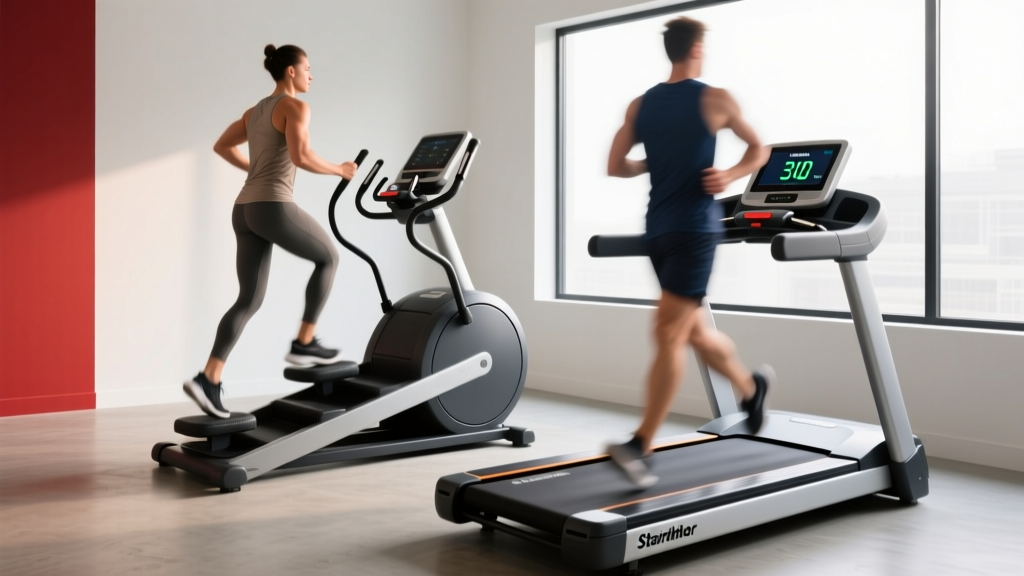
As home fitness spaces evolve in 2026, the debate between an elliptical and a treadmill for home cardio is no longer just about joint impact or calorie burn; it is fundamentally a question of spatial geometry and layout design. Whether you are converting a spare bedroom, carving out a corner of your living room, or designing a dedicated garage gym, the physical footprint of your machine dictates the flow of your entire home. According to the American Council on Exercise (ACE), failing to account for operational clearance is the leading cause of home gym abandonment and equipment damage.
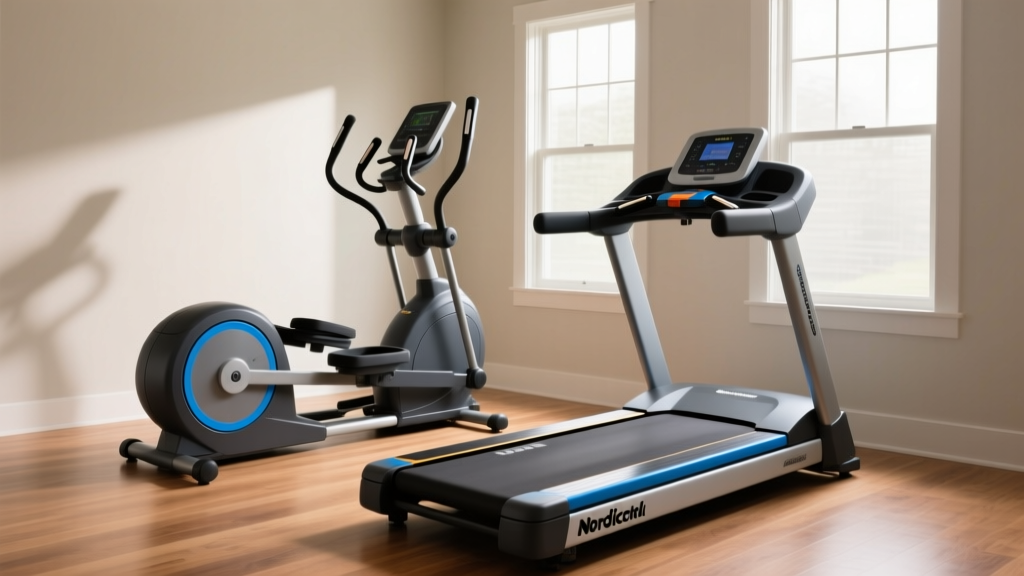
When comparing the footprint of a premium treadmill against a high-end elliptical, the raw floor dimensions often appear deceptively similar. However, the dynamic footprint—the space required while the machine is in motion and the user is active—tells a vastly different story.
Machine Footprint vs. Required Operational Clearance
| Equipment Model (2026 Pricing) | Static Footprint (L x W) | Dynamic Clearance Required | Total Spatial Demand |
|---|---|---|---|
| NordicTrack Commercial 1750 ($1,999) | 80" x 38" | +24" sides, +78" rear | 158" L x 86" W |
| Sole E95 Elliptical ($1,499) | 82" x 33" | +15" sides, +24" rear | 106" L x 63" W |
| Bowflex Max Trainer M9 ($2,299) | 49" x 30" | +12" sides, +12" rear | 73" L x 54" W |
As the data illustrates, while a treadmill and an elliptical may share a similar static length (around 80 inches), the treadmill demands nearly double the rear clearance. This is a critical safety buffer to prevent users from being thrown against a wall in the event of a stumble or emergency stop. Ellipticals, by contrast, keep the user's feet anchored to the pedals, drastically reducing the required rear safety zone.
Vertical Clearance: The Overlooked Ceiling Constraint
Horizontal space is only half the battle. Vertical clearance is where many home gym layouts fail, particularly in basements or attic conversions. The Mayo Clinic emphasizes that proper ergonomic alignment requires an unobstructed environment to prevent postural compensation during exercise.
The Ceiling Height Formula:User Height + Machine Step-Up Height + 6" (Hand Clearance) = Minimum Ceiling Height.
Example: A 6'0" user on a Sole E95 (15" step-up) requires a minimum ceiling height of 7'9". If your ceiling is 8'0", you have only 3 inches of margin for error.
Treadmills present a different vertical challenge. While the deck height is lower (typically 8 to 10 inches), the incline mechanism changes the geometry. When the NordicTrack Commercial 1750 is raised to its maximum 15% incline, the front of the deck rises by an additional 12 to 14 inches. If you place the front of the treadmill near a low-hanging light fixture or a sloped ceiling, you risk catastrophic collision during incline intervals.
Ventilation, Heat Dissipation, and NordicTrack Treadmill Problems
When homeowners attempt to maximize their floor plan by pushing machines flush against walls or cramming them into tight alcoves, they inadvertently trigger a specific subset of NordicTrack treadmill problems related to thermal dynamics and mechanical stress. Space optimization must never come at the cost of airflow.
Modern smart treadmills are essentially high-performance computers paired with heavy-duty industrial motors. The 4.0 CHP motor in the NordicTrack Commercial X32i and the 3.5 CHP motor in the 1750 generate significant heat. Furthermore, the 22-inch HD touchscreens running the iFit operating system contain internal processors that rival mid-tier laptops.
Top 3 Space-Induced NordicTrack Treadmill Problems
- Drive Motor Thermal Tripping: NordicTrack engineering requires a minimum of 18 to 24 inches of lateral clearance on the motor hood side for ambient air intake. When pushed into a tight corner, the motor ingests its own exhaust heat and ambient room dust. This causes the internal thermal limiter to trip, shutting the machine down mid-run—a frequently reported issue on fitness forums when machines are placed in unventilated flex-rooms.
- iFit Console Thermal Throttling: The Android-based internal processors in the HD touchscreens are highly sensitive to heat. In a cramped space with poor cross-breeze, the screen's internal temperature rises, causing the processor to throttle. This manifests as app freezing, Bluetooth audio dropouts, and delayed incline responses.
- Incline Motor Strain from Uneven Baseboards: To save space, users often shove the rear roller of the treadmill directly against the baseboard. Because baseboards and walls are rarely perfectly plumb, this forces the treadmill frame into a micro-twist. The incline motor must then work overtime to compensate for the uneven weight distribution, leading to premature gear stripping and loud clicking noises during elevation changes.
"A home gym layout must treat a smart treadmill like a high-end gaming PC or a home theater receiver. If you enclose it without active ventilation or adequate passive clearance, you are engineering your own hardware failure."
— Home Fitness Equipment Technician Report, 2025
Electrical Layout and Circuit Planning
Space optimization also dictates where your electrical outlets are located. According to Consumer Reports equipment reliability testing, power fluctuations are a primary culprit in console motherboard failures.
Treadmills draw massive transient current, particularly when the drive motor accelerates or the incline motor engages simultaneously. A standard NordicTrack treadmill requires a dedicated 15-amp circuit (with some commercial-grade models demanding a 20-amp circuit). In a cramped spare room, users often plug the treadmill into a power strip shared with a space heater, an air conditioning window unit, or a dehumidifier. This shared load causes voltage drops, which can corrupt the treadmill's EEPROM memory or blow the internal PWM (Pulse Width Modulation) motor controller.
Layout Rule: Never route a treadmill's power cord across a high-traffic walkway to reach an outlet. This creates a trip hazard and can physically rip the power receptacle out of the machine's lower control board if snagged. Plan your machine's orientation based on the location of dedicated wall receptacles.
Folding Mechanisms vs. Fixed Frames: The Layout Trade-off
If your spatial constraints are absolute, the elliptical vs treadmill debate often ends with the treadmill's folding capabilities. NordicTrack's SpaceSaver folding design allows the deck to lock into a vertical position, reducing the machine's length from 80 inches to roughly 39 inches.
However, this spatial advantage introduces a mechanical vulnerability. The hydraulic folding hinge and the locking pin bear the entire 300+ pound weight of the deck and motor assembly. If you frequently fold and unfold the machine in a tight space where you cannot stand directly in front of it to guide it down safely, you risk lateral stress on the hinge pins. Ellipticals, like the Sole E95, feature fixed, welded frames. While they demand permanent floor space, they eliminate the long-term maintenance and failure points associated with folding hinges and transport wheels.
Strategic Room Placement Framework
Before finalizing your purchase, map your room using this spatial placement framework:
- Avoid Direct Sunlight: UV rays degrade the rubber running belt and cause the LCD/OLED pixels in smart consoles to burn out or wash out. Never place your machine directly in front of an un-tinted south-facing window.
- Respect HVAC Vents: Do not place the rear of a treadmill directly under a wall-mounted HVAC vent. The forced air will blow dust and pet dander directly into the treadmill's motor hood and rear roller bearings, accelerating belt friction and motor wear.
- Floor Joist Alignment: If placing heavy cardio equipment (treadmills often exceed 350 lbs) on a second-floor wood-framed room, align the machine's length perpendicular to the floor joists. This distributes the dynamic impact load across multiple joists, preventing floor sagging and reducing structural vibration transfer to the rooms below.
Final Verdict: Let Your Room Dictate Your Cardio
Choosing between an elliptical and a treadmill for home cardio in 2026 requires looking past the marketing brochures and measuring your actual walls. If you have a dedicated, climate-controlled room with a minimum dimension of 10x12 feet and 8-foot ceilings, a premium treadmill like the NordicTrack Commercial series offers an unparalleled interactive experience. However, if you are optimizing a tight corner, a shared living space, or a room with low ceilings, a compact elliptical or vertical climber provides a biomechanically sound, spatially efficient, and mechanically simpler alternative that avoids the spatial pitfalls of enclosed smart-treadmills.
More gear to consider
All reviews
Folding Treadmill Review: How Long to Walk 5 Miles on Compact Models

Matrix Slat Treadmill vs Compact Portable Cardio: 2026 Value Analysis
Using Incline on Treadmill to Lose Weight: Curved vs Motorized

Rowing Machine Guide: Technique Errors vs. Underwater Treadmills

Elliptical vs Treadmill: The 2026 Arch Treadmill Market Shift