
Curved vs Motorized Treadmills: How to Tighten the Belt on a ProForm
Compare curved manual and motorized treadmills. Plus, learn exactly how to tighten the belt on a ProForm treadmill with our expert maintenance guide.

The Biomechanical Divide: Curved Manual vs. Motorized Treadmills
The home cardio landscape in 2026 is dominated by two distinct philosophies: the self-propelled, biomechanically demanding curved manual treadmill, and the feature-rich, pace-controlled motorized treadmill. Choosing between them is no longer just about budget; it is about aligning your joint health, training goals, and maintenance tolerance with the right machine.
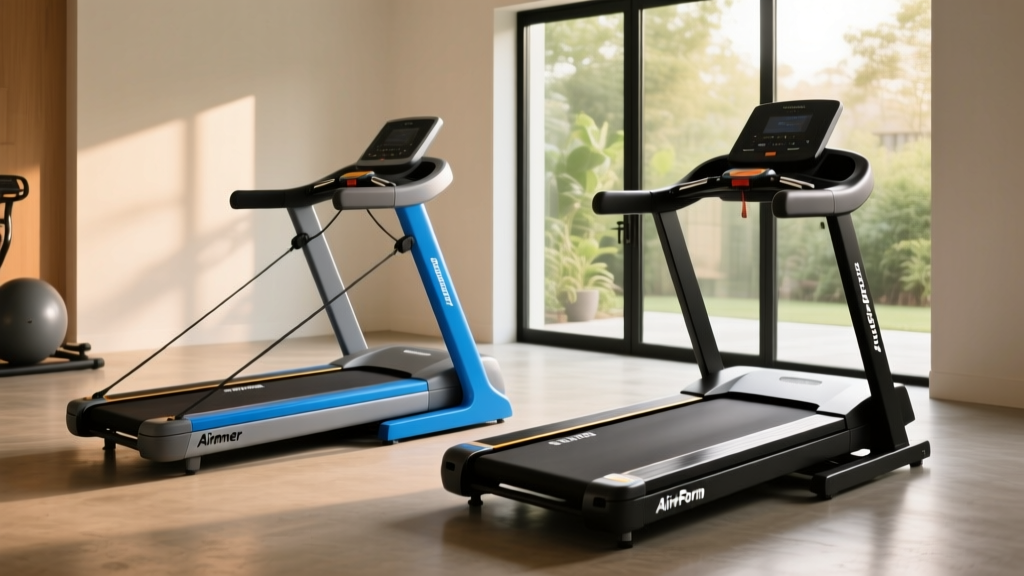
Curved manual treadmills, like the AssaultRunner Elite or Technogym Skillrun, utilize a slatted belt running on ball bearings. Because the user's own stride and foot placement dictate the belt speed, these machines naturally encourage a mid-foot strike and higher cadence. According to peer-reviewed sports science research, running on a curved, non-motorized treadmill can increase metabolic energy expenditure by up to 30% compared to a traditional motorized deck at the same perceived speed.
Conversely, motorized treadmills like the ProForm Pro 9000 or NordicTrack Commercial 1750 rely on a continuous loop PVC belt driven by a DC or AC motor. They excel at enforcing strict pacing, supporting long endurance zones, and integrating immersive digital coaching via iFIT or similar platforms. However, this motorized friction introduces a maintenance variable that curved treadmills completely avoid: belt tensioning.
Head-to-Head Comparison Matrix
| Feature | Curved Manual (e.g., AssaultRunner Elite) | Motorized (e.g., ProForm Pro 9000) |
|---|---|---|
| Propulsion | 100% User-generated (Self-paced) | Motor-driven (Pace-enforced) |
| Belt Type | Rubberized TPU Slats on Ball Bearings | Continuous 2-Ply PVC/Silicone Deck |
| Max Speed | Unlimited (Matched to user's sprint) | Capped (Typically 12.0 - 15.0 MPH) |
| Footprint | Compact (~67" L x 33" W) | Expansive (~80" L x 36" W) |
| Primary Maintenance | Bearing track cleaning, slat inspection | Deck lubrication, belt tensioning, motor dusting |
| 2026 Avg. Price | $3,499 - $4,299 | $999 - $1,599 |
The Maintenance Reality: Why Motorized Belts Slip
When you invest in a motorized treadmill, the continuous friction between the PVC belt and the wooden deck generates heat and mechanical stress. Over months of use, the belt's synthetic fibers stretch. When a belt stretches beyond its tolerance, it loses grip on the front and rear rollers. This results in the dreaded 'belt slip'—a momentary hesitation or stutter underfoot when you strike the deck, which is both annoying and a significant fall hazard.
Curved treadmills do not suffer from this. Their individual rubber slats are bolted to a heavy-duty Kevlar-reinforced guide belt that rides on sealed ball bearings. Because there is no motorized drive roller forcing tension, and the slats do not stretch like PVC, you will never need to perform a tension adjustment on a curved manual treadmill.
However, if you own a motorized model, mastering how to tighten the belt on a ProForm treadmill (or similar motorized brands) is an essential, money-saving skill that prevents premature motor burnout and deck scoring.
How to Tighten the Belt on a ProForm Treadmill (Step-by-Step)
If your ProForm treadmill belt is slipping, stuttering, or drifting to one side, it requires immediate tensioning. According to treadmill repair and maintenance experts, ignoring a slipping belt forces the drive motor to draw excess amperage to compensate for the lost kinetic energy, which can fry the motor controller board—a $200+ replacement part.
Tools Required
- 3/16" Allen wrench (Hex key) — usually included in the original ProForm parts packet
- Clean microfiber cloth
- 100% Silicone treadmill lubricant (if deck is dry)
The Tensioning Process
- Power Down and Secure: Turn off the power switch at the base of the treadmill and unplug the machine from the wall. Never attempt to adjust roller bolts while the machine is live.
- Locate the Rear Roller Bolts: Move to the back of the treadmill deck. You will see two hex-head bolts protruding from the left and right rear end caps. These control the rear roller's position.
- The Quarter-Turn Rule: Insert the 3/16" Allen wrench into the left bolt. Turn it exactly one-quarter turn clockwise. Repeat the exact same quarter-turn clockwise on the right bolt. This ensures the roller remains perfectly parallel to the front roller.
- Perform the 'Lift Test': Reach under the center of the treadmill belt (midway between the front and rear rollers). Lift the belt directly upward. A properly tensioned ProForm belt should lift exactly 2 to 3 inches off the deck. If it lifts higher than 3 inches, it is too loose. If you cannot lift it 2 inches, it is dangerously over-tightened.
- Test the Alignment: Plug the machine back in. Stand on the side rails, insert the safety key, and start the treadmill at 3.0 MPH. Observe the belt for 60 seconds. If it drifts left, give the left bolt a 1/8th turn clockwise. If it drifts right, adjust the right bolt.
Never tighten the belt more than necessary to stop the slip. Over-tightening creates massive friction against the deck and places extreme lateral stress on the rear roller bearings. This will cause the belt seam to snap and will inevitably destroy the drive motor's internal windings. If you have performed two full turns (total) on the bolts and the belt is still slipping, your belt is permanently stretched and requires replacement, not further tensioning.
Total Cost of Ownership: 2026 Pricing Breakdown
When comparing these two cardio machines, the initial purchase price is only half the equation. Consumer fitness equipment analyses consistently highlight that long-term maintenance costs drastically alter the value proposition of home cardio gear.
Motorized Treadmill (ProForm) Maintenance Costs
- Belt & Deck Replacement: $150 - $250 (Required every 3 to 5 years depending on usage and lubrication habits).
- Drive Motor Replacement: $200 - $350 (Often necessitated by user error, such as over-tightening the belt or failing to lubricate the deck).
- Silicone Lubricant: $15 per bottle (Required every 3-6 months).
Curved Manual Treadmill Maintenance Costs
- Slat Bearing Lubrication: $10 (Silicone spray on the guide rails every 12 months).
- Individual Slat Replacement: $40 - $60 per slat (Rarely needed unless impacted by heavy, dropped dumbbells).
- Motor/Electronics: $0 (No drive motor, no incline motor, no complex controller boards to fail).
Expert Verdict: Which Treadmill Belongs in Your Home Gym?
The decision between a curved manual treadmill and a motorized ProForm ultimately hinges on your training style, spatial constraints, and willingness to perform routine maintenance.
Choose a Curved Manual Treadmill If:
- You are a runner focused on biomechanics, cadence drills, and HIIT sprint intervals.
- You want a zero-electricity, eco-friendly machine that can be placed anywhere in the home.
- You despise the idea of adjusting belt tension, lubricating wooden decks, or dealing with motorized error codes.
- You have a smaller footprint and need a compact machine without a massive front motor hood.
Choose a Motorized Treadmill (ProForm) If:
- You rely on structured, pace-specific training (e.g., holding exactly 8.5 MPH for a tempo run) or automated incline programming.
- You prefer immersive, screen-led coaching ecosystems like iFIT that automatically adjust your speed and incline.
- You are a walker or jogger who prefers the consistent, predictable feel of a motorized deck over the physical demand of propelling a curved belt.
- You are comfortable performing basic maintenance, such as learning how to tighten the belt on a ProForm treadmill and applying silicone lubricant bi-annually.
The FitGearPulse Takeaway: Neither machine is universally superior. The curved treadmill is a raw, unfiltered athletic tool that demands physical output and rewards you with zero maintenance headaches. The motorized treadmill is a sophisticated pacing and entertainment hub that requires a mechanical partnership with its owner. Treat your motorized belt with respect, keep it properly tensioned, and it will deliver thousands of miles of reliable service.
More gear to consider
All reviews
Air Bike vs Assault Bike: How to Get 10000 Steps a Day on Treadmill
Non Electric Treadmill Comparison: AirRunner vs TrueForm (2026)

Air Bike vs Assault Bike Value & What Kind of Lubricant for Treadmill

Aviron Treadmill Subscription Cost, Layouts & Belt Maintenance

Club Series+ Treadmill Setup & Rowing Machine Guide
