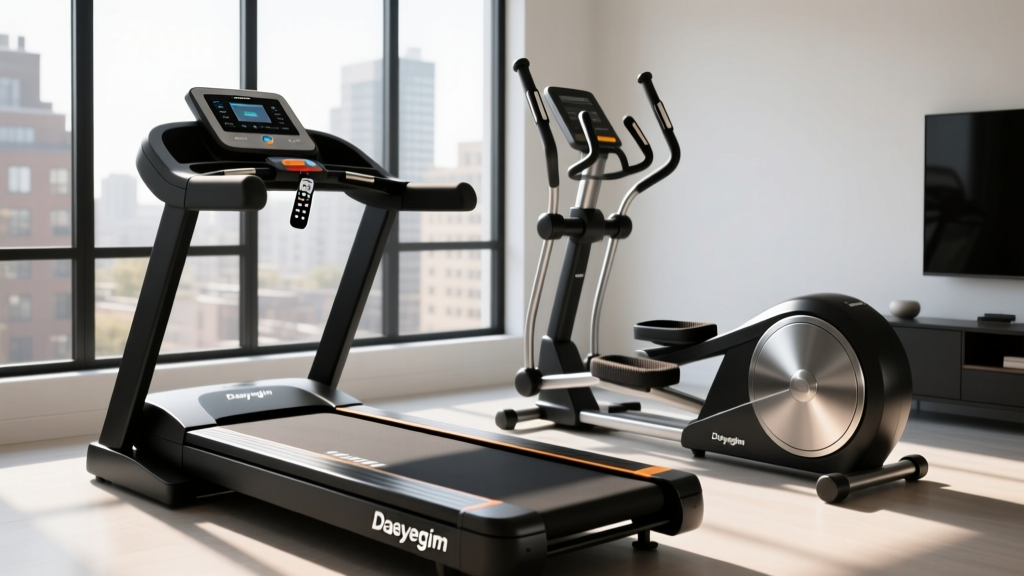
Elliptical vs Treadmill Longevity: Daeyegim Treadmill Remote Tips
Compare elliptical vs treadmill maintenance costs and longevity. Includes expert tips on mechanical care and fixing a Daeyegim treadmill remote.

The True Cost of Home Cardio: Beyond the Price Tag
When outfitting a home gym in 2026, most buyers obsess over screen resolution, interactive programming, and calorie-burn algorithms. However, as fitness equipment repair technicians will tell you, the real differentiator between a treadmill and an elliptical is not the user interface—it is the total cost of ownership (TCO) and mechanical longevity. Home cardio machines are subjected to repetitive kinetic stress, sweat corrosion, and electronic degradation. Understanding the maintenance profiles of these machines is critical before making a four-figure investment.
This guide breaks down the mechanical wear, electronic vulnerabilities, and long-term servicing requirements of ellipticals versus treadmills. We will also explore a highly specific, yet increasingly common, pain point in the modern compact-fitness market: electronic component failure, specifically focusing on troubleshooting and replacing a daeyegim treadmill remote for under-desk walking pads.
Mechanical Wear: Friction, Belts, and Pivot Points
The fundamental difference in longevity between these two machines lies in how they handle friction. Treadmills rely on a high-friction sliding surface, while ellipticals utilize low-friction rotational bearings.
Treadmill Deck and Belt Degradation
A treadmill's lifespan is almost entirely dictated by the relationship between the walking belt and the wooden deck beneath it. According to the experts at Treadmill Doctor, failure to lubricate this interface is the number one cause of premature motor burnout. When friction increases, the drive motor draws excess amperage, eventually frying the motor control board (MCB).
- Lubrication Protocol: Apply exactly 1 oz of 100% silicone treadmill lubricant under the belt every 3 months or every 130 miles. Never use petroleum-based products like WD-40, which will melt the deck's phenolic coating and void your warranty.
- Belt Tensioning: If the belt slips during heavy sprints, adjust the rear roller adjustment bolts exactly one-quarter turn clockwise on both sides. Over-tightening will stretch the belt seams and destroy the front roller bearings.
- Replacement Costs: A standard 2-ply replacement belt costs between $85 and $120, while a commercial 4-ply belt can exceed $180.
Elliptical Pivot Points and Rail Care
Ellipticals eliminate the sliding friction of a treadmill belt, replacing it with rotational mechanics. The Mayo Clinic frequently highlights ellipticals for their low-impact joint benefits, but mechanically, they require a different type of vigilance. The primary failure points are the nylon pivot bushings and the aluminum extrusion rails.
- Rail Maintenance: Wipe down the roller tracks weekly with isopropyl alcohol. Dust and skin cells mix with ambient humidity to create an abrasive paste that will flat-spot the polyurethane guide wheels over time.
- Joint Lubrication: While most modern pivot points feature sealed needle bearings, the drive chain or Kevlar belt requires periodic inspection. If your elliptical uses a chain drive, apply white lithium grease every 6 months to prevent elongation and skipping.
- Crank Arm Torque: Every 500 miles, check the main crank arm bolts. They should be torqued to 40-50 ft-lbs to prevent the wobble that eventually cracks the machine's main weldment.
Electronic Vulnerability: The Daeyegim Treadmill Remote Case Study
While heavy-duty ellipticals feature hardwired, sweat-sealed consoles, the explosion of compact under-desk treadmills has introduced a massive point of failure: proprietary infrared (IR) remotes. Because walking pads lack physical safety keys and full consoles, the remote is the sole interface for the machine's logic board.
If you own a budget-friendly walking pad, you may have experienced the frustration of a dead daeyegim treadmill remote. These white-label machines, widely distributed on Amazon, use cheap, unsealed IR blasters. When dropped on a hard floor, the internal solder joints on the IR LED fracture. Furthermore, the CR2032 coin cell batteries are prone to leaking corrosive acid onto the remote's PCB if left unused in a humid environment for months.
Step-by-Step: Reviving an Unresponsive Daeyegim Remote
- The Smartphone Camera Test: Point the remote's IR emitter at your smartphone's front-facing camera and press a button. If you see a faint purple/white flash on your screen, the remote is transmitting, and the issue is likely a blocked sensor on the treadmill's shroud.
- Contact Cleaning: If there is no flash, open the battery compartment. Use a fiberglass scratch pen or a cotton swab dipped in white vinegar to neutralize and remove any blue/green battery acid corrosion on the metal contacts.
- The Smart Home Bypass (2026 Pro-Tip): If the physical daeyegim treadmill remote is permanently broken, do not wait weeks for a generic replacement from overseas. Use a universal smart hub (like the Broadlink RM4 Pro) to 'learn' the signal from a neighbor's identical walking pad remote, or use a Flipper Zero device to brute-force the standard 38kHz NEC IR protocol used by 90% of budget fitness logic boards. You can then control your treadmill via voice commands, bypassing the fragile physical remote entirely.
5-Year Maintenance & Longevity Matrix
To provide a clear decision framework, we analyzed average maintenance data from Fitness Repair Parts and independent technician surveys to project the 5-year TCO for mid-range home equipment.
| Machine Type | Primary Failure Point | 5-Year Est. Maintenance Cost | Expected Lifespan |
|---|---|---|---|
| Motorized Treadmill | Motor Control Board (MCB) & Deck Friction | $150 - $300 (Belts, Lube, MCB) | 7 - 10 Years |
| Front-Drive Elliptical | Nylon Pivot Bushings & Console Sweat Damage | $80 - $150 (Bushings, Grease) | 10 - 15 Years |
| Compact Walking Pad | Proprietary Remotes (e.g., Daeyegim) & Thin Belts | $60 - $120 (Remotes, 1-Ply Belts) | 3 - 5 Years |
Environmental Degradation: Sweat, Dust, and Humidity
The environment in which you place your cardio machine dictates its electronic lifespan. Human sweat is highly saline and corrosive. On a treadmill, sweat drips directly onto the motor shroud, eventually seeping into the incline motor housing and rusting the limit switches. This is why commercial gym treadmills feature heavy-duty plastic shrouds with sealed seams.
Ellipticals, by contrast, keep their primary logic boards elevated in the console mast, safely away from the 'drip zone' of the user's torso. However, ellipticals are highly susceptible to ambient dust. Because they rely on open-air cooling fans to keep the eddy current magnetic resistance systems cool, they act as vacuums, pulling pet hair and dust into the internal flywheel housing. If you own an elliptical, using a compressed air duster on the rear flywheel vents every six months is mandatory to prevent the logic board from overheating and throwing an 'Error 3' code.
Technician's Warning: Never place a treadmill or elliptical directly on a thick carpet without a high-density EVA foam equipment mat. Carpet fibers are pulled into the treadmill's motor compartment by the static charge generated by the moving belt, leading to catastrophic motor overheating within the first two years of ownership.
Final Verdict: Which Machine Wins the Longevity War?
If your primary goal is mechanical longevity and minimal electronic babysitting, the elliptical is the undisputed champion of home cardio. The absence of a high-friction sliding deck and the elevated placement of its electronic components allow a well-maintained elliptical to easily outlast a treadmill by 3 to 5 years.
However, if you prefer the biomechanics of running and opt for a treadmill, you must commit to strict belt lubrication and electronic care. For users utilizing compact walking pads, recognizing the fragility of accessories like the daeyegim treadmill remote and learning how to bypass or clone IR signals will save you from turning a $300 machine into expensive e-waste simply because a $15 plastic remote broke. Ultimately, longevity in home fitness equipment is not just about what you buy—it is about how meticulously you manage the friction, dust, and digital vulnerabilities of your investment.
More gear to consider
All reviews
Beyond Treadmill History: Expert Belt Maintenance Guide

Rowing Machine Guide & Technique: Skip Lubricating ProForm Treadmills

Rowing Machine Buying Guide for Elite Treadmill NordicTrack Users

Curve Treadmill Benefits vs Motorized: Troubleshooting Guide
Treadmill Feature Comparison & NordicTrack Troubleshooting
