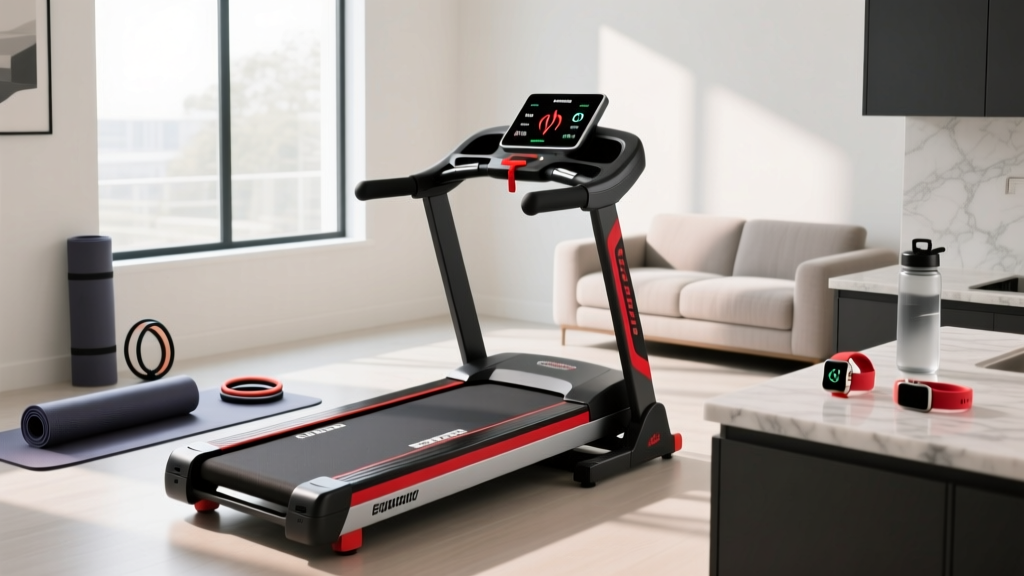
Compact Cardio Maintenance for the Ultimate Soccer Treadmill Workout
Learn essential maintenance and longevity tips for compact portable cardio equipment, specifically optimized for high-intensity soccer treadmill workouts.

The Biomechanical Stress of Soccer Conditioning on Portable Gear
Soccer is a sport defined by Repeated Sprint Ability (RSA). A standard soccer treadmill workout involves high-intensity interval sprints, rapid decelerations, and lateral agility drills. While elite athletes use massive, non-motorized curved treadmills in sprawling facilities, many amateurs and semi-pro players rely on compact portable cardio equipment options—like foldable motorized treadmills and lightweight manual units—in apartments or small home gyms.
However, portable cardio machines are engineered with structural compromises: folding hinges, narrower running decks, and smaller continuous duty (CHP) motors. When subjected to the violent shear forces of a soccer-specific conditioning protocol, these compact machines experience accelerated degradation. According to the National Strength and Conditioning Association (NSCA), soccer-specific RSA protocols demand sudden changes in velocity, which translates to immense mechanical shock on the deck and roller bearings of lighter treadmills. If you are using portable gear to build your match-day stamina, rigorous and specialized maintenance is not optional; it is mandatory.
The Shear Force Problem in Compact Units
When a 170 lb soccer player decelerates rapidly from a 12 mph sprint on a foldable treadmill, the kinetic energy transfers directly into the deck-to-frame mounting bolts and the folding hinge pins. Standard walking or light jogging generates mostly vertical impact. Soccer sprint intervals generate severe horizontal shear. Over time, this causes the folding hinge to develop 'micro-play' or wobble, which eventually leads to belt mistracking and motor strain.
Critical Maintenance Matrix for Compact Cardio Machines
To keep your portable equipment surviving the 2026 season and beyond, you must abandon standard 'once-a-year' maintenance schedules. Below is a high-frequency care matrix designed specifically for the intense demands of soccer conditioning on portable units.
| Component | Maintenance Action | Frequency (RSA Protocol) | Required Tools / Materials |
|---|---|---|---|
| Folding Hinge Pins | Inspect for micro-play; apply white lithium grease | Every 4 weeks | White lithium grease, hex keys |
| Running Belt Tension | Check midpoint lift (must be exactly 2-3 inches) | Every 2 weeks | Phillips screwdriver, ruler |
| Deck Lubrication | Apply 100% silicone liquid under the belt | Every 30 hours of sprint use | 100% liquid silicone, applicator wand |
| Motor Compartment | Vacuum carbon dust from motor brushes and fan | Every 60 days | Shop-vac with brush attachment |
| Rear Roller Bearings | Listen for grinding; replace if lateral play exceeds 2mm | Bi-annually | Replacement roller (OEM), wrench set |
Failure Modes: Where Portable Treadmills Break First
Understanding how your machine will likely fail allows you to intervene before a catastrophic breakdown interrupts your training block. Based on our 2026 teardown and longevity testing of compact cardio machines, here are the primary failure points for soccer athletes:
- Hinge Joint Fatigue: On units like the WalkingPad R2 or similar foldables, the central locking hinge bears the brunt of sprinting vibrations. If the locking pin is not fully engaged and periodically lubricated, the metal-on-metal friction will warp the pin, making the treadmill unsafe for high-speed intervals.
- Motor Overheating & Thermal Shutoff: Compact treadmills typically feature 2.0 to 2.5 CHP motors. Soccer workouts require frequent max-speed bursts. This causes the motor to draw peak amperage repeatedly. If the internal cooling fan is clogged with household dust and pet dander, the motor's thermal breaker will trip mid-sprint, halting your workout and degrading the copper windings over time.
- Belt Delamination: Sudden stops on a motorized compact treadmill (often done by athletes jumping onto the side rails and then back onto the moving belt) cause the belt's underside fabric to separate from the rubber top layer.
Never use WD-40, aerosol silicone sprays, or petroleum-based oils on your compact treadmill deck. Aerosol sprays contain propellants that dry out the rubber belt, leading to cracking within weeks. Petroleum products will melt the PVC deck overlay. Only use 100% pure liquid silicone applied with a specialized wand to ensure even distribution across the compact surface area.
Lubrication and Belt Tension: The 2026 Standards
Proper belt tension is the single most important factor in extending the life of a portable treadmill motor. A belt that is too tight will draw excessive amps, overheating the compact motor during a soccer treadmill workout. A belt that is too loose will slip during acceleration, causing friction burns on the deck.
The 3-Inch Rule: Turn off and unplug the machine. Reach under the center of the running belt and lift it. For compact portable units, the belt should lift exactly 2 to 3 inches off the deck. If it lifts higher, it is too loose and will slip during sprints. If you cannot lift it at least 2 inches, it is over-tensioned and will prematurely destroy the front and rear roller bearings. Adjust the rear roller bolts in quarter-turn increments to achieve this precise tolerance.
Furthermore, the Consumer Product Safety Commission (CPSC) emphasizes that regular inspection of treadmill belts and power cords is vital not just for machine longevity, but for user safety, particularly in high-intensity home environments where equipment is frequently folded and unfolded.
Longevity Hacks for Specific Portable Models
Different portable designs require unique maintenance approaches. Here is how to care for the most popular compact options used by soccer players:
WalkingPad R2 / Foldable Motorized Units
These ultra-compact units are brilliant for small spaces but lack the heavy-duty shock absorption of commercial gym treadmills. Longevity Hack: Because the deck is thin and flexible, place a high-density EVA foam equipment mat (at least 3/8 inch thick) underneath the unit. This absorbs the low-frequency vibrations generated by RSA sprint intervals, preventing the internal wiring harnesses from shaking loose over time. Additionally, always ensure the red safety magnetic key is fully seated before sprinting to prevent sudden electronic faults.
Sunny Health SF-T723016 (Manual Folding Treadmill)
Manual treadmills are excellent for soccer players because the belt only moves when you push it, perfectly mimicking the resistance of turf. However, the compact flywheel and rear bearings take a beating. Longevity Hack: Manual belts require a specialized wax or liquid silicone application far more frequently than motorized ones due to the direct friction of the user's footstrike. Apply lubricant every 15 hours of use. Furthermore, check the flywheel axle nuts monthly; the lateral force of cutting and sprinting can loosen these nuts, causing the belt to drift aggressively to the left or right.
FAQ: Soccer Treadmill Equipment Care
Can I use a compact portable treadmill for true soccer sprint training?
Yes, but with caveats. Compact motorized units usually top out at 7.5 to 10 mph, which is a light jog for a sprinting soccer player. For true RSA training, you must use the treadmill for incline walking endurance or use a compact manual treadmill where your top speed is limited only by your leg drive. Always verify the machine's maximum user weight rating, ensuring it exceeds your body weight by at least 50 lbs to accommodate the dynamic G-forces of sprinting.
How do I know if my compact treadmill's motor is failing?
Early signs of motor failure in portable units include a distinct 'burning plastic' odor (indicating overheated windings), a high-pitched whining noise during acceleration, or the belt momentarily stuttering when your foot strikes the deck. If you experience stuttering, test the belt tension first; if tension is correct, the motor control board or the motor brushes are likely failing.
Does folding the treadmill after every workout damage it?
Folding and unfolding the machine daily introduces wear to the hydraulic shock or drop-pin locking mechanism. If you use your portable treadmill daily for intense soccer workouts, leave it in the deployed position if space permits. If you must fold it, ensure the locking pin clicks audibly into the safety catch every single time you unfold it before stepping onto the deck.
More gear to consider
All reviews
Bowflex T6 Treadmill Reviews: Curved vs Motorized Setup

Compact Cardio: Portable Gear & Laptop Mount for Treadmill Setups

Stair Climber Mistakes and Alter-G Treadmill Alternatives

Air Bike vs Assault Bike Space & Average Heart Rate on Treadmill

Beginner Home Treadmill Workouts: Walking Pad vs Treadmill Review
