
Curved vs Motorized: A Beginner's Guide to Sprint Exercise on Treadmill
Curved vs motorized treadmills for HIIT: Follow our beginner step-by-step guide to safe, effective sprint exercise on treadmill machines.

The Great Debate: Curved Manual vs. Motorized Treadmills for HIIT
If you are looking to elevate your cardiovascular fitness, incorporating a sprint exercise on treadmill machines is one of the most time-efficient methods available. High-Intensity Interval Training (HIIT) on a treadmill drastically improves VO2 max, burns visceral fat, and builds lower-body explosive power. However, as you step into the cardio equipment market in 2026, you are immediately faced with a critical hardware decision: should you use a traditional motorized treadmill or invest in a curved manual treadmill?
This decision fundamentally changes the biomechanics, safety protocols, and physiological outcomes of your sprinting sessions. According to the American Heart Association, HIIT protocols require precise work-to-rest ratios to safely elicit cardiovascular adaptations without overtaxing the central nervous system. The machine you choose dictates how accurately you can hit those targets.
Quick Definitions
Motorized Treadmill: A flat or slightly inclined belt driven by an electric motor (typically 2.5 to 4.0 Continuous Horsepower). The machine dictates the pace, pulling your feet backward.
Curved Manual Treadmill: A non-motorized, concave slat-belt machine. You are the engine. The curved design uses gravity and friction; pushing the belt down and back with a forefoot strike naturally drives the machine forward.
Head-to-Head Comparison Matrix: Sprinting Hardware
Before diving into the step-by-step protocol, it is crucial to understand the mechanical differences that affect your sprint exercise on treadmill equipment. Below is a direct comparison using current 2026 market benchmarks.
| Feature | Curved Manual (e.g., TrueForm Runner) | Motorized (e.g., Sole F80 / NordicTrack 1750) |
|---|---|---|
| Average Cost (2026) | $3,995 - $6,500 | $1,199 - $2,499 |
| Acceleration Lag | Zero (Instant response to leg drive) | 0.5 to 2.5 seconds (Motor spool-up time) |
| Top Speed Limit | Unlimited (Capped only by your legs) | 12.0 mph (Standard) to 15.0 mph (Commercial) |
| Foot Strike Biomechanics | Forces forefoot/midfoot strike | Encourages heel-striking (over-striding) |
| Caloric Expenditure | Up to 30% higher per minute | Standard baseline (Motor does 20% of the work) |
| Maintenance Needs | Low (Belt waxing, bearing checks) | High (Motor dust, belt alignment, lube) |
Step-by-Step Beginner Guide: The 1:2 Sprint Protocol
Whether you are stepping onto a $5,000 AssaultRunner Elite or a $1,200 Horizon 7.4, proper execution is paramount. The Mayo Clinic emphasizes that beginners must prioritize controlled work-to-rest ratios to prevent musculoskeletal injury. We recommend a 1:2 ratio (e.g., 20 seconds of sprinting, 40 seconds of active recovery) for your first four weeks.
Step 1: The Dynamic Warm-Up (5 Minutes)
Never step onto a treadmill cold. Spend five minutes at a brisk walking pace (3.0 to 3.5 mph). On a curved treadmill, this means leaning slightly forward and pushing the belt with a flat foot. On a motorized treadmill, simply set the incline to 1.0% to mimic outdoor wind resistance and reduce the impact of the belt pulling your leg backward.
Step 2: The Acceleration Phase (The Critical Difference)
This is where the machine type completely changes your approach to the sprint exercise on treadmill decks.
- On a Motorized Treadmill: Do not stand on the belt while pressing the speed button to jump from 3.5 mph to 10.0 mph. The motor lag will cause the belt to suddenly jerk, risking a severe fall. Instead, use the straddle technique: step your feet onto the stationary plastic side rails, press the quick-speed button or manually ramp it up, and carefully step back onto the moving belt once it reaches target velocity.
- On a Curved Manual Treadmill: There is no straddling required. To accelerate, simply drop your hips slightly, shift your weight to the balls of your feet (the front curve of the deck), and drive your knees up. The harder you push down and back, the faster the belt moves. You are in total control of the acceleration curve.
Step 3: The Sprint Phase (20 Seconds)
Aim for an RPE (Rate of Perceived Exertion) of 8 out of 10.
Curved Form Cue: Keep your eyes on the horizon. Beginners often look down at their feet on a curved treadmill. This shifts your center of gravity too far forward, stalling the belt and placing immense shear force on your lumbar spine. Keep your chest proud and arms pumping at 90-degree angles.
Motorized Form Cue: Avoid over-striding. Because the belt pulls your foot back, beginners tend to reach their lead foot too far forward, resulting in a harsh heel strike. Focus on quick, rapid cadence (steps per minute) rather than elongating your stride.
Step 4: Active Recovery (40 Seconds)
Do not come to a complete stop.
Curved: Simply stop driving the belt and transition to a slow, flat-footed walk. The magnetic or friction resistance will naturally decelerate the machine.
Motorized: Step back onto the side rails if the machine does not decelerate fast enough, or hit the programmed cooldown button. Walking at 2.5 mph clears lactic acid from the muscles more efficiently than standing still, as noted by CDC physical activity guidelines regarding aerobic recovery.
Step 5: Repeat and Cool Down
Repeat Steps 2 through 4 for a total of 6 to 8 intervals. Finish with a 3-minute walking cool-down and 5 minutes of static stretching, focusing on the hip flexors and hamstrings, which become highly contracted during sprinting.
Expert Insight: The 30% increase in caloric burn often advertised for curved manual treadmills is highly dependent on user effort. Because there is no motor pacing you, it is psychologically easier to 'cheat' and slow down on a curved treadmill during the final 5 seconds of a sprint when fatigue sets in. Use a heart rate monitor to ensure you are actually hitting 85-95% of your max heart rate during the work intervals.
Troubleshooting Common Failure Modes
Even with perfect programming, beginners encounter specific edge cases depending on their hardware. Here is how to troubleshoot them:
Motorized: The 'Belt Slip' Stutter
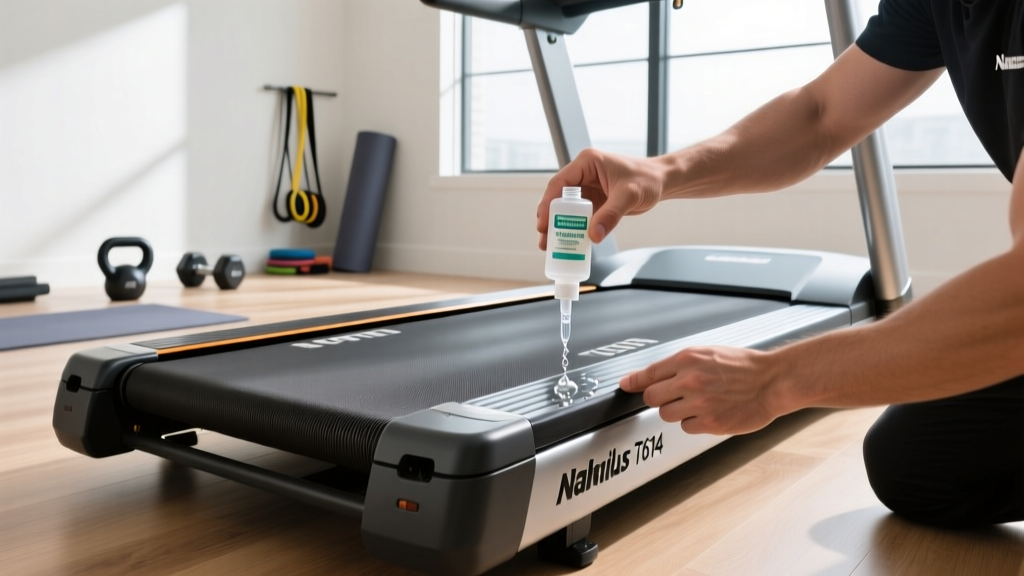
If you are sprinting at 10+ mph on a motorized treadmill and feel the belt 'stutter' or hesitate under your foot, the drive belt or walking belt is loose, or the deck lacks silicone lubrication. This is a massive safety hazard that can throw you backward. Fix: Unplug the machine, use an Allen wrench to tighten the rear roller bolts by a quarter-turn, and apply 100% pure silicone treadmill lube under the deck.
Curved: The 'Heavy Sled' Sensation
If the curved treadmill feels incredibly difficult to push, as if you are dragging a weighted sled, your posture is likely the culprit. If you stand too upright, your foot strikes the flat bottom of the curve rather than the upward slope. Fix: Lean forward from the ankles (not the waist) by about 5 to 10 degrees to ensure your foot lands on the ascending part of the curve, utilizing gravity to help pull the slat belt down.
2026 Purchasing Decision Framework
Which machine should occupy your home gym floor? Use this framework to decide:
- Choose a Curved Manual Treadmill if: You have a higher budget ($4,000+), you prioritize natural running biomechanics, you suffer from shin splints (the slat belt and forced forefoot strike drastically reduce tibial impact), and you want zero electrical maintenance.
- Choose a Motorized Treadmill if: You are on a strict budget (under $2,000), you need programmed incline variations (curved treadmills do not incline), you want to do long, steady-state Zone 2 cardio in addition to sprinting, or you require interactive screen integrations like iFIT or Peloton for guided classes.
Final Thoughts
Mastering the sprint exercise on treadmill equipment requires respecting the mechanics of the machine you choose. Motorized treadmills offer accessible, tech-driven pacing but demand strict safety protocols regarding acceleration. Curved manual treadmills demand a higher financial investment and greater physical output, but they reward the user with superior biomechanics and unmatched interval control. Start with the 1:2 beginner protocol, prioritize form over raw speed, and let the hardware work in harmony with your physiology.
More gear to consider
All reviews
How Your Treadmill Running Routine Impacts Belt Maintenance (2026)

How Many Steps in 1 Hour Walk on Treadmill? 2026 Walking Pad Trends
Nautilus T614 Treadmill Belt Maintenance: Expert Lubrication Guide
Folding Treadmill Review: Surviving a 30-Minute Treadmill HIIT Workout

Black Mirror Treadmill Review: 2026 Compact Cardio Budget Breakdown
