
NYRR Run Center Gait Analysis: Replicate It on a Budget
Discover how the NYRR Run Center gait analysis works and how to apply your running form data to budget treadmills and bikes for home cardio training.

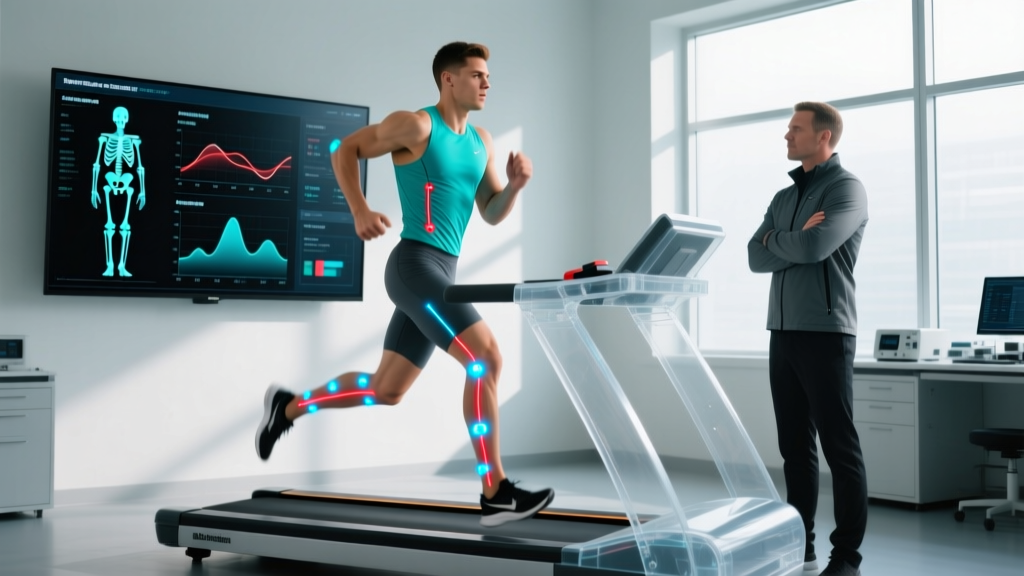
Getting a professional biomechanical assessment is the gold standard for injury prevention. The NYRR Run Center gait analysis provides runners with high-speed motion capture and pressure mapping to optimize stride mechanics. However, translating those clinical findings into a home gym setup—especially when working with budget treadmills and bikes—requires a strategic approach to equipment selection. You do not need a $3,000 commercial treadmill to honor your biomechanical data; you just need to know which specs actually matter.
Inside the NYRR Run Center Gait Analysis Process
Located in Manhattan, the NYRR Run Center offers a comprehensive 60-to-90-minute assessment that goes far beyond the basic video recording you might get at a local running store. The lab utilizes 3D motion capture systems (similar to Vicon setups) and instrumented treadmills with embedded force plates to measure Ground Reaction Forces (GRF) and loading rates.
When you undergo the NYRR Run Center gait analysis, the clinical team evaluates several critical kinematic variables:
- Foot Strike Pattern: Identifying whether you are a rearfoot, midfoot, or forefoot striker, and measuring the exact angle of ankle dorsiflexion at initial contact.
- Cadence and Stride Length: Calculating steps per minute (SPM) and flight time to determine if you are over-striding, which drastically increases tibial shock.
- Vertical Oscillation: Measuring how much energy you waste bouncing upward rather than propelling forward.
- Pronation Velocity: Tracking the speed and degree of ankle eversion during the stance phase to assess your risk for plantar fasciitis and Achilles tendinopathy.
According to biomechanics research published by the National Center for Biotechnology Information (NCBI), treadmill running closely mimics overground kinematics, making lab data highly applicable to home treadmill training—provided the home equipment meets specific mechanical thresholds.
Translating Clinical Data to Budget Home Cardio Gear
If your lab report reveals a heavy heel strike or a wide lateral stance, buying a cheap treadmill with a 45-inch belt and a rigid, uncushioned deck will lead to immediate joint degradation. You must map your specific biomechanical flaws to the mechanical specifications of budget cardio equipment.

| Biomechanical Finding | Equipment Risk on Budget Gear | Required Budget Spec / Workaround |
|---|---|---|
| Heavy Heel Strike (High Loading Rate) | Rigid decks transmit shock directly to the tibia and knees. | Look for multi-zone elastomer cushioning; avoid treadmills under 250 lbs in weight. |
| Over-striding (Long Stride Length) | Standard 45"-48" budget belts force you to shorten your stride unnaturally. | Minimum 55" belt length required; consider a budget bike for cardio if space limits belt size. |
| Excessive Pronation / Wide Stance | Narrow belts (under 18") cause lateral clipping and alter natural hip mechanics. | Minimum 20" belt width; rigid steel frame to prevent lateral deck sway. |
| High Tibial Shock / Joint Pain | Continued running on entry-level treadmills exacerbates stress fractures. | Transition to a heavy-flywheel magnetic resistance bike for low-impact base building. |
Top Budget Treadmills for Gait-Optimized Running (2026)
As of early 2026, the budget treadmill market has improved significantly, but you must still filter out the ultra-cheap walking pads that lack the structural integrity for running. Here are two models that respect your gait data without breaking the bank:
1. Horizon Fitness T101 (Approx. $599)
The T101 remains a benchmark for budget runners. It features a 20" x 55" running belt, which is the absolute minimum length required for runners whose NYRR Run Center gait analysis shows a natural, un-shortened stride. Its 3-zone variable cushioning system is softer at the front (impact zone) and firmer at the back (push-off zone), which specifically helps mitigate the high loading rates associated with rearfoot striking. The 2.5 CHP motor is sufficient for sustained tempo runs up to 10 mph.
2. Sunny Health & Fitness SF-T7516 (Approx. $399)
If your gait analysis revealed a high cadence (170+ SPM) with a naturally shorter stride length, you can compromise on belt length to save money. The SF-T7516 offers a 50" belt, which is slightly short for over-striders but perfectly adequate for high-cadence runners. It includes a 12% motorized incline, allowing you to simulate hill training, which is a proven method for reducing impact forces and shifting the load from the knees to the glutes and calves.
Budget Bikes for Active Recovery and Gait Offloading
Sports medicine specialists at the Hospital for Special Surgery (HSS) frequently recommend offloading running volume when gait analysis flags severe asymmetries or high impact forces. A budget indoor cycle is the most effective tool for maintaining cardiovascular fitness while allowing bone and tendon remodeling.
Yosuda PRO Magnetic Indoor Cycling Bike (Approx. $299)
Unlike friction-resistance bikes, the Yosuda PRO uses a magnetic system that provides a smooth, consistent pedal stroke. More importantly for gait-conscious athletes, it features a highly adjustable 4-way seat and handlebar setup. This allows you to dial in your exact hip and knee angles, ensuring that your cycling posture does not inadvertently tighten your hip flexors—a common issue that ruins running mechanics.
Schwinn IC4 (Approx. $699 on sale)
While pushing the upper limit of "budget," the IC4 is worth the investment if your lab report noted knee valgus (knees caving inward). The IC4 has a relatively narrow Q-factor (the distance between the pedals), which forces your knees to track in a straight, biomechanically efficient line, reinforcing the neuromuscular corrections you learned in the lab.
DIY Gait Analysis: Replicating the Lab at Home
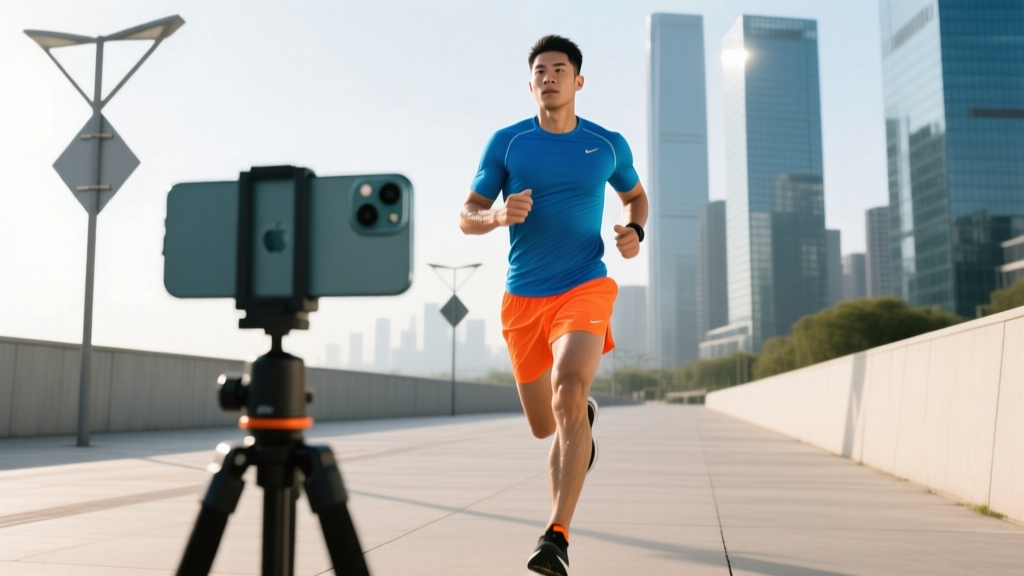
While a DIY setup will never replace the force plates used in the NYRR Run Center gait analysis, you can capture 80% of the visual feedback needed to correct cadence and foot strike on your home treadmill using modern smartphone technology.
- Camera Placement: Mount your smartphone on a tripod exactly perpendicular to the sagittal plane (side view) at knee height. For frontal plane analysis (checking for hip drop or knee valgus), place the camera directly behind the treadmill at waist height.
- Frame Rate: Record at 240 frames per second (fps) using your phone's native slow-motion mode. Standard 60fps video is too blurry to accurately identify the exact moment of initial foot contact.
- AI Pose-Estimation Apps: In 2026, apps like Onform and Kinovea (desktop) use AI to automatically track joint centers. You no longer need to manually draw angles. The software will automatically calculate your knee flexion angle at mid-stance and your trunk lean.
- Marker Placement: Place a piece of high-contrast athletic tape on your lateral malleolus (outside ankle bone) and greater trochanter (outside hip bone). This gives the AI software a reliable anchor point, drastically reducing measurement error.
Pro Tip: Always perform your DIY video analysis after a 10-minute warm-up. Running mechanics change significantly as fatigue sets in; analyzing your form at minute 12 provides a much more accurate picture of your race-day biomechanics than analyzing your fresh stride at minute 1.
Frequently Asked Questions
What exactly happens during an NYRR Run Center gait analysis?
The assessment involves running on an instrumented treadmill while 3D motion capture cameras track reflective markers placed on your joints. The system calculates your joint angles, ground reaction forces, and stride symmetry. A physical therapist or biomechanist then reviews the data with you, providing a detailed report on your injury risks and specific drills to correct mechanical flaws.
Can I use my gait analysis data to buy a budget treadmill?
Yes, but you must focus on the right specifications. If your report shows a long stride length, you must prioritize a belt length of at least 55 inches, even if it means sacrificing a built-in touchscreen or advanced incline features. If your report shows high impact forces, prioritize a heavier treadmill with a thicker deck and elastomer cushioning over a lightweight folding model.
Should I switch to a budget bike if my gait analysis shows high impact forces?
If your analysis reveals high tibial shock, severe over-striding, or early signs of stress-related bone injuries, you should absolutely incorporate cycling to offload your skeletal system. A magnetic resistance budget bike allows you to maintain your aerobic base and build glute/quad strength without the repetitive ground reaction forces associated with running.
How often should I re-test my gait after changing my home cardio equipment?
Biomechanics adapt to your environment. If you transition from overground running to exclusively training on a budget home treadmill, your stride length and cadence will naturally shift due to the belt's motorized pull and deck stiffness. It is recommended to perform a DIY video analysis every 6 to 8 weeks to ensure your home equipment hasn't introduced new mechanical compensations.
More gear to consider
All reviews
Manual Treadmill vs Electric Treadmill or Stationary Bikes?
NordicTrack X24 Treadmill Review: Belt Maintenance Market Trends

How to Avoid the 'Fall Off Treadmill GIF': Feature Comparison & Troubleshooting

Spirit XT685 Treadmill Review: Walking Pad Comparison Guide 2026
Woman on Treadmill vs Walking Pad: Stride Mistakes & Fixes
