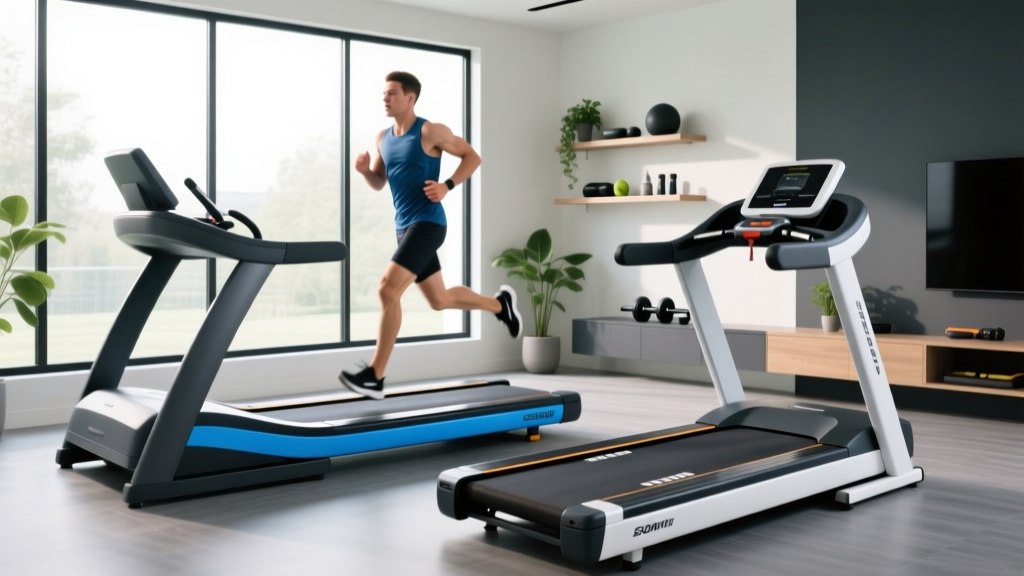
Curved vs Motorized: NordicTrack Treadmill Weight & Setup Mistakes
Compare curved manual and motorized treadmills. Avoid setup mistakes, manage NordicTrack treadmill weight, and troubleshoot common cardio machine issues.

The Core Debate: Curved Manual vs. Heavy Motorized Decks
The home fitness landscape in 2026 is sharply divided between two distinct running experiences: the self-powered, biomechanically demanding curved manual treadmill and the feature-rich, heavy motorized treadmill. While tech specs and screen sizes often dominate buying guides, seasoned home gym builders know that the physical footprint and mass of the machine dictate long-term satisfaction. Understanding the implications of a machine's mass—particularly when evaluating the nordictrack treadmill weight against lighter manual alternatives—is critical for floor integrity, acoustic management, and mechanical longevity.
Curved manual treadmills, like the TrueForm Trainer or AssaultRunner Pro, rely on a slat-belt system and the user's stride to drive the deck. Motorized units, such as the NordicTrack Commercial series, utilize high-torque continuous horsepower (CHP) motors and heavy steel frames to stabilize the user at high speeds and steep inclines. Both have distinct advantages, but both present unique setup and troubleshooting challenges.
| Specification | TrueForm Trainer (Curved Manual) | NordicTrack Commercial 2450 (Motorized) |
|---|---|---|
| Machine Weight | 330 lbs | 340 lbs |
| Max User Capacity | 400 lbs | 300 lbs |
| Footprint (L x W) | 63' x 31' | 80' x 38' |
| Power Requirement | None (Self-powered) | 120V Dedicated 15A Circuit |
| Deck Type | Urethane Slat Belt on Aluminum Track | 1-ply Commercial Rubber Belt on Wood/MDF Deck |
Common Mistakes When Managing Heavy Motorized Treadmills
When consumers research high-end motorized machines, they frequently overlook the structural demands of the equipment. The total nordictrack treadmill weight of a flagship model like the X32i reaches a staggering 550 lbs, while the popular 2450 sits at 340 lbs. Failing to account for this mass leads to costly home repair and mechanical failure.
Mistake 1: Ignoring Dynamic Floor Load Limits
A common error is assuming that if a floor can hold a 340 lb treadmill and a 220 lb runner statically, it is safe. Running generates a ground reaction force of up to 2.5 to 3 times your body weight. A 220 lb runner creates over 600 lbs of peak dynamic impact force per stride. Combined with the 340 lb machine, your floor joists are absorbing nearly 1,000 lbs of localized, repetitive force.
- The Fix: Never place heavy motorized treadmills on second-floor rooms with engineered I-joists spanning more than 14 feet without reinforcement. For basement or garage concrete slabs, use 3/4-inch thick vulcanized rubber mats (often sold as horse stall mats) to distribute the point-load and dampen acoustic vibration.
Mistake 2: Moving the Machine Without Disassembly
Attempting to pivot a fully assembled motorized treadmill through a standard 30-inch interior door frame is a frequent cause of snapped wiring harnesses and bent uprights. The sheer mass makes it impossible to safely tilt the machine without putting catastrophic lateral torque on the folding hinge mechanism.
Warning: Never drag a motorized treadmill by the handrails. Always remove the safety key, unplug the unit, unbolt the uprights from the base frame (usually requiring a 13mm or 15mm socket), and move the base and uprights separately.Troubleshooting Guide: Motorized vs. Manual Treadmills
Because the drive mechanisms are fundamentally different, the troubleshooting protocols for curved manuals and heavy motorized units require entirely different toolsets and diagnostic approaches.
Motorized Treadmill Troubleshooting (NordicTrack Focus)
Heavy motorized units rely on precise belt tension and electronic calibration. When the nordictrack treadmill weight and user weight combine, it places immense friction on the deck if maintenance is ignored.
- Symptom: Belt Hesitation or 'Slipping' Underfoot. This is rarely a motor issue; it is almost always a walking belt tension or friction issue. If the belt requires more torque to move than the motor can provide at low speeds, it will stutter.
Solution: Unplug the machine. Locate the two rear roller adjustment bolts at the back of the deck. Using a 6mm Allen wrench, turn both bolts exactly 1/4 turn clockwise. Test the machine. If slipping persists, lift the belt and apply 100% pure silicone treadmill lubricant to the deck. Never use petroleum-based products like WD-40, which will destroy the PVC belt backing. - Symptom: Incline Motor Stuttering or LS1 Error Codes. Heavy users maxing out the 40% incline on steep-grade models can overload the incline actuator.
Solution: Calibrate the incline system. On most NordicTrack models, holding the 'Stop' and 'Speed Up' buttons simultaneously while inserting the safety key initiates the automatic calibration sequence. The deck will rise to its maximum height and lower to zero, resetting the internal potentiometer limits.
Curved Manual Treadmill Troubleshooting
Curved treadmills eliminate the motor, wiring, and electronic boards, but introduce mechanical friction points related to the slat belt and guide rails.
- Symptom: Slat Belt Drifting to One Side. Unlike motorized belts that use a crowned front roller to self-center, curved slat belts rely on symmetrical tension and the natural tracking of the urethane slats on the aluminum curve.
Solution: If the belt rubs against the left side panel, the right side is too loose. Locate the tensioning bolts on the front or rear axle (depending on the brand, e.g., AssaultRunner uses rear tensioners). Tighten the right-side bolt by 1/8th of a turn. Do not over-tighten, as excessive tension will destroy the sealed cartridge bearings in the pulleys. - Symptom: Squeaking or Grinding Noise from the Curve. This occurs when dust and pet hair embed themselves in the UHMW (Ultra-High-Molecular-Weight) polyethylene guide strips that the slats glide over.
Solution: Wipe down the guide rails with a damp microfiber cloth. Apply a PTFE (Teflon) dry lubricant spray to the rails. Avoid wet silicone sprays, which act as a magnet for ambient dust and will eventually form a grinding paste.
According to the American Heart Association, adults should aim for at least 150 minutes of moderate-intensity aerobic activity per week. Whether you achieve this on a curved manual deck or a motorized incline trainer, ensuring your equipment is mechanically sound prevents workout interruptions and joint strain.
Biomechanics and Joint Impact: Which is Safer?
The decision between curved and motorized often comes down to joint health and running mechanics. The Centers for Disease Control and Prevention (CDC) emphasizes the importance of sustainable, joint-friendly aerobic exercise for long-term cardiovascular health.
Curved manual treadmills naturally encourage a forefoot or midfoot strike. Because the user must pull the belt backward with their hamstrings and glutes, the posterior chain is highly activated, and the impact forces on the patellofemoral joint (knee) are significantly reduced compared to the heel-strike pattern often induced by the moving belt of a motorized treadmill. However, the steep curve can place higher eccentric loads on the Achilles tendon and calf muscles, making it a poor choice for runners recovering from plantar fasciitis or Achilles tendinopathy.
Conversely, modern motorized treadmills with advanced cushioning systems (like NordicTrack's FlexSelect or ProShox) absorb up to 30% more impact than outdoor asphalt. For heavier users (approaching the 300 lb max capacity of many motorized units), the predictable, consistent pace of a motorized belt reduces the cognitive load and stabilizes the gait cycle, lowering the risk of ankle sprains during high-fatigue intervals.
Decision Framework: Choosing Your 2026 Cardio Centerpiece
Use this rapid framework to determine which machine architecture suits your specific environment and physiological needs:
- Choose a Curved Manual Treadmill if: You live in an apartment or off-grid setup where power draw and noise transfer are concerns. You prioritize HIIT (High-Intensity Interval Training) and want instantaneous speed changes without waiting for a motor to ramp up. You have the space for a 63-inch footprint but lack the dedicated 15-amp electrical circuit required by heavy motorized units.
- Choose a Heavy Motorized Treadmill if: You are training for specific outdoor marathons and need to simulate exact paces and downhill/uphill gradients (up to 40% incline and -6% decline). You prefer long, steady-state LISS (Low-Intensity Steady State) cardio where the motor paces you. You have a ground-floor home gym with concrete or reinforced joists capable of handling the substantial nordictrack treadmill weight and dynamic impact forces.
Ultimately, avoiding setup mistakes and understanding the mechanical realities of your chosen machine will extend its lifespan from a mere three years to well over a decade. For ongoing maintenance schedules and error code diagnostics, always refer to the official manufacturer support portals rather than relying on generalized forum advice.
More gear to consider
All reviews
Elliptical vs Treadmill Value: Why Does My Treadmill Keep Stopping?

Space-Saving Cardio: Livestrong LS10.0T Treadmill Small Space Review

Treadmill Motor Guide: Sizing Machines for Good Treadmill Workouts
Elliptical vs Treadmill Care: Maintaining Your HIIT Program Treadmill

Noise Comparison Guide: Quiet Treadmill Exercises for Belly Fat