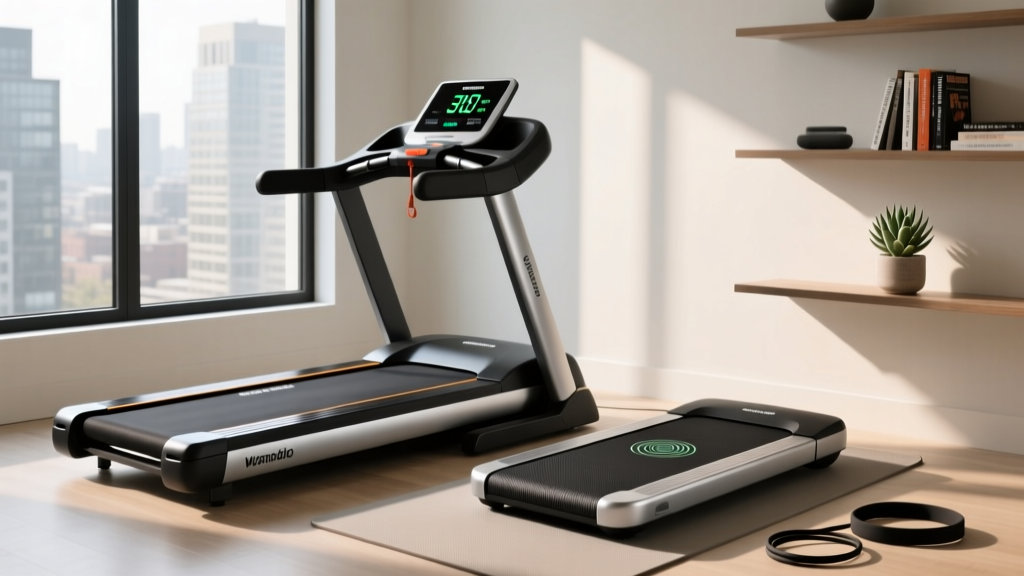
Walking Pad vs Treadmill: The Treadmill Sport Art Guide
Compare walking pads and traditional treadmills. Master the treadmill sport art with our troubleshooting guide, model reviews, and maintenance tips.

The Biomechanical Reality: Walking Pads vs. Traditional Treadmills
The modern home gym has evolved dramatically, and the debate between ultra-compact walking pads and traditional full-sized treadmills is at the forefront of cardiovascular equipment discussions. However, purchasing the right machine is only half the battle. True treadmill sport art isn't just about buying the sleekest machine; it encompasses the seamless integration of biomechanical efficiency, proper stride mechanics, and rigorous equipment maintenance. When users ignore the physical limitations of their chosen cardio canvas, they invite joint pain, premature motor failure, and frustrating error codes.
According to research published by the Mayo Clinic, the biomechanics of walking versus running place vastly different stress loads on the knees and hips. Walking pads, which are engineered primarily for low-impact, steady-state walking, fundamentally alter your natural gait if you attempt to push them beyond their design parameters. Mastering the treadmill sport art means understanding exactly where the hardware ends and your biological mechanics begin.
Stride Length and Joint Stress Matrix
Before troubleshooting specific models, it is critical to understand the mechanical boundaries of the equipment you are using. The following matrix breaks down the physical limitations inherent to different machine classes in 2026.
| Equipment Class | Avg. Belt Length | Max Safe Speed | Stride Impact | Motor Type & Cooling |
|---|---|---|---|---|
| Under-Desk Walking Pad | 40" - 45" | 3.5 - 4.0 mph | Forces shortened, shuffling gait; high calf strain if pushed. | 1.5 - 2.0 HP Peak (DC); Passive air cooling. |
| Foldable Compact Treadmill | 47" - 50" | 6.0 - 7.6 mph | Accommodates brisk walking/jogging; restricts full sprint stride. | 2.5 HP Peak (DC); Basic fan cooling. |
| Full-Size Traditional Treadmill | 55" - 60" | 10.0 - 12.0 mph | Allows full natural running extension; optimal joint shock absorption. | 3.0 - 4.0 CHP (Continuous); Active forced-air cooling. |
Top 2026 Models Reviewed: Where the Mistakes Happen
To illustrate the practical application of the treadmill sport art, let's examine three highly popular models on the market today and identify the specific user errors that lead to hardware failure.
1. KingSmith WalkingPad X21 (Approx. $599)
The X21 remains a top seller for its dual-fold design and 47-inch running surface. It features a 2.5 HP peak motor. The Mistake: Users frequently attempt to run at 7.0 mph on this unit. Because the continuous horsepower (CHP) is roughly 1.25, sustained running causes the DC motor to overheat, triggering an automatic thermal shutdown. Furthermore, the 47-inch belt forces runners to chop their stride, leading to Achilles tendonitis over time.
2. UREVO Strol 2E (Approx. $399)
A budget-friendly folding pad with a 2.25 HP motor and integrated handlebar. The Mistake: Owners often place the Strol 2E on thick, plush carpeting without a high-density equipment mat. This blocks the underside ventilation ports and causes the folding hinge mechanism to warp slightly under dynamic load, resulting in a belt that constantly tracks to the left and frays the side edges.
3. Sole F80 Full-Size Treadmill (Approx. $1,199)
A powerhouse with a 3.5 CHP motor and a 22" x 60" belt. The Mistake: Neglecting the deck lubrication schedule. The Sole F80 relies on a silicone-waxed deck. When users ignore the 150-mile lubrication interval, the friction coefficient spikes. This forces the motor to draw excess amperage to maintain belt speed, eventually blowing the lower control board's MOSFET transistors or triggering an E02 overcurrent error.
Troubleshooting the Treadmill Sport Art: Form & Hardware
Achieving mastery in the treadmill sport art requires correcting both physical form and mechanical neglect. Below are the most common troubleshooting scenarios we see in home gyms.
⚠️ WARNING: The Handrail HangHolding onto the handrails while walking on an incline pad completely negates the caloric expenditure and alters your spinal alignment. According to Harvard Health Publishing, proper arm swing is essential for balance and core engagement. If you must hold on to keep up with the belt speed, the speed is set too high for your current fitness level. Drop the speed by 1.5 mph and let your arms swing naturally.
Hardware Error Code Diagnostics
When your machine halts unexpectedly, the console will usually display an error code. Here is how to troubleshoot the most frequent culprits:
- E01 (Communication Error): This means the console is not receiving data from the lower motor control board. Fix: Unplug the machine, remove the motor hood, and reseat the multi-pin data cable connecting the upright stem to the board. Check for pinched wires near the folding hinge.
- E02 (Overcurrent / Motor Protection): The motor is drawing too many amps. Fix: Perform the 'Lift Test'. With the machine off, lift the center of the running belt. It should rise exactly 2 to 3 inches off the deck. If it lifts less than 2 inches, the belt is too tight, causing massive friction. Loosen the rear roller bolts by a quarter-turn. If it lifts more than 3 inches, the belt will slip underfoot; tighten it.
- E05 (Speed Sensor Error): The console cannot read the belt speed. Fix: Locate the magnetic reed switch near the front roller. Ensure the gap between the magnet and the sensor is exactly 3-5 millimeters. Dust accumulation here is a frequent point of failure.
The Ultimate Maintenance Protocol
Preserving the treadmill sport art in your home requires a strict, non-negotiable maintenance schedule. Walking pads, due to their smaller rollers and lower-profile decks, actually require more frequent attention than full-sized treadmills.
- Weekly Alignment Check: Walk at 3.0 mph without holding the rails. If you feel the belt tug your left or right foot toward the edge cap, adjust the rear roller bolts. Turn the left bolt clockwise by 1/8th of a turn to move the belt right, and vice versa.
- Bi-Monthly Lubrication (Walking Pads): Because walking pad decks are smaller and heat dissipates poorly, apply 15ml of 100% pure liquid silicone treadmill lubricant every 60 days or 100 miles. Never use WD-40 or petroleum-based sprays, as these will melt the PVC belt backing and destroy the MDF deck.
- Quarterly Deep Clean: Remove the motor hood and use a can of compressed air to blow out carbon dust from the motor brushes. Accumulated carbon dust is highly conductive and is the leading cause of short-circuited lower control boards in compact treadmills.
- Annual Roller Inspection: Check the front and rear rollers for 'crowning' (wear in the exact center). If the belt is consistently riding up on the worn center groove, the rollers must be replaced to prevent premature belt stretching.
Expert Verdict: Choosing Your Cardio Canvas
The choice between a walking pad and a traditional treadmill ultimately comes down to your biomechanical needs and your willingness to perform routine maintenance. If your goal is low-intensity, steady-state movement while working at a standing desk, a high-quality walking pad like the KingSmith X21 is an excellent, space-saving tool. However, if your treadmill sport art involves interval training, incline running, and natural stride extension, a full-sized machine like the Sole F80 is a non-negotiable requirement to protect your joints and the machine's internal electronics.
'The greatest mistake in indoor cardio is treating the machine as a passive conveyor belt rather than an interactive piece of sporting equipment. Respect the hardware limits, maintain the deck, and let your stride dictate the speed—not the other way around.'
By avoiding the common pitfalls of stride restriction, motor overheating, and belt neglect, you ensure that your cardiovascular investment delivers safe, effective, and uninterrupted performance for years to come.
More gear to consider
All reviews
Can You Hit an 8 Minute Mile Pace on Treadmill Walking Pads? (2026)
NordicTrack T6.5 Si Treadmill vs Upright, Recumbent & Spin Bike Care

Small Space Folding Treadmill: Reviews on Walking Pad Treadmills

The Fall of Treadmill Injuries: Curved vs. Motorized Setup

Determining Chip for Treadmills vs. Rowing Machine Guide
