
Viral PAWG Ass Treadmill Workouts: Walking Pad vs Incline Treadmill Guide
Discover the science behind the viral PAWG ass treadmill trend. We compare walking pads vs. incline treadmills with a beginner step-by-step glute guide.

If you have spent any time on fitness TikTok or Instagram Reels over the last few years, you have likely encountered the viral 'PAWG ass treadmill' trend. While the internet slang might be colloquial, the underlying fitness protocol is rooted in serious exercise science. This search trend refers to high-incline, low-speed treadmill walking routines specifically designed to maximize gluteus maximus hypertrophy and hamstring engagement without the high joint impact of running.
As we move through 2026, the home fitness market is flooded with compact walking pads and traditional incline treadmills. But which machine actually delivers the results promised by viral fitness influencers? In this beginner-friendly, step-by-step guide, we will break down the biomechanics of incline walking, compare walking pads against traditional treadmills, and provide a concrete protocol to safely build lower-body muscle at home.
The Biomechanics of Incline Glute Hypertrophy
To understand why this specific treadmill protocol works, we have to look at hip extension. When you walk on a flat surface, your glutes activate primarily to stabilize your pelvis. However, when you introduce a steep incline (10% to 15%), the mechanical demand shifts dramatically. Your gluteus maximus and hamstrings must forcefully contract to propel your body weight upward against gravity with every step.
According to the American Council on Exercise (ACE), walking at a high incline significantly increases the electromyographic (EMG) activation of the posterior chain compared to flat walking or even light jogging. Furthermore, maintaining a moderate pace (2.5 to 3.0 MPH) ensures that the muscle remains under tension for a longer duration per rep, triggering metabolic stress—a key driver of muscle hypertrophy.
Expert Insight: The viral '12-3-30' workout (12% incline, 3.0 MPH, 30 minutes) works not because it is a magic formula, but because it perfectly balances mechanical tension and cardiovascular endurance, keeping the heart rate in Zone 2 while heavily taxing the gluteal muscles.
Walking Pad vs. Traditional Incline Treadmill: The Hardware Reality
Many beginners attempt to replicate viral treadmill workouts on under-desk walking pads, only to see zero changes in their lower body composition. Here is the hard truth: walking pads are fundamentally incapable of executing high-incline glute workouts.
Most walking pads feature a fixed 0% incline, or at best, a manual adjustment that caps out around 5%. To achieve the deep hip extension required for glute growth, you need a motorized incline mechanism that reaches at least 10% to 15%. Below is a direct hardware comparison to illustrate why traditional treadmills win for this specific aesthetic goal.
| Feature | Standard Walking Pad (e.g., WalkingPad R2) | Entry-Level Incline Treadmill (e.g., Sunny Health SF-T723016) | Premium Auto-Incline Treadmill (e.g., Horizon 7.0i) |
|---|---|---|---|
| Primary Use Case | Daily step counts, NEAT, under-desk use | Light cardio, basic incline walking | Targeted hypertrophy, advanced interval training |
| Max Incline | 0% (Fixed) to 5% (Manual) | 12% (Manual Pin Adjustment) | 15% (Motorized / Console Controlled) |
| Motor Power | 2.5 HP (Peak) | 2.5 HP (Peak) | 3.0 CHP (Continuous) |
| Handrails | None or minimal front bar | Full-length fixed handrails | Full-length with integrated heart rate sensors |
| Glute Activation Potential | Low (Flat surface limits hip extension) | Moderate (Good incline, but manual changes disrupt flow) | High (Steep incline, seamless transitions) |
| Avg. 2026 Price | $399 - $499 | $320 - $400 | $999 - $1,199 |
Step-by-Step Beginner Guide to the Incline Glute Workout
If you have secured access to a treadmill with at least a 10% incline capability, follow this beginner-friendly protocol. This routine is designed to condition your Achilles tendons and lower back while progressively overloading the glutes.
Phase 1: The Warm-Up (5 Minutes)
- Minutes 0-2: Set the treadmill to 0% incline and 2.0 MPH. Focus on a heel-to-toe walking strike to wake up the calves and shins.
- Minutes 2-4: Increase speed to 2.5 MPH. Introduce a 3% incline. Perform dynamic arm swings to loosen the thoracic spine.
- Minutes 4-5: Raise the incline to 8% at 2.5 MPH. Do not hold the handrails; pump your arms naturally to engage your core.
Phase 2: The Hypertrophy Block (20 Minutes)
- Set the Incline: Bump the incline to 12%. If 12% feels too intense on your calves, start at 10% and work your way up over several weeks.
- Set the Speed: Lock the speed between 2.5 MPH and 2.8 MPH. You should be breathing heavily but still able to speak in short sentences (Zone 2 cardio).
- The Mind-Muscle Connection: With every step, consciously squeeze your glute at the top of the hip extension. Imagine pushing the treadmill belt away from you with your heel, rather than just stepping forward.
- Duration: Maintain this pace for 15 to 20 minutes.
Phase 3: The Cool Down (5 Minutes)
- Drop the incline back to 0% and reduce speed to 1.5 MPH.
- Walk for 3 minutes to flush lactic acid from the legs.
- Step off the machine and perform 2 minutes of standing calf stretches and seated hamstring stretches to prevent plantar fasciitis and Achilles tightness.
The most common failure mode for beginners attempting viral treadmill workouts is leaning back and gripping the console or handrails. When you hold on, you artificially reduce your body weight and change your pelvic tilt, completely neutralizing glute activation and shifting the strain to your lower back. If you cannot maintain the speed without holding on, lower the speed. The American Heart Association emphasizes proper posture during aerobic exercise to maximize cardiovascular and musculoskeletal benefits.
Top Equipment Picks for 2026 Glute-Building Routines
If you are outfitting a home gym specifically for posterior chain development, skip the walking pad and invest in a machine built for steep grades. Here are our top tested picks for 2026:
- Best Budget Incline: Sunny Health & Fitness SF-T723016 (~$350)
While it requires manual pin adjustments to change the incline (meaning you can't do interval pyramids easily), it locks in at a solid 12% grade. It features a 20-inch running surface, which is just wide enough for safe, hands-free walking. - Best Mid-Range: NordicTrack T Series 10 (~$599)
Offers a 10% motorized incline. While 10% is slightly lower than the viral 12% standard, the 20-inch by 55-inch tread belt and 2.6 CHP motor provide a much smoother, quieter ride for apartment dwellers. - Best Premium: Horizon Fitness 7.0i (~$1,099)
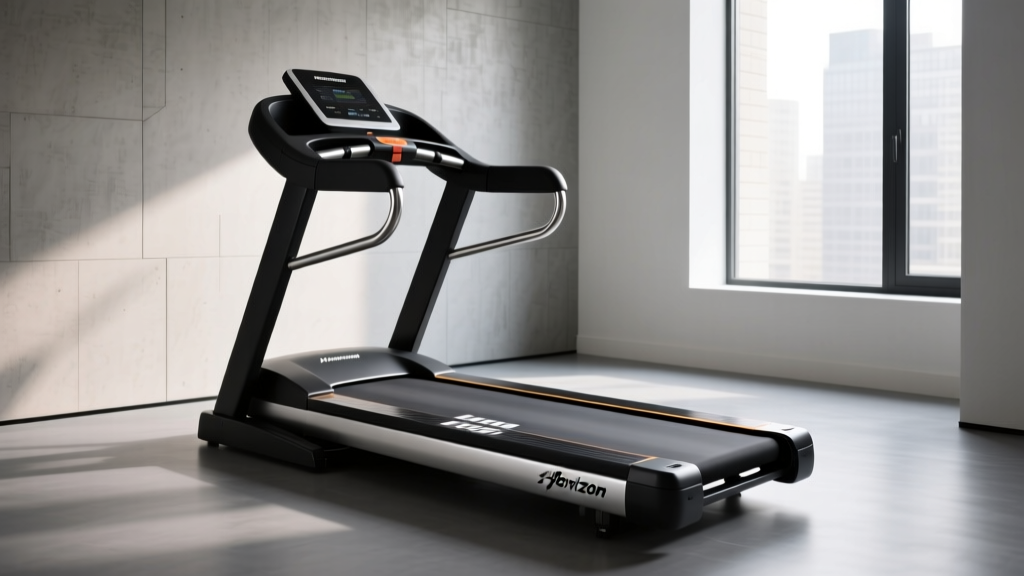
The undisputed king of home incline walking. It boasts a massive 15% motorized incline, a 3.0 CHP motor that won't overheat during 45-minute steep walks, and heavy-duty handrails that you won't need to use if your form is correct.
Frequently Asked Questions
Can I get the same results using a walking pad with a weighted vest?
Adding a 20lb weighted vest to a flat walking pad will increase your overall caloric expenditure and improve bone density, but it will not replicate the biomechanical hip extension required for targeted glute hypertrophy. For muscle growth in the glutes, the angle of the incline is far more critical than the flat-surface load.
How many times a week should I do the incline treadmill workout?
For beginners, 2 to 3 times per week is optimal. The calves and Achilles tendons take a heavy beating on steep inclines. Doing this workout 5 days a week right out of the gate is a fast track to shin splints and Achilles tendinopathy. Alternate incline days with flat-surface walking pad days focused purely on NEAT (Non-Exercise Activity Thermogenesis) step goals.
Will this workout make my legs bulky?
No. Incline walking is a form of resistance-based cardio. It will build dense, toned muscle in the glutes and hamstrings, but it lacks the extreme mechanical overload of heavy barbell squats or deadlifts required to create massive, bulky leg muscles. It is highly effective for the 'lifted' aesthetic without adding excessive thigh circumference.
More gear to consider
All reviews
Best Folding Treadmills for Small Spaces: 2026 Pace Chart & Review
Cardio Noise Comparison: Setup & Horizon Fitness Treadmill Lube Belt

HIIT Workout on Treadmill for Weight Loss vs 2026 Air Bike Trends

Stair Climber & Children's Treadmill Home Setup Guide

Space Guide: Matrix T50 Treadmill, Air Bike vs Assault Bike
