
Curved Manual vs Electrical Treadmills: 2026 Buyer's Guide
Compare curved manual and electrical treadmills for 2026. Explore biomechanics, pricing, maintenance, and find the right cardio machine for your home gym.

The Biomechanical Divide: Self-Powered vs. Motor-Driven
The home fitness equipment market in 2026 has clearly bifurcated into two distinct camps: the self-powered, biomechanically demanding curved manual treadmill, and the tech-forward, highly programmable world of electrical treadmills. Choosing between them is no longer just a matter of budget; it is a fundamental decision about your training philosophy, joint health, and spatial constraints. According to the Centers for Disease Control and Prevention (CDC), adults require at least 150 minutes of moderate-intensity or 75 minutes of vigorous-intensity aerobic activity weekly. Both machine types can help you achieve this, but they elicit vastly different physiological and mechanical responses.
This in-depth buyer's guide strips away the marketing fluff to examine the exact engineering, real-world failure modes, and true cost of ownership for both curved manual and electrical treadmills.
Quick Specs Snapshot
- Curved Manual Treadmills: Self-powered, slat-belt design, 10-15% higher caloric burn, zero electrical footprint.
- Electrical Treadmills: Motor-driven (DC/AC), continuous speed control, integrated incline/decline, requires 15A/20A dedicated circuits.
Deep Dive: Curved Manual Treadmills
Curved treadmills, such as the AssaultRunner Elite ($3,499) or the premium Technogym Skillmill ($7,500+), utilize a non-motorized, concave running surface made of vulcanized rubber slats. Because there is no motor to pull the belt beneath you, the runner must generate all the horizontal force. This design forces a mid-foot or forefoot strike, naturally reducing the severe heel-strike impact associated with traditional running.
The Metabolic Cost
Research highlighted by the American Council on Exercise (ACE) indicates that running on a curved manual treadmill increases metabolic demand by approximately 10% to 15% compared to a motorized treadmill at the exact same speed. The absence of a motor means your hamstrings and glutes must actively pull the belt backward, resulting in significantly higher posterior chain activation. For athletes focused on high-intensity interval training (HIIT) or sprint mechanics, this is a massive advantage.
Engineering and Limitations
The primary limitation of curved treadmills is the inability to simulate downhill running (decline) and the difficulty of maintaining a steady, locked-in pace for long-distance marathon training. Because speed is entirely dictated by your stride rate and force output, 'zoning out' on a 90-minute steady-state run is nearly impossible; if your effort drops, the belt stops.
Deep Dive: Electrical Treadmills
Electrical treadmills remain the gold standard for controlled, steady-state cardio and long-distance endurance training. Modern electrical treadmills range from budget-friendly folding models to commercial-grade behemoths. The core differentiator in 2026 is the motor type and deck cushioning technology.
Motor Dynamics: DC vs. AC
When evaluating electrical treadmills, you must look past 'Peak Horsepower' and focus exclusively on Continuous Horsepower (CHP).
- DC Motors (Residential): Found in models like the Sole F80 ($1,199, 3.5 CHP) and NordicTrack Commercial 1750 ($1,999, 3.5 CHP). They are lighter, quieter, and cheaper, but they can overheat during continuous runs exceeding 90 minutes, especially for users over 220 lbs.
- AC Motors (Commercial): Found in the Matrix T7xe ($4,500+) and Life Fitness Club Series. AC motors run cooler, offer superior torque at low speeds, and are designed for 24/7 gym usage. They are significantly heavier and require a dedicated 20-amp electrical circuit.
Deck Cushioning and Joint Preservation
High-end electrical treadmills utilize multi-durometer elastomer cushions. For example, Sole's 'Cushion Flex' system reduces joint impact by up to 40% compared to asphalt. This makes electrical treadmills highly preferable for heavier runners or those recovering from tibial stress fractures, provided the machine offers a minimum 60-inch running surface to accommodate stride lengthening at speeds above 8 mph.
Head-to-Head Comparison Matrix
| Feature | Curved Manual Treadmill | Electrical Treadmills |
|---|---|---|
| Price Range (2026) | $2,999 - $7,500+ | $799 - $4,500+ |
| Caloric Expenditure | +10% to 15% higher | Baseline (Standard) |
| Top Speed | Unlimited (User-dependent) | Capped (Usually 12-15 mph) |
| Incline / Decline | Fixed Curve (Simulates 1-2% grade) | Motorized (-3% to +15% typical) |
| Power Requirement | None (100% Human-powered) | Standard 15A or 20A Outlet |
| Belt Maintenance | Virtually zero (Slat design) | Silicone lubrication every 150 miles |
Maintenance Realities & Failure Modes
Understanding how these machines break down is critical for calculating the true total cost of ownership. The failure modes for curved manual treadmills and electrical treadmills are entirely different.
Curved Treadmill Failure Points
Because curved treadmills lack a motor and electronic console, their failure points are purely mechanical. The most common issue is sprocket and bearing wear. The slat belt runs on dozens of small ball bearings. If dust and pet hair infiltrate the bearing housings, they will seize, causing a 'dead spot' or grinding noise on the belt. Furthermore, the slat belt tension can stretch over time. Re-tensioning an AssaultRunner requires a specific torque wrench setting; over-tightening will destroy the drive sprockets, while under-tightening causes the belt to slip during explosive sprint starts.
Electrical Treadmill Failure Points
Electrical treadmills are essentially computers paired with heavy machinery. Their primary failure modes include:
- PCB / Motor Controller Burnout: The most common catastrophic failure. If a user consistently runs at high speeds without proper belt lubrication, the friction increases the amperage draw. This excess heat melts the solder joints on the motor control board. Replacement PCBs cost between $150 and $350.
- Drive Belt Snapping: The ribbed belt connecting the motor to the front roller degrades over 3 to 5 years. A snapping drive belt mid-run can cause severe injuries.
- Incline Motor Gear Stripping: Cheap residential electrical treadmills use plastic gears in their incline motors. Frequent interval training with rapid incline changes will strip these gears, requiring a $120 incline motor replacement.
Expert Warning: Never plug a high-draw electrical treadmill into a shared circuit or use an extension cord. Voltage drops caused by shared circuits (e.g., running a treadmill on the same breaker as a space heater) will fry the treadmill's internal power supply. Always use a dedicated 15-amp or 20-amp wall receptacle.
The 2026 Buyer's Decision Framework
To make your final purchasing decision, map your primary training goals to the following profiles:
Profile A: The Sprinter, CrossFitter, and HIIT Enthusiast
Verdict: Buy a Curved Manual Treadmill.
If your programming involves 30-second all-out sprints followed by 90-second rests, electrical treadmills are frustrating. Waiting 15 seconds for a motorized belt to spool up to 12 mph ruins your work-to-rest ratio. A curved treadmill responds instantly to your force output. The upfront cost is higher, but the lack of a motor means zero risk of PCB burnout from high-amperage sprinting.
Profile B: The Marathoner and Steady-State Runner
Verdict: Buy an Electrical Treadmill.
If you are training for a half-marathon or marathon, you need to lock into a specific pace (e.g., 8:15/mile) and zone out. Electrical treadmills allow you to set a precise speed and incline, removing the cognitive load of pace-maintenance. Look for a model with a minimum 3.5 CHP motor and a 60-inch deck to accommodate fatigue-induced stride changes at mile 18.
Profile C: The Space-Constrained or Budget-Conscious Buyer
Verdict: Buy a Folding Electrical Treadmill.
Curved treadmills are massive, non-folding structures that require a permanent 7x4 footprint. If you live in an apartment or need to reclaim your living room space, modern folding electrical treadmills (like the Horizon 7.0 at or the Sole F63) offer hydraulic folding mechanisms and transport wheels, providing a practical compromise for under $1,000.
Frequently Asked Questions
Are curved treadmills bad for your knees?
No. In fact, the concave shape of a curved treadmill naturally encourages a mid-foot strike and a higher cadence. This drastically reduces the braking forces and heel-strike impact that typically cause patellofemoral pain syndrome (runner's knee) on traditional flat, motorized surfaces.
Do electrical treadmills consume a lot of electricity?
A modern electrical treadmill drawing 3.5 CHP at a moderate running pace consumes roughly 600 to 900 watts per hour. If you run for 5 hours a week, that equates to about 4.5 kWh, which costs less than $1.00 per week based on 2026 average national electricity rates. The electrical cost is negligible compared to the machine's purchase price.
Can I use a curved treadmill for walking?
Yes, but it requires conscious effort. Because there is no motor pulling you forward, walking at slow speeds (under 2.5 mph) on a curved treadmill can feel slightly awkward and requires you to actively push the belt with your toes. For casual, low-intensity walking while watching television, a standard electrical walking pad or motorized treadmill is much more comfortable.
More gear to consider
All reviews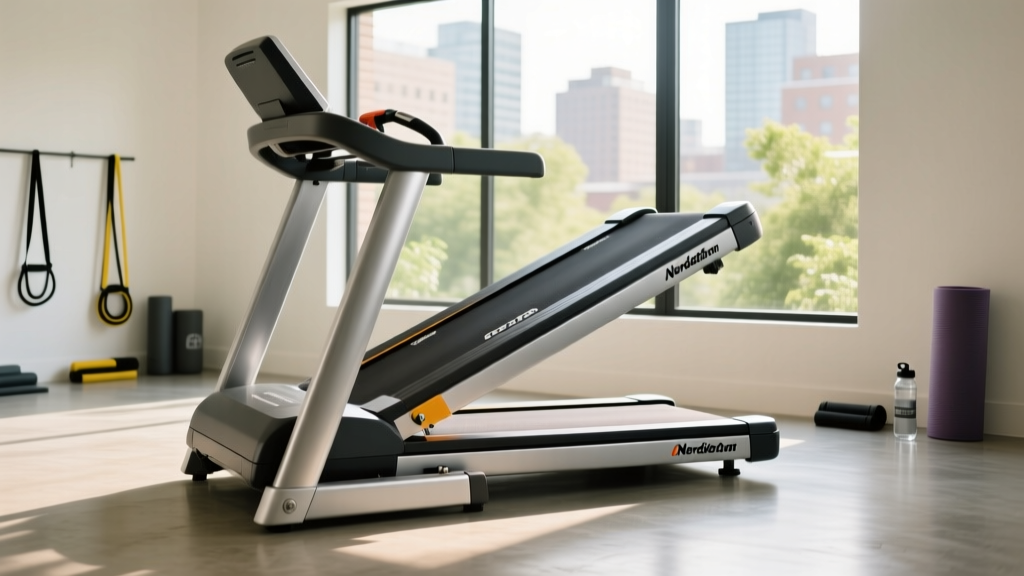
NordicTrack Commercial 1750 Treadmill NTL17125: Folding Small Space Review
Stair Climber Guide: Home Cardio vs Treadmill ECG Test Singapore Price

Instrumented Treadmill Buying Guide: Feature Comparison & Mistakes
Brazzers Treadmill Myth: Real Walking Pad Guide 2026

Anti Gravity Treadmill Cost vs Walking Pads: Avoid Buying Mistakes
