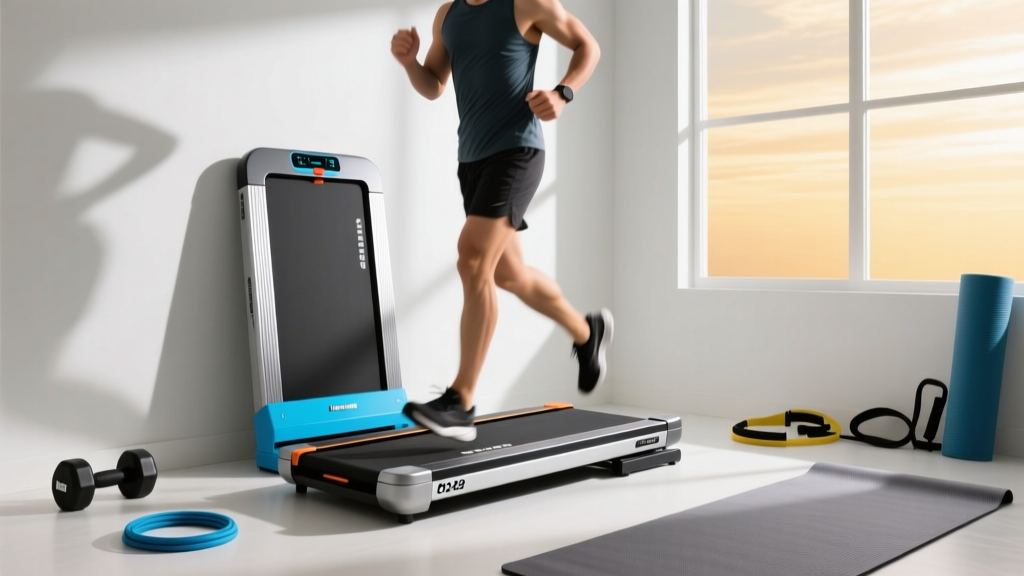
Gym Bike vs Treadmill: Compact Portable Cardio for Small Spaces
Optimizing your home gym layout? We compare the gym bike vs treadmill footprint, clearance needs, and top compact portable cardio models for 2026.

The Spatial Dilemma: Static vs. Dynamic Footprints
When outfitting a small apartment or a multi-use spare bedroom in 2026, the debate between a gym bike vs treadmill extends far beyond calorie burn and biomechanics. It becomes a strict exercise in spatial geometry and interior layout design. Many consumers make the critical error of measuring only the 'static footprint'—the physical dimensions of the machine as listed in the product manual. However, interior designers and fitness facility planners rely on the 'dynamic envelope,' which accounts for the space required for safe mounting, dismounting, and active movement.
Choosing between compact portable cardio equipment options requires understanding how these machines interact with your room's traffic flow. A foldable treadmill might slide neatly under a sofa, but does your floorplan allow for the mandatory rear safety clearance when deployed? Conversely, an indoor cycling bike might have a tiny base, but do you have the lateral wall clearance to swing a leg over the saddle without scuffing your drywall? Let us break down the exact measurements, layout constraints, and top space-saving models available today.
⚠️ The 3-Foot Safety Rule
According to the Consumer Product Safety Commission (CPSC), treadmills require a minimum of 2 to 3 feet of clear, unobstructed space directly behind the rear roller. This is non-negotiable to prevent severe friction burns and head trauma during emergency dismounts. Gym bikes do not require this rear clearance, making them inherently more flexible for placement against walls or in tight alcoves.
Compact Treadmills: Walking Pads and Foldables
The treadmill category has undergone a massive transformation, shifting away from heavy, motorized behemoths toward ultra-compact walking pads and bi-fold treadmills. These machines prioritize storage density over top-end speed, making them ideal for low-impact steady-state (LISS) cardio in confined spaces.
Top Portable Treadmill Models (2026 Specs)
- KingSmith WalkingPad R2: Priced around $499, this is the gold standard for under-desk and living-room cardio. Open Dimensions: 59.5' x 28.4'. Folded Profile: 10.2 inches thick. Weight: 57 lbs. It features a 180-degree fold mechanism that allows it to stand upright in a closet or slide under a bed frame (provided you have at least 11 inches of ground clearance).
- UREVO Strol 2E: Retailing near $399, this model includes a deployable handlebar and a slightly wider running belt (16.5 inches). Open Dimensions: 54.7' x 25.6'. Weight: 61 lbs. It folds down to roughly 11 inches and includes built-in transport wheels, allowing you to roll it into a corner like a suitcase.
Layout Constraint: Walking pads lack incline capabilities and advanced shock absorption. From a layout perspective, they require a dedicated 'deployment zone.' If you plan to store the WalkingPad R2 vertically against a wall, you must ensure the wall is load-bearing or use a specialized anti-tip strap, as the 57-pound center of gravity can easily pull down unanchored drywall shelving.
Compact Gym Bikes: Uprights and Foldables
When analyzing the gym bike vs treadmill footprint, indoor cycles and upright bikes win on sheer spatial efficiency. Because the user remains stationary over the bottom bracket, the dynamic envelope is nearly identical to the static footprint, minus the lateral mounting space.
Top Space-Saving Bike Models
- YOSUDA PRO Indoor Cycling Bike: At approximately $350, this is a high-value, low-footprint option. Footprint: 40' x 20'. Weight: 65 lbs. The heavy flywheel provides stability without requiring a sprawling base. It fits easily into a 2-foot by 4-foot corner alcove.
- Echelon EX-3 Smart Connect: Priced around $999, this bike offers connected classes without the massive footprint of commercial gym rigs. Footprint: 42' x 20'. Weight: 92 lbs. The front stabilizer bar is narrow, designed specifically to fit between standard bedroom furniture.
Layout Constraint: The primary spatial hurdle for gym bikes is lateral clearance. You need a minimum of 18 to 24 inches of open space on your dominant mounting side to safely swing your leg over the saddle. Furthermore, adjustable handlebars and seats extend outward during use; ensure the bike is not placed directly beneath low-hanging pendant lights or wall-mounted thermostats.
The Layout Matrix: Traffic Flow & Clearance
To visualize how these machines impact your room's floorplan, refer to the spatial matrix below. This data is crucial for mapping out multi-use rooms where furniture must be moved before and after workouts.
| Equipment Type | Static Footprint | Dynamic Envelope (In-Use) | Storage Profile | Rear Clearance Req. |
|---|---|---|---|---|
| Foldable Walking Pad | ~ 12 sq. ft. | ~ 20 sq. ft. | 10' - 11' thick (Vertical/Under-bed) | 36 inches minimum |
| Standard Upright Bike | ~ 6 sq. ft. | ~ 10 sq. ft. | Fixed (Rolls on wheels) | 12 inches (for airflow) |
| Traditional Foldable Treadmill | ~ 22 sq. ft. | ~ 35 sq. ft. | Deck folds up 45-degrees | 36 inches minimum |
Real-World Edge Cases: Floor Load & Vibration Transfer
Space optimization is not just about square footage; it is also about vertical impact, especially in multi-story dwellings or apartments with downstairs neighbors. The structural interaction between the machine and your flooring dictates where you can safely place it.
Impact and Acoustic Transfer
Treadmills generate rhythmic, high-impact forces. A 180-pound runner can generate up to 540 pounds of downward force per footstrike. This creates low-frequency acoustic vibration that travels easily through floor joists. If you live in an apartment, a treadmill must be placed on a high-density EVA foam mat (at least 3/4-inch thick) and positioned directly over a load-bearing wall or structural beam, never in the center of a suspended floor span.
Gym bikes, conversely, generate static point loads and rotational torque, but zero rhythmic impact. As noted in the Mayo Clinic's guide to home fitness equipment, cycling is a low-impact modality that spares the joints, and this mechanical benefit extends to your home's architecture. A bike can be placed in the center of a room on a standard rug without risking acoustic complaints from neighbors below.
The Power Outlet Proximity Problem
A frequently overlooked layout constraint is power cord management. Compact walking pads like the WalkingPad R2 feature short power cables (usually under 6 feet) and lack the internal cable routing of massive commercial treadmills. If your room's outlets are located behind a heavy dresser or near the baseboard trim, you may need to install a flat-plug extension cord or route the cable under a rug protector to prevent tripping hazards, which violates the CPSC safety clearances mentioned earlier.
Decision Framework: Which Fits Your Floorplan?
Use this practical framework to finalize your gym bike vs treadmill decision based on your specific room geometry:
- The Studio Apartment (Under 600 Sq. Ft.): Choose a Foldable Walking Pad. The ability to slide the machine under a bed or sofa outweighs the lack of incline and speed. Ensure you have a dedicated closet or under-bed clearance of at least 11 inches.
- The Spare Bedroom / Home Office: Choose an Indoor Cycling Bike. You can position it in the corner of the room facing the window or a wall-mounted monitor. The static footprint allows you to keep a desk and bed in the room without compromising the 3-foot safety zones required by treadmills.
- The Multi-Use Living Room: Choose an Upright Bike with a Folding Frame (like the Sunny Health & Fitness SF-B1851). These can be folded down to a 20' x 20' square and tucked behind a curtain or room divider when guests arrive, maintaining the aesthetic flow of your primary living space.
Interior Design Pro-Tip: When mapping your cardio zone, use painter's tape to outline the 'dynamic envelope' on your floor before purchasing. Tape the static footprint, then add 3 feet to the rear for treadmills or 2 feet to the side for bikes. Live with the tape for 48 hours to ensure it does not disrupt your natural traffic patterns or block access to closets and HVAC vents.
Ultimately, the best compact portable cardio equipment is the one that respects your home's architecture. By prioritizing dynamic clearance, structural loading, and storage profiles over sheer feature lists, you can build a highly effective, space-optimized cardio zone that seamlessly integrates into your 2026 lifestyle.
More gear to consider
All reviews
Stairmaster or Treadmill? Feature Comparison Mistakes to Avoid

Walking Pad vs Treadmill Setup: Can It Help Lose Belly Fat?
How to Turn On Life Fitness Treadmill vs Portable Cardio Trends
Setup Guide: NordicTrack T Series 16 vs Curved Manual Treadmills

Rowing Technique: Low-Impact Cardio Like an Underwater Treadmill Cat