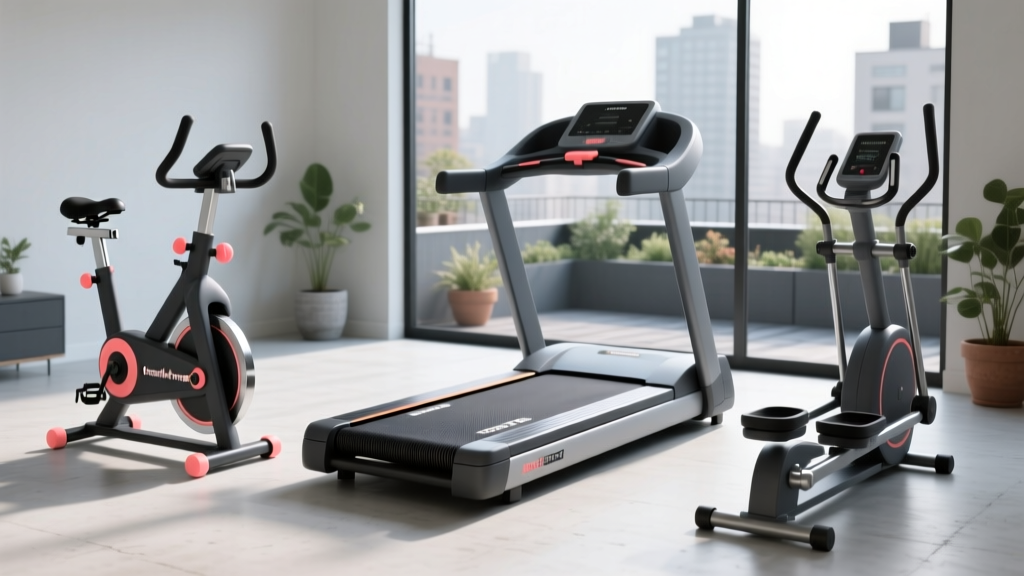
Cardio Machine Noise: Home Gym vs Treadmill for Horses
Compare cardio machine noise levels, from quiet bikes to a treadmill for horses. Learn expert troubleshooting to eliminate squeaks, thuds, and vibration.

The Decibel Dilemma: Why Noise Levels Dictate Your Home Gym's Success
When outfitting a home gym, consumers obsess over screen resolution, continuous horsepower (CHP), and interactive programming. Yet, the number one reason cardio machines are eventually relegated to the garage—or worse, become expensive clothing racks—is acoustic disruption. A machine that shakes the floorboards or emits a high-pitched whine will quickly alienate household members and neighbors. According to the U.S. Environmental Protection Agency (EPA), chronic exposure to indoor noise pollution elevates stress hormones and disrupts sleep patterns, making the acoustic footprint of your fitness equipment a critical purchasing factor in 2026.
To truly understand structural vibration and airborne noise, we must look at the entire spectrum of cardio equipment. This guide provides a comprehensive cardio machine noise level comparison, highlights the most common installation mistakes, and offers a mechanical troubleshooting guide to silence your squeaking, thudding, or humming equipment.
The Acoustic Spectrum: Cardio Machine Noise Level Comparison
Not all cardio machines are created equal when it comes to sound. Airborne noise (fan whine, motor hum) is measured in decibels (dB), while structure-borne noise (impact vibration) transfers through floor joists. Below is a comparative matrix of average operational noise levels measured at a distance of three feet in a standard residential room with hard flooring.
| Machine Type | Average dB (Airborne) | Vibration Profile | Primary Noise Source |
|---|---|---|---|
| Magnetic Spin Bike (e.g., Peloton Bike+) | 40 - 45 dB | Negligible | Tire hum, chain/belt whisper |
| Elliptical Cross-Trainer | 50 - 55 dB | Low (Rhythmic) | Track rollers, pivot bearings |
| Air Bike (e.g., Assault Bike Pro X) | 75 - 85 dB | Low | Massive fan blade air displacement |
| Standard Motorized Treadmill | 65 - 75 dB | Moderate to High | Motor whine, footstrike impact |
| Heavy-Duty Rehab Treadmill (Human) | 75 - 80 dB | High | High-torque motor, heavy deck resonance |
| Treadmill for Horses (Equine Therapy) | 85 - 95+ dB | Extreme (Seismic) | Hydraulic drives, 1,200+ lb dynamic impact |
The Extreme Benchmark: What a Treadmill for Horses Teaches Us About Vibration
You are highly unlikely to install a treadmill for horses in your residential spare bedroom. However, looking at the extreme acoustic engineering required for equine rehabilitation treadmills—such as the hydraulic-driven models used in veterinary sports medicine and elite equestrian conditioning—provides a masterclass in vibration management. An equine treadmill must support over 1,200 pounds of dynamic, asymmetrical impact, generating low-frequency structure-borne noise that easily exceeds 90 dB. Facilities housing these machines require specialized floating concrete slabs and industrial acoustic dampening to prevent structural fatigue.
Why does this matter for your home gym? When fitness enthusiasts purchase heavy-duty human treadmills (like the Life Fitness Club Series or Matrix T7xe), they often underestimate the similar, albeit smaller-scale, vibrational transfer that occurs on suspended wooden floors. The low-frequency "thud" of a 200-pound runner striking a treadmill deck at 8 mph acts exactly like a miniature version of a horse's trot. If you fail to decouple the machine from the floor, that kinetic energy bypasses the air and travels directly through the subfloor, turning your home's framing into a giant acoustic amplifier. The CDC's National Institute for Occupational Safety and Health (NIOSH) notes that low-frequency noise is particularly insidious because it penetrates standard building materials with minimal attenuation.
⚠️ Critical Warning on Structural Load:Before placing any heavy-duty treadmill (or commercial-grade elliptical) on an upper-level suspended floor, verify the floor's live load capacity. Standard residential floors are rated for 40 lbs per square foot. A 350-lb treadmill combined with a 250-lb runner generating dynamic impact forces can exceed localized load limits, causing both severe noise transfer and long-term structural sagging.
Common Mistakes Amplifying Home Treadmill Noise
Most noise complaints stem from user error during setup and maintenance. Avoid these three cardinal sins of cardio machine placement:
- Mistake 1: Using Cheap PVC Mats. The thin, $30 PVC mats sold at big-box stores do nothing to stop low-frequency impact vibration. They only protect the floor from scratches. To stop structure-borne noise, you need high-durometer vulcanized rubber or specialized Sorbothane isolation pads.
- Mistake 2: Ignoring the Leveling Feet. If a treadmill is even slightly unlevel, the deck will flex unevenly upon footstrike. This causes a rhythmic "clack-clack" sound as the metal frame shifts against the floor and the plastic motor shroud vibrates out of phase.
- Mistake 3: Over-Tensioning the Belt. A common troubleshooting myth is that a slipping belt should be tightened as much as possible. Over-tensioning puts immense lateral stress on the roller bearings and the motor shaft, resulting in a high-pitched mechanical whine and premature motor failure.
Step-by-Step Troubleshooting Guide for Treadmill Thuds and Squeaks
If your machine is generating excessive noise, follow this systematic diagnostic protocol to isolate the failure point.
Step 1: The Lift and Level Test
Turn the machine off and unplug it. Walk around the perimeter, pressing down on the corners of the deck and the side rails. If the machine rocks even a millimeter, adjust the threaded leveling feet at the rear of the machine until it is dead-flat. Use a carpenter's level across the width of the belt to ensure lateral balance.
Step 2: Belt Tension and Lubrication
A dry or misaligned belt creates friction, leading to a squealing noise and a burnt-rubber smell.
- Check Tension: Lift the walking belt from the center of the deck. It should rise exactly 2 to 3 inches. If it lifts higher, it is too loose (causing slippage thuds); if lower, it is too tight (causing bearing whine).
- Check Alignment: Turn the machine on to 3 mph. Observe the rear roller. If the belt drifts left, tighten the left rear adjustment bolt by exactly one-quarter turn. Never adjust by more than a quarter turn at a time.
- Lubricate: Use only 100% silicone-based treadmill lubricant. Never use WD-40 or petroleum-based oils, which will destroy the PVC belt backing. Apply 1 oz of silicone in a zig-zag pattern under the belt, then run the machine at 2 mph for 3 minutes to distribute it.
Step 3: Motor Shroud Resonance
If you hear a plastic rattling sound that changes pitch with the speed of the belt, the motor hood is vibrating against the frame. Remove the shroud (usually 4 to 6 Phillips screws), apply self-adhesive felt tape or acoustic foam weatherstripping to the contact points where the plastic meets the metal frame, and reassemble.
Advanced Acoustic Isolation: Building a "Vault" for Your Cardio Gear
If you have completed all mechanical troubleshooting and your downstairs neighbors are still complaining about the "thud" of your footstrikes, you are dealing with structure-borne impact noise. To solve this, you must decouple the machine from the building's framing.
For ultimate noise reduction, build an isolation platform. Start with a base layer of 3/4-inch MDF (Medium Density Fiberboard). Apply a layer of Mass Loaded Vinyl (MLV) rated at 1 lb per square foot to add dense mass that blocks sound waves. Top this with a 3/8-inch layer of vulcanized rubber gym flooring. Finally, place OSHA-compliant anti-vibration machinery pads (such as Sorbothane with a 50 durometer rating) directly under the treadmill's feet. This multi-layered "floating floor" approach absorbs the kinetic energy of a heavy footstrike before it can transfer into the floor joists, reducing impact noise transfer by up to 85%.
Expert Insight: "Airborne noise from a treadmill motor is rarely the issue in modern 2026 brushless DC motors. The real culprit is the kinetic energy of the runner. Treating the floor with decoupling materials is the only permanent fix for multi-story home gyms."
By understanding the physics of sound—from the quiet hum of a magnetic bike to the seismic impact of a treadmill for horses—you can engineer a home gym space that is as peaceful as it is powerful. Regular maintenance, precise leveling, and proper acoustic decoupling will ensure your cardio routine remains a source of health, not household friction.
More gear to consider
All reviews
Rowing Machine Buying Guide, Setup & Treadmill for Toning Legs
Best Treadmill Fold Mechanisms for Small Spaces (2026)

Rowing Machine vs 3 30 Treadmill: Beginner Buying & Technique Guide
Cardio Machine Noise Comparison: Hitting Your Treadmill Mile Pace
NordicTrack Apex 6100xi Treadmill: Small Space Value Breakdown
