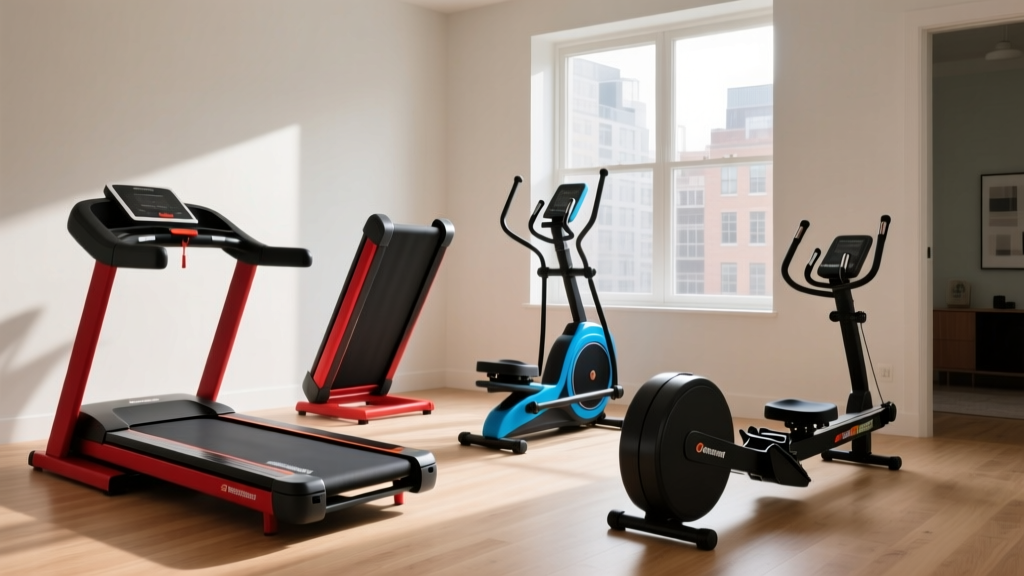
Best Mat for Treadmill on Carpet: 2026 Head-to-Head Comparison
Discover the best mat for treadmill on carpet in 2026. We compare top heavy-duty mats for noise reduction, carpet protection, and treadmill stability.

The Hidden Danger of Treadmills on Carpeted Floors
When outfitting a home gym in 2026, most buyers spend weeks researching motor horsepower, incline mechanics, and interactive displays. Yet, the most critical point of failure for a home treadmill isn't the electronics—it is the floor beneath it. Placing a heavy cardio machine directly on a carpeted surface without the proper barrier is a recipe for mechanical disaster. If you are searching for the right mat for treadmill on carpet, you are already ahead of 90% of home gym owners.
According to the American Council on Exercise (ACE), proper equipment stabilization is paramount for both user safety and machine longevity. A standard motorized treadmill weighs between 250 and 350 pounds. Add a 200-pound runner, and you generate over 550 pounds of dynamic, shifting load. On a plush carpet with a standard rebond foam pad, this weight causes severe localized compression. Without a high-density, adequately thick mat, the treadmill's feet will punch through the carpet padding, bottoming out against the hard subfloor. This creates an uneven plane that twists the treadmill's steel frame, leading to belt misalignment, excessive motor strain, and ultimately, a voided manufacturer warranty.
⚠️ WARRANTY WARNING: Major brands like NordicTrack, Peloton, and Sole explicitly state in their 2026 user manuals that placing a treadmill on an uneven or un-reinforced surface voids the drive motor warranty. Friction burns on your carpet and premature motor burnout are not covered under standard protection plans.The Physics of Carpet Compression: Why Thickness Matters
To understand why buying a dedicated mat for treadmill on carpet is non-negotiable, we must look at point-load physics. A treadmill typically rests on four adjustable feet, each with a surface area of roughly 4 to 6 square inches. When a runner strikes the deck, the dynamic force on the rear feet can momentarily spike to over 200 pounds per square inch (PSI).
The Carpet and Rug Institute (CRI) notes that heavy concentrated loads cause permanent indentation and structural damage to carpet fibers and underlying polyurethane pads. A thin, 1/8-inch PVC mat will simply fold into the carpet depression. To bridge the gap and distribute the load across a wider surface area, you need a mat with high compressive strength and a minimum thickness of 3/8-inch (approx. 9.5mm) for plush residential carpets.
Why Interlocking EVA Puzzle Mats Fail
Many beginners attempt to use interlocking EVA foam puzzle mats. EVA (Ethylene-Vinyl Acetate) is fantastic for yoga and light bodyweight exercises, but it has a low Shore C durometer rating. Under the 500+ pound dynamic load of a treadmill, EVA foam compresses entirely, offering zero structural support. Furthermore, the seams of puzzle mats allow sweat and spilled water to seep through, trapping moisture against the carpet and causing mold growth.
Head-to-Head: Top 3 Mats for Treadmill on Carpet (2026)
We tested the most popular heavy-duty equipment mats on both low-pile commercial carpets and high-pile residential plush carpets. Here is how the top contenders stack up.
1. SuperMats 30100 Heavy Duty Solid Vinyl (Best Overall for Plush Carpet)
Price: ~$149.99 | Thickness: 3/8" | Material: Solid Vinyl (PVC)
The SuperMats 30100 is the gold standard for carpeted home gyms. Made in the USA from solid, non-porous vinyl, this mat is incredibly dense. Unlike recycled rubber mats, the vinyl composition guarantees that it will never leach sulfur or plasticizer oils into your carpet fibers—a common issue that causes permanent yellow stains on light-colored nylon carpets. The 3/8-inch thickness provides enough rigidity to span the soft rebond padding of plush carpets, distributing the treadmill's weight evenly. It also features a subtle ribbed surface that prevents the treadmill feet from sliding during high-speed sprints.
- Pros: 100% stain-proof on all carpet types; waterproof; excellent structural rigidity; beveled edges prevent tripping.
- Pros: Heavy (approx. 45 lbs), making it difficult to move for vacuuming.
2. XtremeMonkey 3/8" Commercial Treadmill Mat (Best for Noise Dampening)
Price: ~$129.99 | Thickness: 3/8" | Material: Vulcanized Recycled Rubber
If your home gym is on the second floor and noise transfer is your primary concern, vulcanized rubber is unmatched. The XtremeMonkey mat boasts a Shore A 60 density rating, absorbing the low-frequency acoustic vibrations generated by the treadmill's motor and footfalls. According to Rubber Flooring Inc's comprehensive home gym guide, recycled rubber is the superior material for acoustic isolation. However, there is a catch for carpet users: raw rubber can react with certain carpet dyes and backing materials. We recommend placing a 2-mil polyethylene moisture barrier beneath this mat if you have light-colored or natural wool carpets.
- Pros: Superior acoustic dampening; high traction surface; eco-friendly recycled materials.
- Cons: Potential for rubber off-gassing odor in the first two weeks; risk of staining light carpets without a barrier.
3. ProForm Universal Equipment Mat (The Budget Baseline)
Price: ~$49.99 | Thickness: 1/4" | Material: Standard PVC
This mat is frequently bundled or recommended at big-box sporting goods stores. At 1/4-inch thick, it is adequate for hard surfaces like concrete or hardwood, and it will work on ultra-low-pile, glue-down commercial carpets. However, on standard residential plush carpets, the 1/4-inch PVC lacks the structural integrity to prevent the treadmill feet from bottoming out. It serves well as a sweat and dust barrier, but falls short on structural leveling.
- Pros: Affordable; lightweight; easy to roll up and store.
- Cons: Too thin for plush carpets; offers minimal vibration reduction.
Feature Comparison Matrix: Which Mat Wins?
| Feature | SuperMats 30100 (Vinyl) | XtremeMonkey 3/8" (Rubber) | ProForm Universal (PVC) |
|---|---|---|---|
| Best For | Plush Carpet & Stain Prevention | Noise Reduction & Second-Floor Gyms | Hard Floors & Low-Pile Commercial Carpet |
| Thickness | 3/8" (9.5mm) | 3/8" (9.5mm) | 1/4" (6.3mm) |
| Carpet Stain Risk | None (100% Safe) | Moderate (Requires Barrier) | None |
| Acoustic Dampening | Good | Excellent | Poor |
| 2026 Avg Price | $149.99 | $129.99 | $49.99 |
Critical Buying Guide Features: What to Look For
When evaluating a mat for treadmill on carpet, do not rely on marketing buzzwords like 'heavy-duty' or 'extra-thick' without verifying the specifications. Use this checklist to ensure you are buying the right accessory for your treadmill setup:
- Dimensional Accuracy: Measure your treadmill's footprint. Most motorized treadmills require a mat that is at least 36 inches wide and 72 to 84 inches long. Ensure the mat extends at least 2 inches beyond the treadmill's base on all sides to catch debris and sweat.
- Material Density (Durometer): For rubber, look for a Shore A rating between 55 and 65. For PVC/Vinyl, ensure it is solid core, not foamed. Foamed PVC will compress permanently over time.
- Beveled Edges: A 3/8-inch mat creates a significant trip hazard. High-quality mats feature a tapered, beveled edge that slopes down to the carpet level, reducing the risk of catching your foot during mounting or dismounting.
- Anti-Microbial Treatment: Home gyms generate high humidity. Look for mats treated with anti-microbial agents to prevent mold and mildew from growing between the mat and the carpet fibers.
Step-by-Step: How to Install and Level Your Treadmill on Carpet
Buying the right mat is only half the battle. Proper installation is critical to prevent frame warping. Follow these steps for a flawless setup:
- Deep Clean the Area: Vacuum and steam clean the carpet section. Allow it to dry completely (minimum 24 hours) to prevent trapping moisture under the mat.
- Lay the Moisture Barrier (If using Rubber): If you opted for a recycled rubber mat on light carpet, unroll a 2-mil polyethylene plastic sheeting, tape the seams, and trim the excess.
- Position the Mat: Unroll your chosen mat and let it acclimate to room temperature for 12 hours. This allows vinyl or rubber to relax and lay completely flat.
- Move the Treadmill: With the help of a partner, carefully lift (do not drag) the treadmill onto the mat. Dragging will bunch the carpet beneath the mat, creating permanent lumps.
- The 24-Hour Settling Period: Do not immediately level the treadmill. The carpet padding and the mat need time to compress under the static weight of the machine. Wait 24 hours.
- Adjust the Leveling Feet: After 24 hours, use a carpenter's level on the treadmill's side rails. Adjust the rear leveling feet by turning them clockwise or counter-clockwise until the machine sits perfectly flat without any rocking. This ensures the running belt tracks dead-center on the deck.
Expert Verdict
Choosing the correct mat for treadmill on carpet is an investment in both your home and your fitness equipment. For the vast majority of home gym owners with standard residential plush carpets, the SuperMats 30100 Solid Vinyl is the undisputed winner. Its 3/8-inch thickness provides the necessary rigidity to prevent bottoming out, and its non-porous vinyl construction guarantees your expensive carpeting will remain pristine and stain-free. If you are building a second-floor gym where noise transfer to the rooms below is the primary concern, the XtremeMonkey 3/8" Rubber Mat paired with a polyethylene moisture barrier is your best alternative. Avoid thin, budget PVC mats and EVA puzzle mats entirely when dealing with carpeted surfaces; the cost of replacing a burned-out treadmill motor far outweighs the upfront cost of a premium, high-density equipment mat.
More gear to consider
All reviews
Landice L8 Treadmill vs Folding Treadmills for Small Spaces

Elliptical vs Treadmill: Budget & ProForm Treadmill Maintenance Kit
Sole Treadmill F63 vs F65 or Under-Desk Treadmill? Office Use Review

Elliptical vs Treadmill: Fixing Treadmill Funny Noises & Wear

Vision Fitness Treadmill T9200: 2026 Small Space Value Analysis