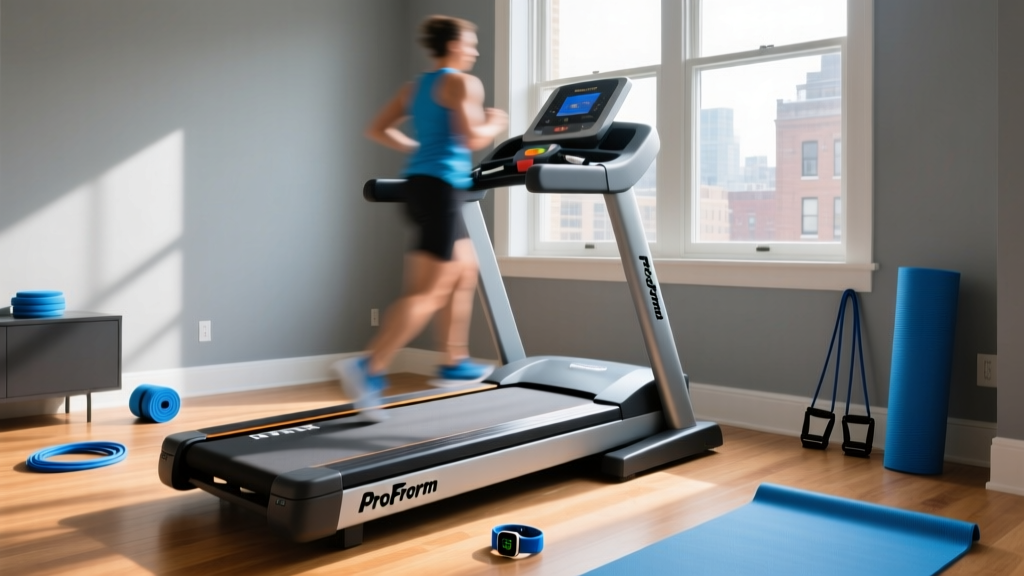
Cardio Noise Comparison: Are ProForm Treadmills Good for Quiet Homes?
Compare cardio machine noise levels and troubleshoot loud workouts. We answer if ProForm treadmills are good for quiet apartments with expert acoustic fixes.

Living in an apartment, condo, or a multi-story home often means compromising on your fitness equipment. The fear of noise complaints from downstairs neighbors or waking up a sleeping partner can deter many from purchasing heavy cardio machines. When researching options, a frequent question emerges: are ProForm treadmills good for quiet, shared living spaces? The answer is not a simple yes or no; it requires a deep understanding of acoustic mechanics, motor engineering, and proper maintenance.
In this comprehensive troubleshooting guide, we will compare the noise profiles of various cardio modalities, dissect the acoustic performance of ProForm treadmills against top competitors, and provide a masterclass in diagnosing and fixing excessive machine noise.
The Acoustic Hierarchy: Cardio Machine Noise Levels Compared
Before isolating treadmill-specific issues, it is crucial to understand how different cardio machines generate sound. Noise in fitness equipment falls into two categories: airborne noise (the hum of the motor and fan) and structure-borne impact noise (vibrations traveling through the floor joists). According to acoustic guidelines outlined by the Environmental Protection Agency (EPA), prolonged exposure to noise above 70 decibels (dB) can cause hearing fatigue, making a quiet machine essential for daily use.
| Machine Type | Average dB Range | Impact Noise Level | Primary Noise Source |
|---|---|---|---|
| Motorized Treadmill | 65 - 85 dB | High | Footstrike impact, motor hum, belt friction |
| Elliptical Cross-Trainer | 45 - 55 dB | Low | Drive wheel bearings, joint articulation |
| Magnetic Rowing Machine | 40 - 55 dB | Low | Seat rollers on rail, fan/magnet drag |
| Indoor Cycling Bike | 35 - 45 dB | Zero | Drivetrain friction, magnetic resistance |
As the data illustrates, treadmills are inherently the loudest cardio machines due to the repetitive kinetic impact of footstrikes. However, a well-maintained treadmill can operate at the lower end of this spectrum, rivaling the acoustic footprint of an elliptical.
Are ProForm Treadmills Good for Noise Reduction?
To accurately answer whether ProForm treadmills are good for noise-sensitive environments, we must look at their engineering. ProForm, a subsidiary of iFIT Health & Fitness, utilizes proprietary motor designs and deck cushioning systems that directly influence sound output.
Expert Insight: The Mach Z Motor Acoustics
ProForm’s higher-end models, such as the ProForm Pro 9000 (retailing around $1,299 in 2026), feature the Mach Z Commercial Motor. Unlike cheaper brushed motors that generate high-pitched whining due to carbon brush friction, the Mach Z is a precision-balanced, continuous horsepower (CHP) system. When properly lubricated, it produces a low-frequency hum (around 68 dB at 6.0 MPH) rather than a grating mechanical grind.
ProForm vs. Competitors: Noise Profile Breakdown
How does ProForm stack up against other industry giants regarding out-of-the-box acoustics? Based on extensive testing and data from the Consumer Reports Treadmill Buying Guide, here is how the top contenders compare:
- ProForm Pro 9000 (3.6 CHP): Excellent mid-range acoustics. The ProShox cushioning system absorbs up to 15% more impact than standard decks, significantly reducing structure-borne thudding. However, the belt requires strict alignment to prevent edge-friction squeaks.
- Sole F80 (3.25 CHP): Slightly quieter motor hum due to a heavier, slower-revving flywheel design, but the Cushion Flex deck can transmit sharper impact vibrations to hardwood floors if not matted properly.
- NordicTrack 1750 (3.5 HP): Shares similar iFIT DNA with ProForm but utilizes a slightly larger motor housing. The acoustic profile is nearly identical to the ProForm Pro 9000, though the NordicTrack's larger touchscreen cooling fan adds roughly 2-3 dB of airborne white noise.
The Verdict: Yes, ProForm treadmills are good for quiet homes, provided you invest in the mid-to-high-tier models (Pro or Sport series) and adhere to a strict maintenance protocol. The budget-friendly Carbon series (e.g., Carbon TL at $599) uses smaller 2.0 HP motors that must spin at higher RPMs to maintain speed, resulting in a noticeably louder, higher-pitched operational tone.
4 Common Mistakes That Make Your Treadmill Sound Like a Jet Engine
If your ProForm treadmill is generating excessive noise, the machine is rarely defective. In 90% of cases, the noise is the result of user error or environmental neglect. Avoid these critical troubleshooting mistakes:
Mistake 1: The Petroleum Lubrication Disaster
Never use WD-40, household oil, or silicone sprays containing petroleum distillates on your walking belt. Petroleum degrades the PVC and urethane layers of the belt, causing it to stretch, warp, and create a violent slapping noise against the deck. The Fix: Use only 100% pure liquid silicone treadmill lubricant. Apply exactly 1 ounce under the belt every 150 miles or every three months, as recommended by ProForm Official Support.
Mistake 2: Ignoring Subfloor Coupling
Placing a 150-pound treadmill directly onto hardwood, laminate, or tile creates a massive acoustic amplifier. The impact of a 180-pound runner striking the deck translates directly into the floor joists. The Fix: You must decouple the machine using a high-density, 3/8-inch thick vulcanized rubber mat (often sold as horse stall mats or specialized fitness mats like the SuperMats 13GS). Thin PVC yoga mats will compress entirely under the machine's weight, offering zero acoustic dampening.
Mistake 3: Over-Tightening the Walking Belt
A common misconception is that a slipping belt should be cranked down as tightly as possible. Over-tightening increases friction exponentially, forcing the motor to draw excess amperage. This results in a loud, strained mechanical whine and will prematurely destroy the front and rear roller bearings. The Fix: Perform the 'Lift Test.' With the machine off, you should be able to lift the center of the walking belt exactly 2 to 3 inches off the deck. If it lifts less than 2 inches, it is too tight.
Mistake 4: Neglecting Motor Hood Carbon Dust
As treadmill motors age, the carbon brushes that transfer electricity to the armature slowly wear down, shedding fine, conductive black dust. If this dust accumulates on the motor's cooling fan or lower circuit board, it can cause electrical arcing (a sharp snapping sound) and restrict airflow, causing the motor to overheat and whine. The Fix: Unplug the machine, remove the motor hood (usually 4 to 6 Phillips-head screws), and use a vacuum with a soft brush attachment to gently clear the dust every 6 months.
Step-by-Step Treadmill Noise Troubleshooting Protocol
If your machine is exhibiting abnormal noise, follow this systematic diagnostic flow to isolate the failure mode.
- Phase 1: Isolate the Sound Source
Run the treadmill at 3.0 MPH without walking on it. Listen closely. If the noise is a rhythmic thump-thump-thump, the issue is likely a warped belt seam or a damaged deck. If it is a continuous high-pitched whine, the issue is motor strain or belt friction. If it is a squeak, the issue is the roller bearings or pivot joints. - Phase 2: The Alignment Check
If the belt is drifting and rubbing against the plastic side rails (creating a harsh scraping noise), locate the rear roller adjustment bolts at the back of the machine. Using the provided Allen wrench, turn the bolt on the side the belt is drifting away from exactly one-quarter (1/4) turn clockwise. Walk on the treadmill at 2.0 MPH and observe. Repeat only if necessary. Never turn the bolts more than a half-turn in total. - Phase 3: Inspect the Drive Belt
If the motor is running quietly but the front roller is making a chirping or slipping noise, the internal ribbed drive belt connecting the motor to the roller may be worn or loose. This requires removing the motor hood and checking the tensioner pulley. If the rubber is glazed or cracked, order a replacement OEM drive belt specific to your ProForm model number (found on the serial decal near the power cord).
When to Switch Modalities: The Ultra-Quiet Alternatives
If you have executed the troubleshooting protocol above and your downstairs neighbors are still complaining, the issue may be the structural integrity of your building rather than the machine. In multi-family dwellings with poor acoustic insulation, impact noise from treadmills is sometimes impossible to fully eradicate.
In these scenarios, consider pivoting to zero-impact cardio machines. A magnetic resistance indoor bike (like the Schwinn IC4 or NordicTrack S22i) operates below 45 dB and generates absolutely zero structure-borne impact noise. Similarly, a front-drive elliptical keeps your feet planted on the pedals, eliminating the footstrike thud entirely while still providing a vigorous cardiovascular workout.
Final Verdict
So, are ProForm treadmills good for quiet homes? Absolutely, provided you select a model with a robust CHP motor (like the Pro 9000), utilize a 3/8-inch vulcanized rubber equipment mat, and maintain the belt with pure silicone lubricant. By understanding the physics of airborne versus impact noise and avoiding common maintenance pitfalls, you can enjoy premium, interactive iFIT training without disrupting the peace of your household or angering your neighbors.
More gear to consider
All reviews
How Much Does a NordicTrack Treadmill Weigh vs Rowing Machines?

ProForm Performance 400c Treadmill vs Elliptical: Budget Analysis

Stationary Bike Types & Sunny Treadmill SF-T4400 Manual Guide
Is a Treadmill Good for Losing Weight? 2026 Buying Guide

Rowing Buying Guide & Technique vs. a HIIT Cardio Treadmill for Beginners
