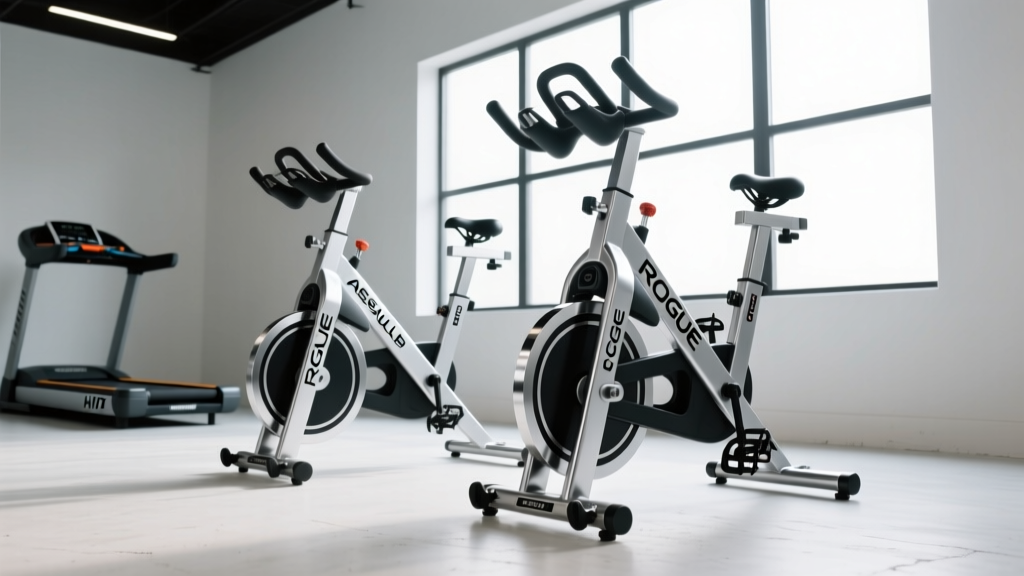
Air Bike vs Assault Bike Care & HIIT Treadmill Routine for Beginners
Compare AssaultBike ProX and Rogue Echo maintenance. Learn longevity tips and why it outlasts a standard HIIT treadmill routine for beginners.

The Mechanical Shift: From Treadmill Belts to Air Bike Drivetrains
Many athletes initiate their cardiovascular conditioning with a standard hiit treadmill routine for beginners, relying on the straightforward mechanics of a motorized belt and incline motor. However, as power output demands increase and athletes seek unlimited resistance curves, the migration to air bikes becomes inevitable. While treadmills require predictable, albeit frequent, silicone lubrication and belt alignment, air bikes introduce a completely different mechanical paradigm. The wind resistance generated by a massive front fan places immense torque on the drivetrain, making maintenance the single largest determinant of the machine's lifespan.
In this comprehensive 2026 comparison guide, we dissect the maintenance care and longevity profiles of the two industry titans: the AssaultBike ProX (retailing around $1,199) and the Rogue Echo Bike V2 (priced at $1,250). Understanding the mechanical divergence between these two machines is critical for gym owners and home athletes looking to protect their investment over thousands of high-wattage sprint intervals.
The Drivetrain Divide: Chain vs. Belt Mechanics
The most significant maintenance differentiator between the AssaultBike and the Rogue Echo lies in how power is transferred from the crank to the fan.
AssaultBike ProX: The Heavy-Duty Chain Drive
Assault Fitness utilizes a robust metal chain drive system. While this provides a slightly more "authentic" bicycle feel and allows for easier, cheaper part replacements, it demands rigorous lubrication. According to Assault Fitness engineering guidelines, the chain must be cleaned and lubricated with a PTFE (Teflon) or dry bicycle chain lube every 30 days in a commercial environment, or every 3-6 months in a home gym. Failure to lubricate leads to rapid chain stretch, which causes the chain to skip teeth on the rear sprocket during peak wattage sprints—a catastrophic failure mode mid-workout.
⚠️ Critical Failure Warning: Never use standard WD-40 or wet oil-based lubricants on your AssaultBike chain. Wet lubes attract dust and grit from the fan's airflow, creating a grinding paste that will destroy the bottom bracket bearings and sprocket teeth within months.Rogue Echo Bike V2: The Polyurethane Belt Drive
Conversely, the Rogue Echo Bike V2 employs a custom-molded polyurethane belt drive. This system is entirely maintenance-free regarding lubrication. You will never need to apply grease or oil, keeping your gym floor clean. However, belt drives require strict tension monitoring. Over time, the belt can stretch or the idler pulley can shift, leading to lateral tracking issues where the belt rides off-center and frays against the housing.
2026 Maintenance Cost & Frequency Matrix
To quantify the long-term ownership experience, we have mapped out the specific maintenance tasks, intervals, and associated costs for both platforms based on current 2026 parts pricing.
| Maintenance Task | AssaultBike ProX (Chain) | Rogue Echo V2 (Belt) | Est. Cost / Interval |
|---|---|---|---|
| Drivetrain Lubrication | Required (PTFE Dry Lube) | Never Required | $14 / Monthly (Assault) |
| Tension Adjustment | Every 6 months | Annually | $0 (Labor only) |
| Drive Component Replacement | Chain & Sprockets | Polyurethane Belt | $35 / $55 |
| Crank Arm Torque Check | Monthly (35-40 Nm) | Monthly (35-40 Nm) | $0 |
| Fan Cage Dusting | Quarterly | Quarterly | $0 |
Fan Blade Dust and Bearing Degradation
Because air bikes function as massive centrifugal fans, they actively pull room air—and the dust, pet dander, and chalk within it—directly through the front housing. This creates a unique longevity threat not seen in your average hiit treadmill routine for beginners, where dust primarily settles on the deck.
The Bottom Bracket Threat
On both the Assault and Echo models, the bottom bracket sits directly behind the fan cage. If the fan blades accumulate heavy dust, the aerodynamic drag increases, forcing the user to push harder, which in turn places higher lateral loads on the bottom bracket bearings. Furthermore, fine particulate matter bypasses the cage and settles into the bearing seals. Once the factory grease is compromised by dust, the bearings will emit a distinct grinding noise and eventually seize. Pro Tip: Use a can of compressed air and a soft-bristled detailing brush to clean the fan blades every 90 days. Never use a high-pressure water hose, as this will instantly destroy the sealed bearings.
Console Sweat Corrosion: The Silent Killer
The console is the brain of the machine, but it is also the most vulnerable component to human biology. High-intensity interval training generates massive amounts of sweat, which is highly saline and corrosive.
- AssaultBike ProX: Utilizes an internal generator powered by the bike's movement, eliminating the need for AA batteries. This is a massive longevity win, as leaked battery acid is a primary cause of console death in older air bike models.
- Rogue Echo V2: Also features an internal generator, but the LCD screen housing requires careful wiping. If sweat drips into the button membrane, the tactile feedback fails, and the display will register phantom inputs.
"The number one reason we see air bikes returned for console repairs is sweat ingress. Users finish a brutal sprint, lean forward, and let sweat drip directly onto the display bezel. Always keep a microfiber towel draped over the handlebars and wipe the console immediately post-workout."
— Commercial Gym Equipment Technician, 2026 Field Report
Diagnostic Troubleshooting: Decoding Air Bike Noises
Unlike treadmills where a slipping belt is visually obvious, air bike mechanical issues often manifest as auditory clues. Use this diagnostic framework to identify failure modes before they cause permanent damage:
- Clicking Under Heavy Load: This is rarely the chain or belt. It is almost always loose crank arm bolts. The immense torque of standing sprints can loosen the square-taper or splined interface. Use a torque wrench set to 35-40 Nm to secure the crank bolts.
- Squeaking During Arm Push/Pull: The upper pivot arm bearings are drying out. Remove the pivot bolt, clean the sleeve, and apply a high-quality white lithium grease. Do not use WD-40, which will strip existing grease.
- Rhythmic Ticking from the Front Cage: A loose fan blade bolt or a zip-tie/cable rubbing against the spinning fan. Remove the side covers and inspect the blade mounting hardware.
Why Air Bike Upkeep Beats Treadmill Lubrication
When comparing the long-term care of an air bike to the maintenance required for a hiit treadmill routine for beginners, the air bike actually presents a more forgiving profile for the mechanically inclined. Treadmills require precise belt tracking, motor hood vacuuming to prevent overheating, and strict silicone deck lubrication every 130 miles. If a treadmill belt is over-tightened, it will burn out the drive motor's control board—a $400+ mistake.
Air bikes, by contrast, are purely mechanical. There is no drive motor to burn out, no incline motor to strip its gears, and no electronic deck to short-circuit. If you snap an AssaultBike chain, it is a $20 fix and a 10-minute repair with a chain breaker tool. This mechanical transparency makes air bikes vastly superior for garage gyms where commercial-grade preventative maintenance schedules are often neglected.
Step-by-Step: Checking Chain Tension (AssaultBike)
To ensure your AssaultBike drivetrain lasts beyond the 5-year mark, perform this tension check bi-annually:
- Locate the midpoint of the chain between the front chainring and the rear sprocket.
- Apply moderate upward and downward pressure with your thumb and forefinger.
- Measure the total vertical deflection. The ideal specification is 1/2 inch to 3/4 inch (12mm - 19mm) of total play.
- If the chain is too tight, it will bind and accelerate bearing wear. If it exceeds 1 inch of play, loosen the rear wheel axle nuts, slide the wheel back slightly in the dropouts, and retighten to 25 Nm.
Ultimately, whether you are transitioning from a treadmill or outfitting a new home gym, understanding the distinct mechanical needs of chain versus belt drives will ensure your air bike survives the brutal demands of high-intensity interval training for years to come. For further reading on the physiological demands and equipment wear of high-intensity interval training, refer to the educational resources provided by the American Council on Exercise (ACE).
More gear to consider
All reviews
Rowing Machine Buying Guide & Technique: Beyond the Barry's Treadmill

What's the Benefit of a Curved Treadmill vs Under-Desk Office Models?
ProForm Power 795 Treadmill vs Walking Pad: 2026 Review
Life Fitness Treadmills vs Stationary Bikes: 2026 Market Analysis

FSA Treadmill & Cardio Machine Noise Level Comparison Guide
