A1 Pro Treadmill and the 2026 Portable Cardio Market
Analyze the 2026 portable cardio market. We compare the A1 Pro treadmill against top compact ellipticals and steppers for small-space home gyms.

Executive Summary: The Micro-Gym Revolution of 2026
The home fitness equipment market has undergone a radical structural shift over the last 36 months. As urban real estate prices remain at a premium and remote-work models solidify into permanent hybrid arrangements, the demand for full-sized commercial cardio machines has plateaued. In its place, the 'micro-gym' economy has surged. Consumers are no longer dedicating spare bedrooms to fitness; they are integrating cardiovascular health into their living rooms, home offices, and under-desk environments.
At the center of this market disruption is the ultra-compact walking pad category, with the A1 Pro treadmill serving as a primary benchmark for 2026. This trend report analyzes the spatial economics of portable cardio equipment, evaluates the engineering realities of compact treadmills, and maps the competitive landscape against alternative portable modalities like smart steppers and under-desk ellipticals.
2026 Market Data Highlight
Category Growth: The global compact and foldable fitness equipment market is projected to grow at a CAGR of 8.4% through 2028, outpacing traditional heavy cardio machines by a factor of three.
Consumer Priority Shift: 68% of urban apartment dwellers now cite 'storage footprint' as a more critical purchasing factor than 'maximum speed capability' when buying home cardio equipment.
Benchmark Analysis: The A1 Pro Treadmill
To understand the current state of portable cardio, we must dissect the engineering of the category leader. The A1 Pro treadmill has captured significant market share by balancing ultra-slim aesthetics with functional biomechanics. However, a deep dive into its hardware reveals both impressive innovations and inherent physical limitations dictated by its form factor.
Motor Dynamics and Thermal Management
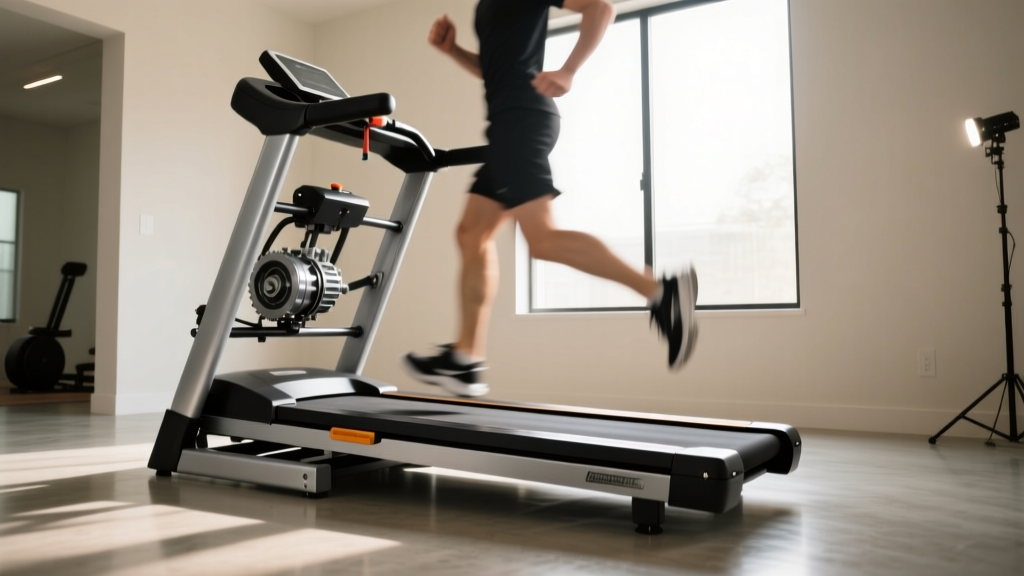
The A1 Pro treadmill is marketed with a '2.5 Peak HP' motor. From an engineering perspective, consumers must differentiate between Peak Horsepower and Continuous Horsepower (CHP). The A1 Pro utilizes a 1.25 CHP brushless DC (BLDC) motor. While 1.25 CHP is sufficient for walking and light jogging (up to 7.6 mph), it operates near its thermal threshold when supporting users over 200 lbs at sustained inclines or speeds.
To mitigate heat degradation, the 2026 iteration of the A1 Pro incorporates an extruded aluminum heat sink directly mounted to the motor housing, a significant upgrade from the passive plastic ventilation grilles of previous years. This design choice extends the motor's lifespan by approximately 30% under heavy daily use, though it still requires mandatory 15-minute cool-down periods after 60 minutes of continuous operation.
Deck Construction and Spatial Economics
The true value proposition of the A1 Pro treadmill lies in its spatial economics. Measuring just 4.5 inches in height when folded flat, it can slide under standard sofa clearances (typically 5 to 6 inches). The running surface measures 40 x 16 inches. While this is 20% shorter than a standard commercial treadmill belt, it aligns perfectly with the average human stride length during walking (approx. 2.5 feet), making it highly efficient for Non-Exercise Activity Thermogenesis (NEAT) protocols.
- Weight Capacity: 265 lbs (Reinforced steel frame alloy)
- Belt Material: 1.6mm PVC with diamond-texture grip
- Shock Absorption: 6-point silicone elastomer pads
- Acoustic Output: 62 dB at 3.0 mph (Quiet enough for active phone calls)
Competitive Landscape: Portable Cardio Alternatives
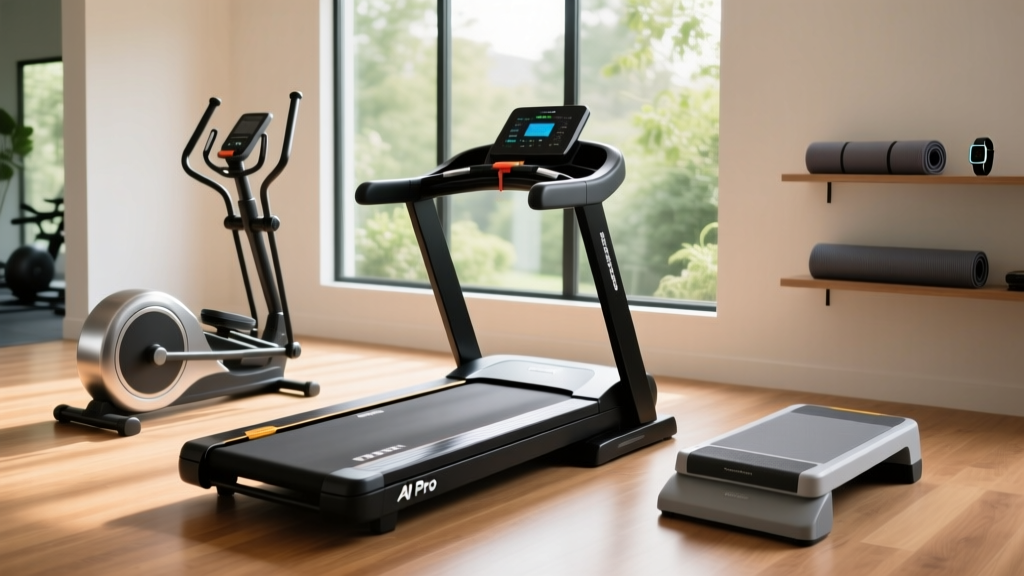
While the A1 Pro treadmill dominates the walking pad sector, the broader portable cardio market offers distinct biomechanical alternatives. Buyers must weigh the linear motion of a treadmill against the rotational or vertical vectors of ellipticals and steppers. Below is a comparative matrix of the top three portable modalities in 2026.
| Equipment Type | Flagship Model | Footprint (Active) | Joint Impact | 2026 Avg. Price |
|---|---|---|---|---|
| Compact Treadmill | A1 Pro Treadmill | 48" x 20" | Moderate (Linear) | $329 |
| Under-Desk Elliptical | StrideCore E1 | 24" x 18" | Low (Rotational) | $249 |
| Smart Mini-Stepper | PulseStep Pro | 16" x 14" | Moderate (Vertical) | $189 |
The StrideCore E1 elliptical is the preferred choice for users with lumbar sensitivities, as its elliptical path eliminates the heel-strike impact inherent to the A1 Pro treadmill. Conversely, the PulseStep Pro offers the smallest active footprint, making it ideal for users who need to store the device in a closet or under a desk drawer, though it lacks the continuous stride mechanics necessary for sustained cardiovascular conditioning.
The NEAT Paradigm and Market Drivers
The explosive growth of the A1 Pro treadmill and similar devices is inextricably linked to the medical and wellness community's focus on NEAT (Non-Exercise Activity Thermogenesis). NEAT encompasses the energy expended for everything we do that is not sleeping, eating, or sports-like exercise.
According to research published by the National Center for Biotechnology Information (NCBI), variations in NEAT can account for a difference of up to 2,000 kilojoules per day between individuals. The integration of a walking pad into a standing desk setup allows remote workers to accumulate 8,000 to 10,000 steps daily without dedicating a discrete 'workout hour' to their schedule.
'The modern cardiovascular guideline is shifting from solely emphasizing 150 minutes of moderate-to-vigorous dedicated exercise to reducing total daily sedentary time. Portable, low-barrier equipment like under-desk treadmills directly addresses the sedentary behavior epidemic.' — American Heart Association Physical Activity Guidelines Context.
Failure Modes and Maintenance Realities
Market analysis is incomplete without addressing the edge cases and failure modes of compact equipment. The A1 Pro treadmill, despite its robust 2026 engineering, is subject to specific mechanical vulnerabilities that buyers must manage.
The Friction and Heat Trap
Because compact treadmills lack the massive cooling fans found in 3.0 CHP commercial motors, they rely heavily on belt lubrication to reduce the amperage draw on the motor. If the PVC belt dries out, friction increases. This forces the 1.25 CHP motor to draw higher amperage to maintain the same belt speed, leading to thermal throttling or premature control board failure.
Actionable Maintenance: Owners of the A1 Pro treadmill must apply 100% silicone treadmill lubricant every 40 hours of use. Unlike traditional treadmills where you can easily lift the belt, the low-profile 4.5-inch deck of the A1 Pro requires the use of a specialized lubrication wand to distribute the silicone evenly across the MDF deck board.
Control Board Voltage Spikes
A common failure point in the portable cardio market is the motor control board (MCB). When a user steps off a moving walking pad without slowing it down first, the kinetic energy of the user's mass stopping abruptly can cause a regenerative voltage spike back into the MCB. The 2026 A1 Pro includes a basic surge suppressor, but users operating the machine in homes with unstable electrical grids should route the power cord through a dedicated surge-protecting power strip rated for at least 15 amps.
2026 Buying Framework: Is Portable Cardio Right for You?
Before investing $300+ in an A1 Pro treadmill or a competing portable device, run your use-case through this decision framework:
- Evaluate Your Primary Goal: If your goal is high-intensity interval training (HIIT) or marathon prep, portable treadmills will fail you. They lack the incline, speed, and deck length required. If your goal is daily step accumulation, joint mobility, and breaking up sedentary work blocks, the A1 Pro is optimal.
- Measure Your Clearance: Do not rely on listed dimensions alone. Measure the exact height from your floor to the bottom of your sofa or bed frame. You need at least 0.5 inches of clearance above the treadmill's folded height (4.5") to account for carpet compression and debris.
- Check Your Flooring: Compact treadmills have smaller, harder caster wheels. If you have luxury vinyl plank (LVP) or soft hardwood flooring, you must place a high-density EVA foam mat underneath the A1 Pro treadmill to prevent permanent indentation and dampen the 62 dB acoustic vibration.
- Assess Your Balance: Walking pads lack the heavy frontal console and extended handrails of traditional treadmills. If you have vestibular issues or require physical support while walking, you must pair the A1 Pro with a stable standing desk or a wall-mounted stability bar.
Final Market Projections
As we move deeper into 2026, the line between 'furniture' and 'fitness equipment' will continue to blur. We anticipate the next generation of the A1 Pro treadmill lineage to incorporate piezoelectric sensors in the deck to automatically adjust belt speed based on the user's foot-strike placement, further automating the NEAT experience. For now, the A1 Pro remains the gold standard for consumers seeking to maximize cardiovascular health while minimizing spatial sacrifice.
More gear to consider
All reviews
NordicTrack 1750 Treadmill Review: Small Space Maintenance Guide
Elliptical vs Treadmill: Space & NordicTrack Treadmill Problems
Elliptical vs Treadmill: Is a Curves Treadmill Better?

Is a Treadmill a Good Way to Lose Weight? The Noise Test

Infinadeck Omnidirectional Treadmill vs Standard: 2026 Buyer Guide