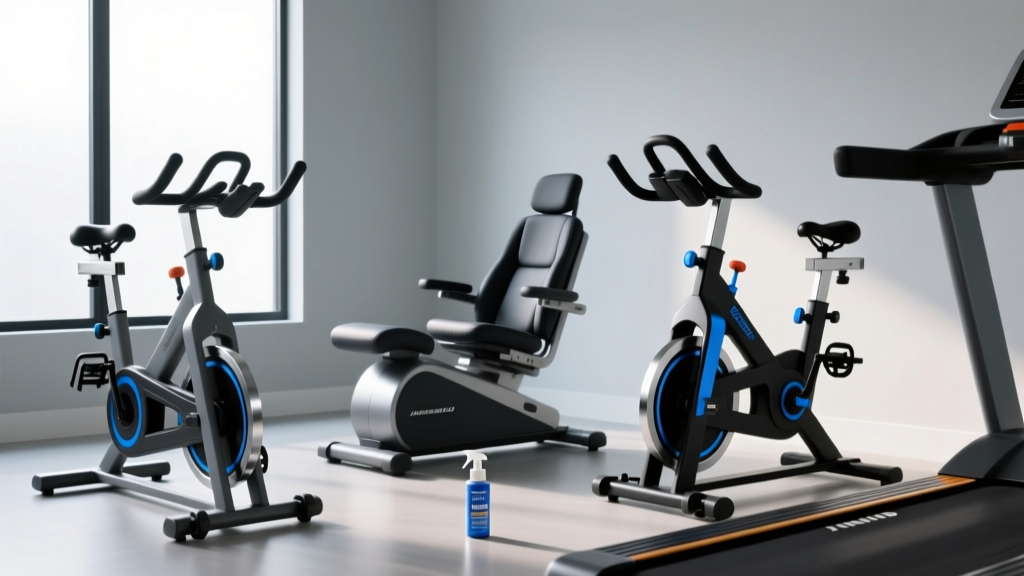
Stationary Bike Types Care & Silicone Spray for Treadmill Belt Guide
Master cardio machine longevity. Compare maintenance for upright, recumbent, and spin bikes, plus when to use silicone spray for treadmill belt care.

The Maintenance Divide: Magnetic Bikes vs. Friction Treadmills
When outfitting a home gym, understanding the mechanical realities of your equipment is the difference between a decade of reliable use and a costly repair bill. As of 2026, the cardio machine market has largely bifurcated into two mechanical camps: sealed magnetic resistance systems found in modern stationary bikes, and high-friction kinetic decks found in treadmills. While stationary bike types (upright, recumbent, and spin) require targeted mechanical care to combat sweat and bearing wear, treadmills demand strict chemical lubrication protocols. This guide breaks down the exact maintenance frameworks for the three primary stationary bike types, while contrasting them with the non-negotiable requirement of using a 100% pure silicone spray for treadmill belt longevity.
Upright Stationary Bikes: Sealed Systems and Threaded Pedals
Upright bikes, such as the Nautilus U618 or the Schwinn IC4, mimic the geometry of a traditional road bike but utilize heavy flywheels and Poly-V drive belts. Because the resistance is generated electromagnetically, there are no friction pads to replace. However, the drivetrain and contact points require specific attention.
Drivetrain and Pedal Torque Specifications
The most common catastrophic failure on upright bikes is pedal stripping. The left pedal spindle is reverse-threaded (left-hand thread) to prevent it from unscrewing during the upward pull of the pedal stroke. When reinstalling or greasing the pedal threads on a Schwinn or Nautilus model, you must apply a thin layer of marine-grade grease and torque the pedals to exactly 35 Nm (Newton-meters). Under-torquing leads to cross-threading, which will destroy the $120 crank arm assembly.
Furthermore, the Poly-V ribbed belt connecting the pedals to the flywheel is designed to be maintenance-free. Do not apply belt dressing or any lubricants to the ribbed belt; doing so will cause micro-slippage and degrade the rubber compound. If the belt squeaks, it requires tension adjustment via the idler pulley bolt, not lubrication.
Recumbent Bikes: Rail Care and Step-Through Frame Stress
Recumbent bikes, like the NordicTrack Commercial R35 or the Schwinn 270, are engineered for low-impact rehabilitation and extended seated cardio. Their elongated frames and step-through designs introduce unique maintenance variables, specifically regarding the seat adjustment mechanisms and motorized resistance calibration.
Seat Rail Lubrication and Frame Stress
The horizontal seat rail on a recumbent bike bears the entire dynamic load of the user. Over time, the factory-applied grease attracts dust and pet hair, forming an abrasive paste that grinds down the steel rail and breaks the plastic locking pop-pin. Every six months, wipe the rail clean with a degreaser and apply a light coat of white lithium grease (approximately an $8 investment). Avoid using WD-40, as it is a solvent and will strip away the internal lubrication of the pop-pin mechanism.
Additionally, the step-through frame design means the main central tube experiences high torsional stress when users mount and dismount. Annually inspect the weld points near the bottom bracket for hairline fractures, especially if the bike is used by individuals over 250 lbs.
Indoor Spin Bikes: Combating Sweat Corrosion
Spin bikes (indoor cycles) like the Keiser M3i and Peloton Bike+ operate in high-intensity, high-sweat environments. Unlike recumbent bikes where the user is relatively stationary, spin bike riders frequently stand, generating massive amounts of perspiration that drips directly onto the flywheel, bottom bracket, and tension knobs.
According to the American Council on Exercise (ACE), human sweat contains high levels of chloride and urea, which rapidly accelerate the oxidation of untreated steel and aluminum components on indoor cycles. Wiping down equipment with a neutralizing agent is critical for preventing structural degradation.
The 50/50 Vinegar Protocol and Bearing Replacement
To neutralize the corrosive salts in sweat, do not use standard household bleach or ammonia-based cleaners, which will cloud the digital displays and degrade the powder-coated paint. Instead, use a 50/50 mixture of distilled white vinegar and water. Spray this onto a microfiber cloth (never directly onto the bike's console) and wipe down the handlebars, seat post, and the top of the flywheel guard after every session.
If your spin bike develops a rhythmic 'clicking' noise that syncs with your cadence, the bottom bracket bearings are likely compromised. Premium bikes use standard 6203-2RS sealed radial bearings. Replacing these requires a bottom bracket puller tool and a $12 pair of replacement bearings from an industrial supplier, saving you a $200+ service call.
The Treadmill Contrast: Using Silicone Spray for Treadmill Belt Longevity
While the stationary bike types discussed above rely on sealed bearings and magnetic resistance that require zero chemical lubrication, treadmills operate on an entirely different physical principle. A treadmill belt sliding over a wooden or MDF deck generates immense kinetic heat and friction. This is where understanding the proper application of a silicone spray for treadmill belt decks becomes a mandatory, life-extending chore.
Unlike bicycle chains that require PTFE or petroleum-based wet lubes, applying anything other than 100% pure silicone to a treadmill deck will catastrophically degrade the PVC backing of the belt and cause the motor control board to overheat and fail. Experts at Treadmill Doctor emphasize that petroleum distillates cause the belt to delaminate, leading to catastrophic slipping and potential user injury.
How to Apply 100% Silicone Spray Correctly
- Verify the Compound: Ensure your can explicitly states '100% Silicone'. Avoid 'water-displacing' silicone blends or aerosol sprays containing propellants that leave sticky residues.
- Loosen the Belt: Using a hex key, turn the rear roller adjustment bolts counter-clockwise exactly three full turns to create slack.
- Apply the Spray: Lift the edge of the belt and spray a continuous, zig-zag line of silicone spray for treadmill belt coverage across the center third of the deck. Repeat on the opposite side.
- Re-tension and Distribute: Tighten the rear bolts exactly three turns clockwise. Plug the machine in and run it at 3.0 MPH for five minutes without walking on it, allowing the heat to evenly distribute the silicone across the deck.
Comparative Maintenance Matrix: Bikes vs. Treadmills
To help you budget your time and maintenance costs, refer to the matrix below comparing the core upkeep requirements across the major cardio categories.
| Equipment Type | Primary Wear Point | Required Lubricant / Care | Frequency | Est. Annual Cost |
|---|---|---|---|---|
| Upright Bike | Pedal Threads / Seat Post | Marine Grease / White Lithium | Every 6 Months | $15 |
| Recumbent Bike | Horizontal Seat Rail | White Lithium Grease | Every 6 Months | $8 |
| Spin Bike (Indoor Cycle) | Bottom Bracket / Flywheel | Vinegar Solution (Cleaning) | Post-Workout | $10 |
| Motorized Treadmill | Deck and Belt Friction | 100% Silicone Spray for Treadmill Belt | Every 150 Miles | $25 |
Diagnostic Troubleshooting: Identifying the Squeak
When cardio machines develop noise, users often default to spraying WD-40 on every moving part. This is a critical error. Use this diagnostic framework to identify the true source of the noise:
- Rhythmic Squeak (Spin Bike): Usually indicates a dry felt tension pad (on older friction models) or a failing bottom bracket bearing. Do not spray the flywheel.
- Clunking on Downstroke (Upright Bike): Check the crank arm bolts. If the square-taper or splined interface has loosened, the aluminum crank arm will deform. Tighten to 40 Nm immediately.
- High-Pitched Whine (Treadmill): This is the sound of a dry deck. The motor is drawing excess amperage to overcome friction. This is your immediate cue to apply your silicone spray for treadmill belt maintenance before the motor control board trips its thermal breaker.
- Seat Squeak (Recumbent Bike): The mesh backrest rubbing against the plastic housing. Apply a dry PTFE spray to the plastic contact points, avoiding the metal seat rail.
By respecting the distinct mechanical architectures of your equipment—keeping magnetic bike systems clean and dry, while religiously applying the correct silicone spray for treadmill belt decks—you ensure your home gym remains a safe, silent, and effective training environment for years to come. For further reading on commercial and home gym equipment safety standards, consult the guidelines published by the National Strength and Conditioning Association (NSCA).
More gear to consider
All reviews
Home Stair Climber Guide: Is a Treadmill Good for Weight Loss?

2026 Decline Treadmill Guide: Step-by-Step Feature Comparison

Weslo Cadence 80 Treadmill Maintenance & Compact Cardio Care

Curved vs Motorized: A Sole Treadmill Comparison Guide

Curved Manual vs Motorized: ProForm 305 CST Treadmill Compared
