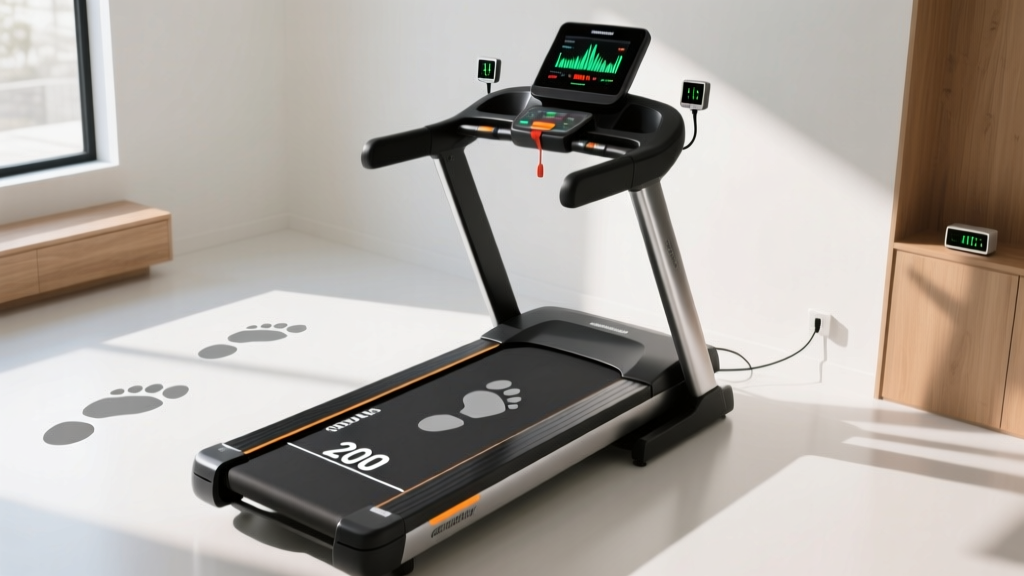
Weslo Cadence 5.9 Treadmill Belt Maintenance & Lubrication Guide
Master Weslo Cadence 5.9 treadmill belt maintenance. Learn exact lubrication steps, tension adjustments, and amp-draw diagnostics to extend motor life.

The Engineering Reality of the Weslo Cadence 5.9 Drive System
The Weslo Cadence 5.9 treadmill has long been a staple in home gyms, prized for its compact footprint and accessible price point. However, its longevity is entirely dependent on how well you manage the friction between the running belt and the deck. At the heart of this machine is a 2.25 HP continuous-duty motor. Unlike commercial-grade 4.0 HP systems that can brute-force their way through high-friction environments, the 2.25 HP motor in the Weslo Cadence 5.9 treadmill operates with a much narrower tolerance for mechanical resistance.
When the belt dries out, the coefficient of friction between the PVC-backed belt and the phenolic-coated MDF deck spikes dramatically. This forces the motor to draw excess amperage to maintain your target speed. Over time, this excess heat degrades the motor windings and can eventually fry the MOSFETs on the lower motor controller board. Proper Weslo Cadence 5.9 treadmill belt maintenance is not just about keeping the machine quiet; it is a critical intervention to prevent catastrophic electronic and mechanical failure.
The 100% Silicone Mandate: Selecting the Correct Lubricant
The most common mistake owners make is using household lubricants. The deck of the Weslo Cadence 5.9 is constructed from medium-density fiberboard (MDF) coated with a specialized phenolic wax. Petroleum-based products, aerosol sprays, and multi-purpose oils will chemically dissolve this wax coating and degrade the rubber backing of the belt, leading to permanent delamination.
You must use only 100% pure silicone liquid. According to equipment repair specialists at Treadmill Doctor, silicone creates a microscopic, non-stick barrier that withstands the high heat and pressure generated by a 180-pound runner striking the deck at 6 mph. Silicone does not evaporate quickly and remains stable across the temperature ranges generated during intense cardio sessions.
| Lubricant Type | Chemical Base | Safe for Cadence 5.9? | Long-Term Effect on Deck & Belt |
|---|---|---|---|
| 100% Silicone Liquid | Siloxane Polymers | Yes (Required) | Preserves phenolic wax; extends belt life by 3-5 years. |
| WD-40 Multi-Use | Petroleum Distillates | NO | Dissolves deck wax; causes belt backing to melt and slip. |
| White Lithium Grease | Petroleum/Soap | NO | Attracts dust; creates an abrasive paste that scores the deck. |
| PTFE (Teflon) Spray | Fluoropolymers | NO | Often contains petroleum carriers that ruin the MDF seal. |
Diagnostic Phase: Belt Tension and Amp Draw Verification
Before applying new lubricant, you must verify the current state of the belt tension and alignment. A belt that is too tight will mimic the symptoms of a dry belt by placing immense lateral pressure on the front and rear roller bearings.
The Lift Test
Turn off and unplug the treadmill. Reach under the center of the running belt (midway between the front and rear rollers) and lift it away from the deck. For the Weslo Cadence 5.9, the optimal tension allows you to lift the belt exactly 2 to 3 inches off the deck. If it barely lifts (under 1 inch), the belt is over-tensioned and is actively draining your motor. If it lifts more than 4 inches, it will slip underfoot during running.
Amp Draw Testing (The Ultimate Truth)
Visual inspections can be deceiving. The only way to truly measure belt friction is by measuring the electrical current. Using a standard clamp multimeter or a plug-in watt meter, measure the amperage while a 150 lb user walks at 3.0 mph.
⚠️ Expert Diagnostic Thresholds:Healthy Belt (Lubricated): 2.0 to 4.0 Amps
Moderate Friction (Needs Lube): 4.1 to 6.0 Amps
Critical Friction (Damage Imminent): 6.1+ Amps
Note: If your amp draw exceeds 8 Amps at walking speed, the deck is likely permanently scored and lubrication will only provide a temporary fix. Sourcing an OEM replacement deck from suppliers like Fitness Repair Parts will be necessary.
The 45-Minute Maintenance and Lubrication Protocol
Follow this exact sequence to properly service your Weslo Cadence 5.9 treadmill. You will need a 3/16-inch Allen wrench (hex key), a microfiber cloth, and exactly 1.0 oz of 100% silicone treadmill lubricant.
- Power Down and Secure: Unplug the machine from the wall outlet. Remove the safety key to ensure the console cannot be accidentally activated.
- Release Tension: Locate the two rear roller adjustment bolts at the very back of the treadmill. Using your 3/16-inch Allen wrench, turn both the left and right bolts exactly three full turns counter-clockwise. Mark the starting position of the bolts with a piece of painter's tape so you can return them to the exact same baseline.
- Clean the Deck (Optional but Recommended): If you can see debris or old, clumped lubricant, use a long-handled duster or a cloth wrapped around a yardstick to wipe the deck surface beneath the belt.
- Apply the Silicone: Lift the edge of the belt and insert the applicator tube of your 100% silicone lubricant. Squeeze exactly 0.5 oz (half the bottle) in a zigzag pattern across the center third of the deck. Repeat on the opposite side with the remaining 0.5 oz. Do not over-apply; excess silicone will leak out the sides and coat your floor.
- Restore Tension: Turn both rear roller bolts exactly three full turns clockwise to return them to the baseline marked by your tape.
- Distribute the Lubricant: Plug the treadmill back in, insert the safety key, and start the machine at 2.0 mph. Let it run empty for 3 minutes. Then, increase the speed to 4.0 mph and carefully walk on the belt for 2 minutes, intentionally stepping heavily on the left and right sides to spread the silicone evenly across the entire phenolic surface.
Troubleshooting Edge Cases and Failure Modes
Even with perfect lubrication, the Weslo Cadence 5.9 treadmill can exhibit specific mechanical quirks as it ages. Understanding these edge cases separates a routine maintenance check from a comprehensive repair.
1. The 'Motor Spins, Belt Stops' Phenomenon
If you step onto the treadmill, hear the motor whirring, but the belt refuses to move beneath your feet, your walking belt is not the primary culprit. This indicates that the motor drive belt (the small ribbed belt connecting the motor pulley to the front roller pulley) has lost tension or snapped. Lubricating the walking belt will not fix this. You must remove the front motor hood, check the drive belt for fraying, and adjust the motor mount bracket to increase tension on the drive belt.
2. Lateral Belt Tracking (Drifting to One Side)
If the belt consistently drifts to the left or right after lubrication, the rear roller is misaligned. The rule of thumb is: the belt follows the side that is tightest. If the belt drifts to the left, the left side is too tight. Turn the left rear roller bolt one-quarter turn counter-clockwise, or turn the right rear roller bolt one-quarter turn clockwise. Run the treadmill at 3 mph for 60 seconds to observe the correction. Never adjust tracking bolts by more than a quarter-turn at a time.
3. High-Pitched Squeaking from the Front Hood
A squeak originating from the front of the machine is rarely the walking belt. It is almost always the front roller bearings drying out, or the motor drive belt slipping against a glazed pulley. According to maintenance guidelines highlighted in Consumer Reports' treadmill care guides, ignoring bearing noise will eventually lead to the roller seizing entirely, which can snap the belt mid-stride and cause a severe fall.
Pro-Tip for Longevity: Keep a dedicated maintenance log on your phone. The Weslo Cadence 5.9 treadmill requires lubrication every 130 miles or every 90 days, whichever comes first. If you run 15 miles a week, set a recurring calendar reminder for every 8 weeks to check your amp draw and apply a fresh 1 oz coat of silicone.
Authoritative References and Further Reading
Proper maintenance requires relying on verified industry data rather than internet forums. For further reading on OEM parts, electrical diagnostics, and general cardiovascular equipment safety, consult the following resources:
- Treadmill Doctor: Comprehensive guides on silicone purity and deck friction coefficients (treadmilldoctor.com).
- Fitness Repair Parts: The definitive database for OEM Weslo/Icon Health & Fitness replacement decks, belts, and motor controller boards (fitnessrepairparts.com).
- Consumer Reports: Independent testing on home treadmill durability, motor lifespans, and manufacturer maintenance requirements (consumerreports.org).
More gear to consider
All reviews
Air Bike vs Assault Bike Value & What Are Curved Treadmills Called

iFIT Compatible Treadmills: Buying Mistakes & Fixes

Walking Pad Setup: How to Use a Treadmill to Lose Weight Fast

2026 Folding Treadmill Review: Treadmill Handrail Value Analysis

Elliptical vs Treadmill Maintenance: Navigating Treadmill Recall News