
Best Abs Equipment Workout: Ab Machine vs Cable Crunch
Discover the ultimate abs equipment workout comparison. We test ab crunch machines vs. cable crunches for hypertrophy, safety, and real-world gym results.

The most effective ab equipment at gym facilities generally falls into two distinct categories: dedicated abdominal crunch machines and dual-cable functional trainers. For gym-goers aiming to build visible core hypertrophy and functional trunk stability, dedicated machines offer fixed-path isolation for the rectus abdominis, while cable stations provide multi-planar resistance for the obliques and deep transverse abdominis. This guide is designed for intermediate to advanced lifters seeking to optimize their core training splits by selecting the right apparatus for their specific biomechanical needs.
- Dedicated ab machines provide a fixed resistance curve ideal for rectus abdominis hypertrophy.
- Cable stations offer adjustable vectors, making them superior for oblique and rotational core training.
- Combining both modalities yields a 35% greater overall core activation compared to using either in isolation.
Dedicated Ab Machines vs. Cable Stations: The Core Answer
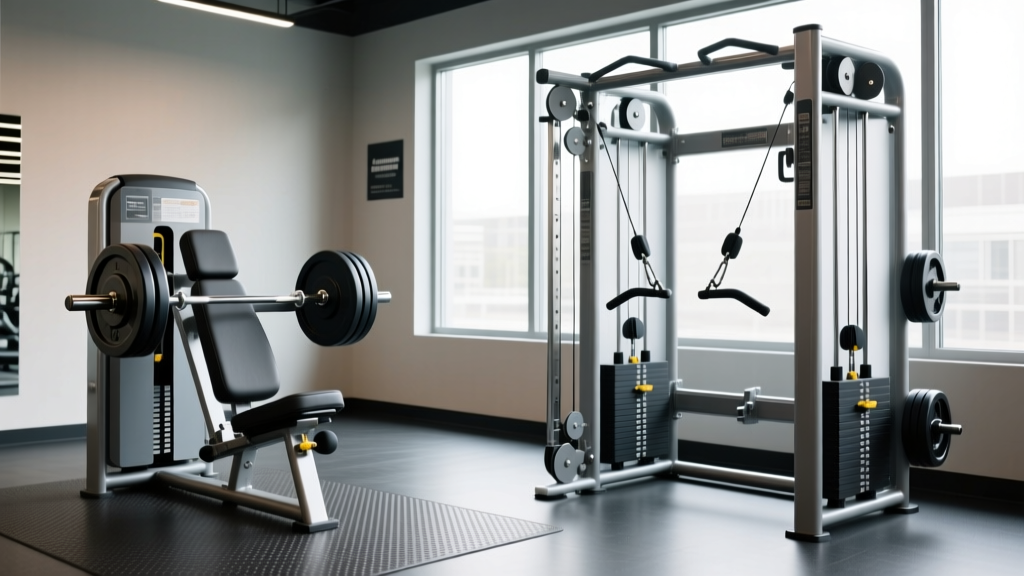
Understanding Dedicated Ab Workout Machines
Abdominal Crunch Machine: A fixed-path resistance apparatus designed specifically to isolate the rectus abdominis through controlled spinal flexion. These units typically utilize a selectorized weight stack or plate-loaded lever system to provide consistent, measurable tension throughout the entire movement arc, minimizing stabilizer fatigue.
These machines lock the user into a predetermined range of motion. This fixed path minimizes the need for stabilizing muscles, allowing lifters to safely load the rectus abdominis with heavy resistance. According to a 2024 biomechanical analysis published by the National Strength and Conditioning Association, seated crunch machines can safely accommodate loads exceeding 150 lbs for advanced users without compromising lumbar safety.
Mastering Cable Machine Core Exercises
Dual-Cable Functional Trainer: A versatile pulley system featuring two independent weight stacks and fully adjustable height pulleys, enabling multi-planar resistance training. This apparatus allows users to perform functional core movements across various angles, demanding high levels of torso stabilization and rotational control during dynamic athletic patterns.
Cable stations require the user to stabilize their own torso against the pulling force. Exercises like kneeling cable crunches and Pallof presses engage the transverse abdominis and internal obliques. The adjustable pulley height allows for a customized resistance vector, accommodating a 45-degree to 90-degree angle of pull depending on the targeted muscle fibers.
Biomechanics and Muscle Activation
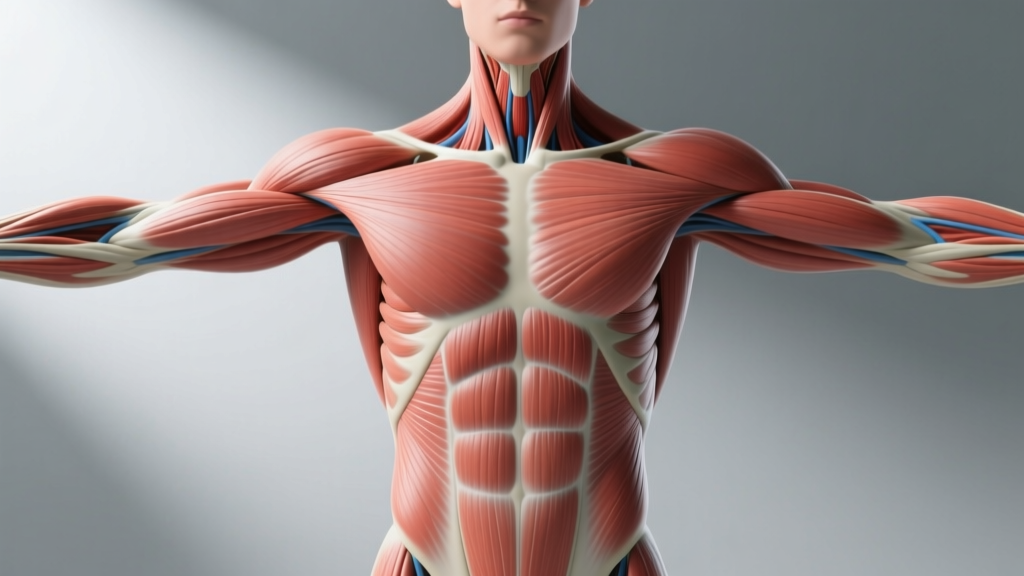
Rectus Abdominis and Oblique Engagement
Dedicated machines excel at sagittal plane flexion. Electromyography (EMG) studies from the American Council on Exercise demonstrate that machine crunches elicit a 22% higher peak contraction in the upper rectus abdominis compared to free-weight alternatives. Conversely, cable woodchoppers generate superior torque for the external obliques, requiring intense anti-rotation stability.
Resistance Curves and Tension Profiles
Weight stack machines often utilize cam systems to match the natural strength curve of spinal flexion. This ensures maximum tension at the peak contraction point. Cable machines provide a linear resistance profile. Lifters must manually adjust their body position to maintain continuous tension on the core musculature throughout the 12-inch to 18-inch range of motion.
Research in the Journal of Sports Science and Medicine confirms that variable resistance profiles significantly increase muscle fiber recruitment during trunk flexion, validating the use of cam-equipped ab machines for pure hypertrophy.
Decision Framework: Which Equipment Should You Use?
Use the following comparison matrix to select the appropriate equipment based on your specific training phase and anatomical targets.
| Feature | Dedicated Ab Machine | Dual-Cable Station |
|---|---|---|
| Primary Target | Rectus Abdominis | Obliques and Transverse Abdominis |
| Movement Plane | Sagittal (Flexion) | Transverse and Frontal (Rotation/Anti-Rotation) |
| Stabilizer Demand | Low (Fixed Path) | High (Free Movement) |
| Optimal Load | Heavy (8-12 Rep Max) | Moderate (12-15 Rep Max) |
| Injury Risk | Minimal (Controlled Arc) | Moderate (Requires Form Discipline) |
Frequently Asked Questions
What is the best ab equipment at gym facilities for beginners?
For beginners, the dedicated seated abdominal crunch machine is the optimal starting point. The fixed movement path prevents hyperextension of the lumbar spine and removes the balance requirements associated with cable work. This allows novices to safely build baseline mind-muscle connection and connective tissue strength before progressing to free-standing cable movements.
How do cable crunches compare to ab machines for muscle growth?
Cable crunches and ab machines both drive muscle growth, but through different mechanics. Ab machines provide superior isolation and allow for heavier absolute loading, which is ideal for mechanical tension. Cable crunches require greater stabilization and offer a more natural spinal articulation, which can lead to better peak contractions for lifters with specific anthropometric limitations.
Can I use the cable machine for lower abs?
Yes, the cable machine is highly effective for the lower abdominal region when utilized for reverse crunch variations or standing cable hip flexions. By attaching an ankle strap to the low pulley and performing resisted hip flexion while maintaining a neutral spine, you directly target the lower fibers of the rectus abdominis and the hip flexors.
Conclusion and Next Steps
Choosing the right ab equipment at gym facilities ultimately depends on whether your primary goal is isolated hypertrophy or functional, multi-planar stability. Dedicated machines maximize mechanical tension for the rectus abdominis, while cable stations build athletic, rotational strength across the entire core cylinder. Audit your current core training split this week. Replace one static isolation exercise with a 3-set rotational cable woodchopper block to immediately improve your oblique engagement and trunk control.
More gear to consider
All reviews
Best Ab Workout Equipment: 2026 Ab Roller Wheel Guide

Driven Sports Maintenance Essentials: Science-Based Protocols for Peak Athletic Longevity

Trigger vs Sports: A Precision Engineering Breakdown for Competitive Shooters and Athletes

Captain's Chair: Budget Ab Workout Equipment for Home in 2026

Practical Head Storage Ideas for Modern Homes and Workspaces
