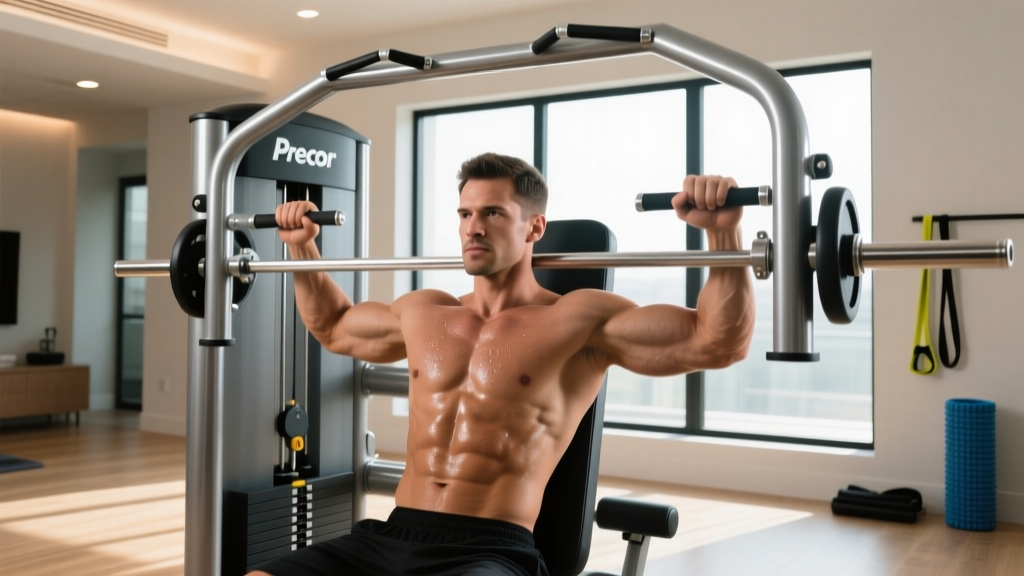
Precor Converging Chest Press Machine: Home Gym Troubleshooting
Master your home gym setup with our troubleshooting guide for the Precor converging chest press machine. Fix mechanical, spatial, and biomechanical errors.

Bringing Commercial Power Home: The Precor Converging Chest Press
In 2026, the trend of outfitting residential home gyms with commercial-grade chest training equipment has reached an all-time high. Among the most coveted pieces is the Precor converging chest press machine, available in both the plate-loaded Discovery Series and the selectorized Resolute Series. Renowned for its biomechanically flawless arc and independent arm movement, it is a staple in elite athletic facilities. However, transitioning a 600 to 850-pound commercial behemoth into a residential space introduces a unique matrix of spatial, mechanical, and biomechanical challenges. This guide serves as your definitive troubleshooting manual for installing, maintaining, and optimizing the Precor converging chest press for home gym environments.
⚠️ CRITICAL HOME GYM WARNING: Residential floor joists are typically rated for a live load of 40 pounds per square foot (PSF). A fully loaded Precor Resolute chest press can exceed 1,200 lbs (machine + user + plates) distributed over a roughly 22-square-foot footprint. Always consult a structural engineer to reinforce your floor joists before installation to prevent catastrophic structural sagging or failure.Spatial and Structural Troubleshooting
The most common mistake home gym owners make with the Precor converging chest press machine is underestimating its operational footprint. While the static dimensions are approximately 54 inches long by 58 inches wide, you must account for the operational envelope.
Clearance and Plate Loading Errors
Users frequently place the machine flush against a wall, forgetting that the Discovery Series (plate-loaded) requires lateral clearance for loading 45-pound bumper plates. The horn sleeves extend outward, and you need a minimum of 36 inches of clearance on both sides and the rear for safe plate loading and unloading. If you are using the selectorized Resolute model, wall clearance is less of an issue, but you must ensure the weight stack shroud has adequate ventilation to prevent dust buildup in the cable pulleys.
Ceiling Height Miscalculations
The Precor converging chest press stands roughly 62 inches tall. While this fits under standard 8-foot residential ceilings, home gym owners often forget to account for overhead lighting, HVAC ducts, or pull-up bar attachments mounted to the ceiling joists directly above the machine's ingress/egress path.
Mechanical Troubleshooting: Maintaining the Converging Arc
The magic of the Precor converging chest press machine lies in its independent, converging arm pivot system. When the arms feel gritty, uneven, or exhibit 'stiction' (static friction), your workout quality plummets. Below is a diagnostic matrix for common mechanical failures in home environments, where climate control and dust differ vastly from commercial gyms.
| Symptom | Root Cause | Expert Solution |
|---|---|---|
| Arms feel 'gritty' or catch during the concentric phase. | Dust accumulation in the sealed pivot bearings or lack of humidity control causing micro-corrosion on the shaft. | Wipe down the pivot shafts with a microfiber cloth. Apply a PTFE-based dry lubricant. Never use WD-40, which attracts dust and degrades factory grease. |
| Seat track adjustment pin sticks or won't lock. | Metal shavings or debris in the pop-pin hole; bent detent spring. | Use compressed air to blow out the seat track holes. If the pin still drags, replace the pop-pin assembly (Precor part #50010-101). |
| Selectorized weight stack (Resolute) drops with a loud clank. | Worn UHMW polyethylene guide rods or frayed internal aircraft cable. | Inspect the guide rods for scoring. If scored, replace the UHMW bushings. Check cable tension and replace if individual wire strands are visible. |
Biomechanical Errors: Dialing in the Press
According to biomechanical analyses detailed in resources like ExRx.net's pectoral sternal exercise directory, the primary function of the pectoralis major during a horizontal press is transverse adduction. The Precor converging chest press machine is engineered to mimic this natural arc, bringing the hands together at the peak of the movement. However, improper setup negates this advantage, shifting the load to the anterior deltoids or triceps.
Mistake 1: Incorrect Seat Height Alignment
The most pervasive error is sitting too low. When the seat is too low, the handles align with the upper chest/clavicular region, turning the movement into an incline press and heavily recruiting the front delts. Conversely, sitting too high shifts the load to the lower costal fibers and triceps.
- Find the Sternot notch: Sit in the machine and grasp the handles. Your grip should align perfectly with the mid-line of your sternum (nipple line for most males, lower sternum for females).
- Adjust the seat pad: Use the lateral pop-pin to raise or lower the seat until this alignment is achieved.
- Check the scapular retraction: Your shoulder blades must be pinched together and depressed against the backpad. If your feet cannot plant firmly on the floor to drive this retraction, the seat is too high.
Mistake 2: Ignoring Grip Width Variables
The Precor handles offer multiple grip positions. Home gym users often default to the widest grip, assuming it yields the greatest chest activation. In reality, an excessively wide grip on a converging machine increases the moment arm at the shoulder joint, placing immense shear stress on the acromioclavicular (AC) joint and rotator cuff. Utilize the neutral (palms facing each other) mid-width grip for optimal pectoral recruitment and shoulder safety, reserving the pronated wide grip for advanced hypertrophy blocks only.
"The independent converging arc allows for unilateral overload. If you are rehabilitating a shoulder or correcting a strength imbalance, load one side with 70% of your working weight and focus on the mind-muscle connection on the weaker side without the dominant arm taking over."
2026 Market Realities: Sourcing and Cost Analysis
Acquiring a Precor official strength equipment piece for a home gym requires navigating a complex secondary market. As of 2026, purchasing a brand-new Resolute Series Selectorized Chest Press directly from commercial distributors will cost between $6,800 and $8,200, not including freight shipping, which can add $400 to $800 for a residential delivery with a liftgate.
The Refurbished Route: Most home gym owners opt for the secondary market. A professionally refurbished Discovery Series Plate-Loaded Converging Chest Press typically ranges from $2,600 to $3,400. When buying refurbished, demand proof of bearing replacement and inspect the welds on the converging arm brackets. Hairline fractures in the welds near the pivot point are a known failure mode in machines that have seen heavy use in commercial powerlifting gyms.
Alternative Considerations
If the spatial requirements, floor loading issues, or price point of the Precor converging chest press machine are prohibitive for your home gym, consider high-end functional trainers with dual adjustable pulleys (DAP). While they lack the fixed stability of a dedicated chest press, a DAP system with a bench allows for cable crossovers and converging cable presses that mimic the biomechanical arc at a fraction of the footprint and cost.
Final Thoughts on Home Integration
Integrating the Precor converging chest press machine into your home gym is a masterclass in upgrading your chest training equipment arsenal. By respecting the structural limits of your home, adhering to strict PTFE-based maintenance protocols, and dialing in the biomechanical seat alignment, you secure a lifetime of elite-level pectoral hypertrophy. Treat the machine with the same rigor you apply to your training, and it will deliver unparalleled performance for decades.
More gear to consider
All reviews
Real For World: How Functional Chest Protection Transforms Real-World Safety Across Industries

Matrix Chest Press Machine vs Cable & Dumbbell Fly Maintenance

Incline Chest Press Machine vs Pec Deck: Butterfly Guide

Pec Deck Guide: Space Layouts vs the Leg Bench Press Machine

Close Grip Chest Press Machine: Beginner's Guide & Comparison
