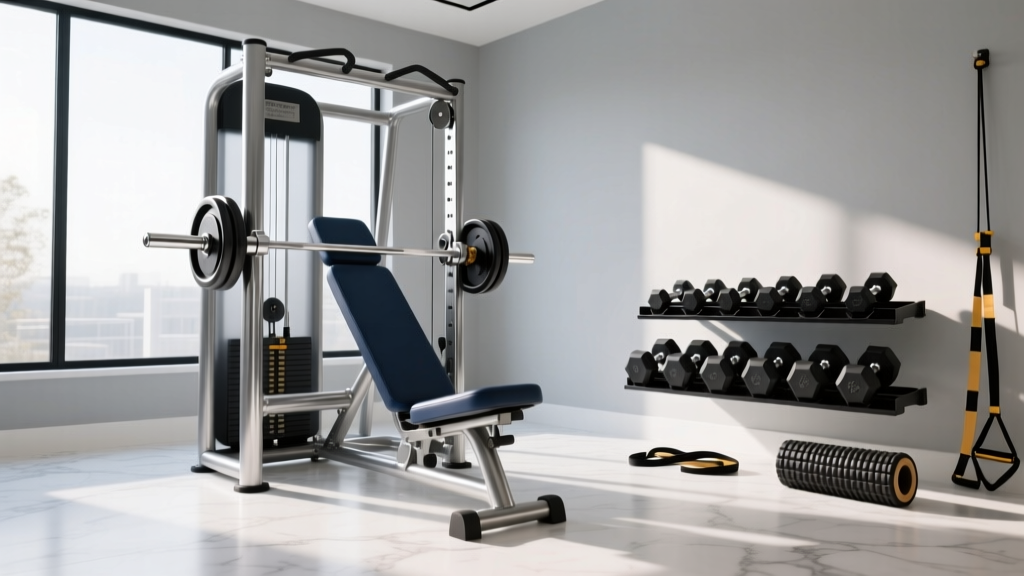
Plate Loaded Incline Chest Press Machine & Fly Equipment Trends
Analyze 2026 chest gear trends, comparing the plate loaded incline chest press machine market with the dumbbell fly vs cable fly equipment shift.

The 2026 Chest Equipment Landscape: Compound Anchors vs. Isolation Innovators
The commercial and premium home gym equipment market has undergone a radical bifurcation in 2026. On one side of the showroom floor, heavy compound builders remain the undisputed anchors of raw hypertrophy. The plate loaded incline chest press machine—epitomized by industry stalwarts like the Hammer Strength HS-4300 and Prime Fitness Incline Converging Axis—continues to dominate capital expenditure (CapEx) budgets for facilities prioritizing mechanical overload and athletic performance. These machines offer unmatched stability, allowing lifters to safely push to failure without the neurological tax of balancing free weights.
However, the most aggressive growth and technological innovation in the chest training category is currently happening in the isolation sector. Driven by the sports science community's overwhelming consensus on the importance of stretch-mediated hypertrophy and constant tension, the dumbbell fly vs cable fly equipment comparison has become the central debate for gym owners and home gym architects. This trend report analyzes the shifting market dynamics, biomechanical ROI, and spatial economics of chest isolation equipment in the modern fitness landscape.
2026 Market Data Highlight
According to the IHRSA Global Report, functional training zones and cable-based isolation systems have seen a 22% year-over-year increase in square footage allocation in newly built commercial facilities, largely at the expense of traditional selectorized single-station pec deck machines. Meanwhile, plate-loaded compound stations remain a fixed baseline requirement, with 88% of top-tier gyms retaining at least two dedicated plate-loaded incline units.
Biomechanical ROI: Dumbbell Fly vs Cable Fly Equipment Comparison
To understand the purchasing shift, we must look at the biomechanics of the pectoralis major. The chest's primary function is horizontal adduction. How an equipment manufacturer manipulates gravity and resistance vectors determines the efficacy of the fly movement.
The Dumbbell Fly: Free Weight Purism and the 'Dead Zone'
The traditional dumbbell fly relies entirely on gravity, which only pulls vertically. When a lifter lies on a flat or incline bench holding a pair of Rogue Urethane or Nuobell adjustable dumbbells, the resistance curve is distinctly bell-shaped. Maximum mechanical tension occurs at the bottom of the movement (the stretched position), which aligns perfectly with recent literature on stretch-mediated hypertrophy. However, as the hands move upward and converge, the horizontal resistance vector drops to zero. At the peak contraction, the pecs are largely unloaded, relying instead on skeletal stacking and joint compression to support the weight.
From an equipment perspective, dumbbells are highly cost-effective and require zero maintenance. Yet, the requirement to purchase a full rack of dumbbells (ranging from 15 lbs to 80 lbs in 5 lb increments) to accommodate progressive overload represents a massive spatial and financial footprint.
The Cable Fly: Constant Tension and the Selectorized Boom
Cable systems, specifically Dual Adjustable Pulleys (DAPs) and functional trainers, have effectively solved the 'dead zone' inherent to dumbbells. By utilizing a cable and pulley system, the resistance vector remains perfectly aligned with the muscle fibers throughout the entire range of motion. As detailed in the ExRx Cable Crossover Analysis, the cable fly provides continuous tension at peak contraction, forcing the pectorals to work isometrically and concentrically even when the hands are touching.
Furthermore, modern 2026 cable systems feature micro-adjustable pulleys and swivel carabiners that allow for behind-the-back crossover angles. This enables lifters to target the clavicular (upper) and sternocostal (mid/lower) heads with a degree of precision that dumbbells simply cannot achieve without introducing severe shoulder impingement risks.
CapEx and Spatial Economics: The 2026 Matrix
When outfitting a facility or a high-end garage gym, the decision between free weight isolation, cable isolation, and plate-loaded compound machines comes down to cost per square foot and user throughput. Below is a comparative analysis of the three dominant chest-training equipment archetypes.
| Equipment Archetype | 2026 Avg. Entry Cost | Space Footprint | Tension Curve | Maintenance Profile |
|---|---|---|---|---|
| Plate Loaded Incline Press (e.g., Hammer Strength) |
$3,800 - $4,500 | ~16 sq. ft. (plus plate storage) | Converging Arc (High stability) | Low (Pivot point lubrication) |
| Dumbbell Fly Setup (Full Rack + Adjustable Bench) |
$2,200 - $3,500 | ~30 sq. ft. (Rack + drop zone) | Bell-shaped (Zero tension at top) | Very Low (Urethane care) |
| Cable Fly (DAP System) (e.g., Rep Fitness FT-5000 2.0) |
$2,500 - $4,800 | ~25 sq. ft. (Wall-mounted or inline) | Constant Linear Tension | Medium (Cable & pulley wear) |
While the plate loaded incline chest press machine remains the most expensive single-station investment, its durability and throughput in a commercial setting are unmatched. Conversely, a high-quality DAP cable system offers a vastly superior isolation experience compared to dumbbells, while simultaneously replacing lat pulldowns, tricep pushdowns, and functional rotational work, yielding a much higher overall utility-to-cost ratio for home gym owners.
The Stretch-Mediated Hypertrophy Factor
A major driver in the 2026 dumbbell fly vs cable fly equipment comparison is the widespread adoption of lengthened partials and stretch-focused training protocols. The ExRx Dumbbell Fly Biomechanics database notes that while dumbbells provide an excellent deep stretch, the risk of pectoral tendon strain increases exponentially as lifters attempt to overload the bottom position with heavy iron.
Modern cable systems mitigate this risk. By setting the pulleys slightly below shoulder height and utilizing ergonomic D-ring handles, lifters can achieve a profound, loaded stretch across the sternocostal fibers with a significantly lower risk of acute tearing. Furthermore, cable systems allow for 'drop-set' protocols via pin-loaded weight stacks, enabling users to push past failure safely—a feature entirely absent in traditional dumbbell setups and highly cumbersome to execute on a plate loaded incline chest press machine without a dedicated spotter.
2026 Purchasing Framework: Structuring the Ultimate Chest Armory
Based on current market trends and biomechanical efficacy, here is how facility managers and serious home gym builders should allocate their chest-training equipment budgets:
- The Compound Anchor (40% of Budget): Invest in a premium plate loaded incline chest press machine. The converging axis and ability to safely load heavy weight without a spotter make it irreplaceable for baseline strength and mechanical tension. Look for models with ISO-lateral arms and multi-grip handles.
- The Isolation Workhorse (45% of Budget): Prioritize a commercial-grade Dual Adjustable Pulley (DAP) system over a dedicated pec deck or dumbbell rack. The constant tension, adjustable vector angles, and utility for non-chest movements make the cable fly the superior ROI for isolation work.
- The Stabilizer Supplement (15% of Budget): Keep a single pair of high-quality adjustable dumbbells (e.g., Nuobell or PowerBlock) and an adjustable FID bench. Use these strictly for unilateral incline presses and occasional stretch-focused dumbbell flys to engage the deep stabilizer muscles that cables and plate-loaded machines bypass.
Final Verdict
The days of filling a gym floor with single-purpose selectorized butterfly machines are over. The 2026 market demands versatility, biomechanical precision, and space efficiency. While the plate loaded incline chest press machine will forever hold its throne as the king of heavy, stable compound pressing, the isolation battleground has been decisively won by cable systems. The dumbbell fly remains a nostalgic and effective tool for stabilizer recruitment, but for pure pectoral hypertrophy, constant tension, and joint longevity, the modern cable fly is the undisputed champion of the modern weight room.
More gear to consider
All reviews
Standing Chest Press Machine Types: 2026 Head-to-Head
Cable Crossover vs Nautilus Chest Press Machine: 2026 Guide

Equip Bands Tools Checklist: A Field-Tested, Precision-Driven Inventory for Fitness Professionals

Close Grip Chest Press Machine: Beginner's Guide & Comparison

Wrap Homegym Compare Essentials: Real-World Performance, Space Efficiency, and Value Breakdown
