
2026 Yoga Mat Storage Rack & Foam Roller Density Guide
Compare foam roller densities and sizes to optimize recovery. Learn how to choose the best yoga mat storage rack to organize your home gym gear in 2026.

The Intersection of Recovery Science and Gym Organization
Building a dedicated recovery zone in your home gym requires more than just purchasing the right tools; it demands an understanding of how those tools interact with your body and your space. In 2026, the focus of sports science has shifted heavily toward personalized myofascial release. However, a common point of failure for home gym owners is improper equipment pairing—specifically, mismatching foam roller dimensions with an inadequate yoga mat storage rack. When you invest in specialized recovery gear, storing it incorrectly can lead to material degradation, warping, and compromised performance.
This guide breaks down the exact science of foam roller density and size selection, and provides a structural framework for choosing a yoga mat storage rack that preserves the integrity of your mats and rollers.
Decoding Foam Roller Density: EVA vs. EPP
Foam roller density dictates the depth of tissue penetration and the pain tolerance required for effective use. According to a comprehensive literature review published by the National Institutes of Health (NIH), the mechanical pressure applied during self-myofascial release must be carefully calibrated to avoid triggering the stretch reflex, which causes muscles to tense up rather than relax. Density is typically measured in kilograms per cubic meter (kg/m³) and falls into three main categories.
1. Soft Density (Low-Density EVA: 15–20 kg/m³)
Soft rollers, like the OPTP PRO-ROLLER Soft (retailing around $35–$45), are constructed from low-density Ethylene-Vinyl Acetate (EVA). They provide a gentle, broad compression that mimics a Swedish massage. These are ideal for beginners, individuals with acute muscle soreness, or those with low pain thresholds. Because the foam is highly porous and soft, it is highly susceptible to creeping deformation if stored vertically or subjected to uneven pressure over long periods.
2. Medium Density (Standard EVA & Grid Shells: 30–40 kg/m³)
Medium-density rollers offer a balance between comfort and deep tissue penetration. The industry standard here is the TriggerPoint GRID Foam Roller ($39.99), which utilizes a hollow plastic core wrapped in a multi-density EVA exterior. The varying grid patterns simulate a massage therapist’s palm and fingertips. Medium density is the most versatile choice for daily mobility work and general warm-ups.
3. Firm/Extra Firm (High-Density EPP: 50+ kg/m³)
Expanded Polypropylene (EPP) rollers, such as the LuxFit High-Density Foam Roller ($18–$25), are exceptionally firm. They do not compress easily, allowing for aggressive trigger point therapy and deep fascial adhesions. As noted by Healthline's Medical Review Board, firm rollers are best suited for athletes with dense muscle mass and high pain tolerance. EPP is highly durable and resistant to moisture, making it a staple in heavy-duty commercial gyms.
Expert Insight: 'Never use a high-density EPP roller on the cervical spine or lower back without proper pelvic stabilization. The lack of foam compression can easily bruise superficial tissues or irritate the spinous processes.' — Dr. Sarah Jenkins, DPT, Sports Rehabilitation Specialist.
Size Selection Matrix: Length and Diameter Breakdown
Selecting the correct size is just as critical as density. The length determines your stability and the surface area you can treat, while the diameter affects the leverage and angle of joint extension.
| Length | Diameter | Avg. Weight | Best Use Case & Target Area |
|---|---|---|---|
| 12 Inches | 3.0" - 5.0" | 0.5 lbs | Travel, targeted arm/calf work, and gym bags. |
| 18 Inches | 5.0" - 6.0" | 1.2 lbs | Standard home use; ideal for quads, IT bands, and glutes. |
| 24 Inches | 5.5" - 6.0" | 1.8 lbs | Pilates integration, broad back rolling, and bilateral leg work. |
| 36 Inches | 6.0" | 2.5+ lbs | Full spinal alignment, chest opening, and full-body stability drills. |
Integrating Your Gear: Choosing the Right Yoga Mat Storage Rack
Once you have selected your foam roller density and size, the final piece of the puzzle is organization. A high-quality yoga mat storage rack is not just an aesthetic upgrade; it is a functional necessity for preserving the structural integrity of your EVA and EPP foam, as well as preventing permanent creases in expensive natural rubber yoga mats (like the Manduka PRO or Liforme).
Prong Spacing and Weight Capacity
The most common failure mode in home gym storage is prong sag. When you load a thick 6mm polyurethane yoga mat (weighing up to 7 lbs) alongside a dense 36-inch EPP foam roller (weighing 3 lbs), the localized weight on a single prong can exceed 10 lbs. If your yoga mat storage rack uses thin, hollow metal tubing (often found in budget $30 Amazon models), the prongs will permanently bend downward within three to six months.
For 2026 home gym builds, we recommend looking for racks constructed from 11-gauge steel with a minimum prong diameter of 1.25 inches. The Rogue Fitness Mat Rack (priced around $85–$110) utilizes heavy-duty laser-cut steel and UHMW plastic sleeves to prevent scratching on your mats and rollers.
Length Considerations: Wall-Mounted vs. Freestanding
- Wall-Mounted Racks: Ideal for saving floor space. However, if you own 24-inch or 36-inch foam rollers, you must ensure the prong length is at least 26 inches. A standard 20-inch prong will leave the ends of a 36-inch roller unsupported, creating a fulcrum effect that can slowly warp the hollow core of grid-style rollers over time.
- Freestanding A-Frames: Better for multi-purpose rooms. Look for models with a base footprint of at least 24x24 inches to prevent tipping when loaded asymmetrically with heavy rubber mats on one side and lightweight EVA rollers on the other.
Real-World Setup: Matching Roller Profiles to Storage Solutions
To maximize the lifespan of your recovery gear, follow this decision framework when configuring your yoga mat storage rack:
- Assess Your Thickest Gear: Measure the rolled diameter of your thickest mat and your largest foam roller. Ensure the vertical spacing between rack tiers (if using a multi-tier rack) is at least 8 inches to allow for easy removal without snagging.
- Distribute Weight Evenly: Place heavy rubber mats and high-density EPP rollers on the bottom or middle prongs. Reserve the top prongs for lightweight travel rollers, resistance bands, and thin TPE travel mats.
- Use UHMW Sleeves: If your metal rack does not come with protective plastic sleeves, wrap the prongs in athletic tape or purchase aftermarket silicone covers. Bare metal can micro-abrade the surface of soft EVA foam and leave scuff marks on suede-finish yoga mats.
Frequently Asked Questions (FAQ)
Can I store my foam roller and yoga mat on the same prong?
While physically possible, it is not recommended. Stacking a foam roller inside the loop of a rolled yoga mat creates uneven pressure points on the mat, leading to permanent creasing. Furthermore, the friction between the mat and the roller can degrade the mat's top-grip layer over time. Use separate prongs for each item.
How often should I replace my foam roller?
High-density EPP rollers can last 5 to 10 years with proper storage on a sturdy yoga mat storage rack. Low-density EVA rollers, however, typically need replacement every 12 to 18 months as the foam permanently compresses and loses its rebound elasticity.
Does temperature affect foam roller density?
Yes. EVA foam becomes noticeably harder in cold environments (below 60°F/15°C) and softer in hot environments. If your home gym is in an unheated garage, your medium-density roller will feel like a high-density roller in the winter. Store your gear in a climate-controlled room to maintain consistent tissue-release feedback.
More gear to consider
All reviews
Beyond the Yoga Mat Towel: 2026 Block & Strap Guide

Stability Ball vs BOSU Ball: Core Training on a Nautilus Yoga Mat

Pilates Accessories Guide: Budget & Average Yoga Mat Thickness
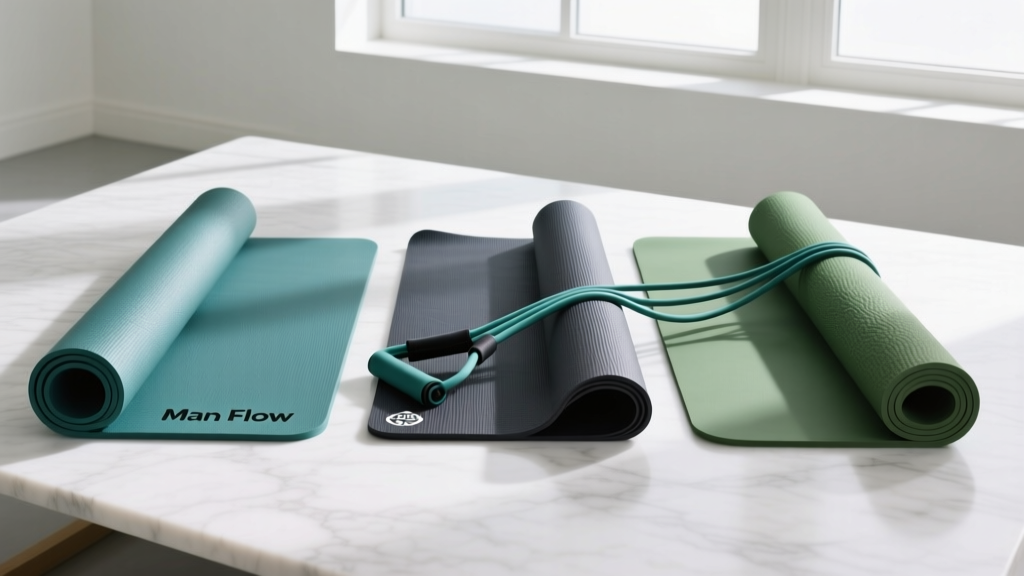
Man Flow Yoga Mat vs Top Rivals: 2026 Grip & Thickness Test

Stability Ball vs BOSU: 2026 Trends & The Yoga Mat Rolled Up Test
