
Battle Rope Guide: Length, Thickness & Large Yoga Mat Trends
Analyze 2026 battle rope length and thickness specs, and discover why the large yoga mat market is shifting to protect functional training zones.

The 2026 Functional Training Shift: Heavy Ropes and Floor Protection
According to the American College of Sports Medicine (ACSM), functional fitness and high-intensity interval training (HIIT) remain dominant forces in the 2026 fitness landscape. As home and garage gyms evolve from simple weightlifting spaces into comprehensive athletic performance centers, two distinct equipment categories are colliding: heavy conditioning gear and high-density floor protection. Specifically, the market is seeing a massive surge in consumers pairing heavy battle ropes with oversized, high-density training surfaces—colloquially driving a new wave of search volume for the large yoga mat.
Why the crossover? Standard 4mm PVC yoga mats are entirely inadequate for the acoustic shock and sheer impact force of a 25-pound poly-dacron rope being slammed at 120 beats per minute. This trend report and sizing guide breaks down the exact physics of battle rope dimensions and analyzes how the mat manufacturing industry has pivoted to meet the demands of modern functional athletes.
Battle Rope Dimensions: The Ultimate Sizing Matrix
Selecting the correct battle rope is not a one-size-fits-all endeavor. The interaction between rope diameter, length, and material dictates the metabolic demand, grip fatigue, and spatial requirements of your workout. The American Council on Exercise (ACE) frequently highlights the unique cardiovascular and neuromuscular benefits of undulating rope exercises, but only if the implement is scaled correctly to the user's biomechanics.
Diameter: Grip Endurance vs. Brute Power
- 1.5-Inch Diameter: The industry standard for cardio, HIIT, and endurance. Weighing roughly 0.35 lbs per foot, a 1.5-inch rope allows for rapid wave creation and prolonged sets (60+ seconds) before grip failure. Ideal for beginners, lighter athletes, and those focusing on shoulder endurance.
- 2.0-Inch Diameter: The sweet spot for power development and intermediate-to-advanced users. Weighing approximately 0.55 lbs per foot, the thicker grip demands significantly more forearm activation. Sets typically cap at 30–45 seconds due to grip fatigue.
- 2.5-Inch Diameter: Pure brute force. Weighing up to 0.80 lbs per foot, these ropes are used primarily by strongman competitors, tactical athletes, and heavy-weight fighters for short, explosive bursts (15–20 seconds). Grip strength is the absolute limiting factor.
Length: Wave Physics and Spatial Limits
The physics of a battle rope require enough distance for the wave to travel, peak, and reflect off the anchor point. If a rope is too short, the kinetic energy rebounds too quickly, causing chaotic, unmanageable whip-back.
- 30 Feet: Best for tight apartments or small home gyms. Requires a highly aggressive, fast-twitch whip to generate waves. Not recommended for beginners.
- 40 Feet: The most versatile length for standard two-car garage setups. Provides a smooth wave cycle with moderate spacing requirements (requires about 20 feet of clear space in front of the anchor).
- 50 Feet: The gold standard for commercial facilities and spacious home studios. Allows for long, fluid, continuous waves and complex movements like lateral shuffles and spirals without the wave bottoming out.
Material Science Note: Poly-Dacron vs. Manila
In 2026, Poly-Dacron (a polypropylene outer sleeve with a twisted dacron core) dominates the indoor market. It is virtually shed-free, soft on the hands, and highly resistant to fraying. Manila (natural hemp fiber) is strictly for outdoor use; it sheds continuously, degrades in humidity, and requires regular maintenance. Avoid nylon ropes for indoor slamming, as they tend to absorb moisture and become dangerously stiff in cold garage environments.
Battle Rope & Mat Pairing: Data-Driven Specifications
The following matrix illustrates the relationship between rope specifications, user profile, and the necessary floor protection density.
| Rope Spec (Length x Dia.) | Approx. Weight | Primary Use Case | Required Mat Thickness | 2026 Est. Cost (Rope + Mat) |
|---|---|---|---|---|
| 30' x 1.5' | 10.5 lbs | Small Space Cardio | 8mm - 10mm TPE | $140 - $180 |
| 40' x 1.5' | 14.0 lbs | Standard HIIT / Endurance | 10mm - 12mm TPE | $180 - $240 |
| 50' x 2.0' | 27.5 lbs | Power / Advanced HIIT | 15mm+ High-Density Rubber | $300 - $450 |
| 50' x 2.5' | 40.0 lbs | Strongman / Tactical | 3/4" (19mm) Vulcanized Rubber | $450 - $650 |
The "Large Yoga Mat" Market Evolution: From Stretching to Slamming
Historically, the term "yoga mat" conjured images of thin, 68-by-24-inch PVC or NBR foam rolls designed for static stretching and joint cushioning. However, market analytics in 2026 reveal a fascinating semantic shift. Consumers building home functional zones are heavily searching for a large yoga mat, but their actual purchasing intent has shifted toward oversized, continuous-surface training mats (typically 6x10 feet or 8x12 feet) made from high-durometer TPE (Thermoplastic Elastomer) or vulcanized rubber.
Why Standard Mats Fail Under Functional Loads
When a 27-pound battle rope is slammed into the ground, it generates an instantaneous localized impact force exceeding 150 PSI. A standard yoga mat (usually rated around 20-30 on the Shore A durometer scale) will instantly bottom out. This leads to three critical failure modes:
- Subfloor Spalling: The kinetic energy bypasses the compressed mat and transfers directly into concrete or wood subfloors, causing micro-fractures in concrete and splintering in plywood.
- Acoustic Shock Transfer: Thin foam does nothing to dampen low-frequency sound waves. Slamming a heavy rope on a thin mat in a garage or basement will reverberate through the home's framing, causing severe noise complaints.
- Mat Delamination and Tearing: The sheer friction of a braided poly-dacron rope whipping across a soft foam surface will tear the mat's cellular structure apart within weeks.
The 2026 Solution: High-Density TPE and Natural Rubber
To solve this, manufacturers have introduced what the market now refers to as "studio-grade" or "functional" large yoga mats. These mats feature a dual-layer construction: a softer top layer (approx. 4mm) for joint comfort during ground work, fused to a high-density base layer (10mm to 15mm) rated at 65+ Shore A. This base layer absorbs and disperses the kinetic energy of rope slams, kettlebell drops, and plyometric landings laterally, protecting the subfloor and drastically reducing acoustic transfer.
"The modern home athlete isn't just buying a mat for downward dog; they are engineering a multi-use impact zone. The demand for oversized, 8-by-12-foot TPE mats has outpaced traditional puzzle tiles because continuous surfaces prevent the rope from catching in the seams during lateral drags and ground-based wave variations."
— FitGearPulse Equipment Testing Lab, Q1 2026 Report
Expert Verdict: Budgeting Your 2026 Slam Zone
If you are outfitting a functional training space, do not treat your floor protection as an afterthought. The cost of replacing a damaged concrete subfloor or a torn foam mat far outweighs the initial investment in proper gear.
Step-by-Step Purchasing Framework
- Step 1: Measure Your Anchor Zone. Ensure you have at least 25 feet of linear clearance for a 50-foot rope (accounting for the anchor point and your stance). If you only have 18 feet, downgrade to a 30-foot rope to maintain proper wave physics.
- Step 2: Select the Rope. For 90% of home users, a 40-foot, 1.5-inch Poly-Dacron rope ($90–$120) offers the best balance of cardio conditioning and grip endurance.
- Step 3: Source the Mat. Search for a large yoga mat constructed from TPE or natural rubber, with a minimum thickness of 10mm and a continuous surface (no interlocking seams in the slam zone). Expect to invest between $150 and $280 for a quality 6x10 foot functional mat.
- Step 4: Anchor Safely. Use a heavy-duty steel wall mount or a dedicated floor anchor plate bolted into a structural joist. Never wrap a heavy rope around a PVC pipe or an unstable squat rack upright.
Frequently Asked Questions
Can I use interlocking EVA foam puzzle tiles instead of a large mat?
While EVA foam tiles (often 1/2" or 3/4" thick) are cheap and great for dropping bumper plates, they are highly problematic for battle ropes. The aggressive whipping motion of the rope will catch the interlocking seams, causing the tiles to separate, bunch up, and eventually tear. A continuous-surface TPE or rubber mat is vastly superior for rope conditioning.
How do I clean a large TPE training mat after intense rope sessions?
TPE is non-porous and highly resistant to sweat and moisture. Simply use a microfiber cloth dampened with a mild, pH-neutral soap solution. Avoid harsh chemical cleaners or bleach, which can degrade the elastomer bonds over time and cause the mat to dry out and crack.
Is a 50-foot 2-inch rope too heavy for a beginner?
Yes. A 50-foot, 2-inch rope weighs nearly 30 pounds. The grip strength required to even hold the ends, let alone generate continuous alternating waves, will cause forearm failure in beginners within 10 to 15 seconds. Beginners should always start with a 1.5-inch diameter rope to build connective tissue tolerance and cardiovascular base before scaling up in thickness.
More gear to consider
All reviews
Pull Up Assist Band Sizing & Gaiam Sol Dry Grip Yoga Mat Guide
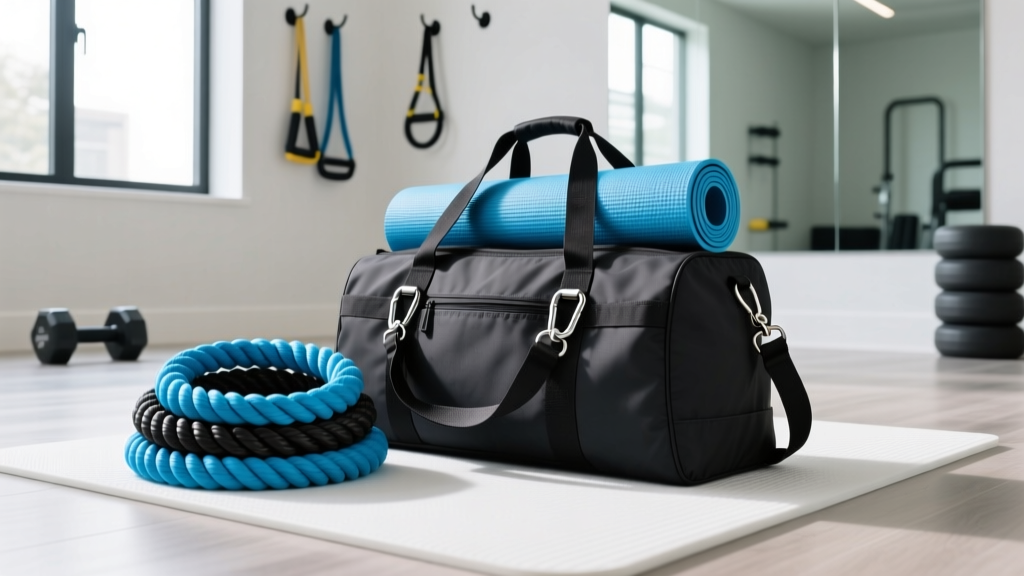
Battle Rope Sizing Guide & Best Bag with Yoga Mat Strap

Speed vs Weighted Jump Ropes on an Oversized Yoga Mat

Beyond a Five Below Yoga Mat: Stability Ball vs BOSU 2026
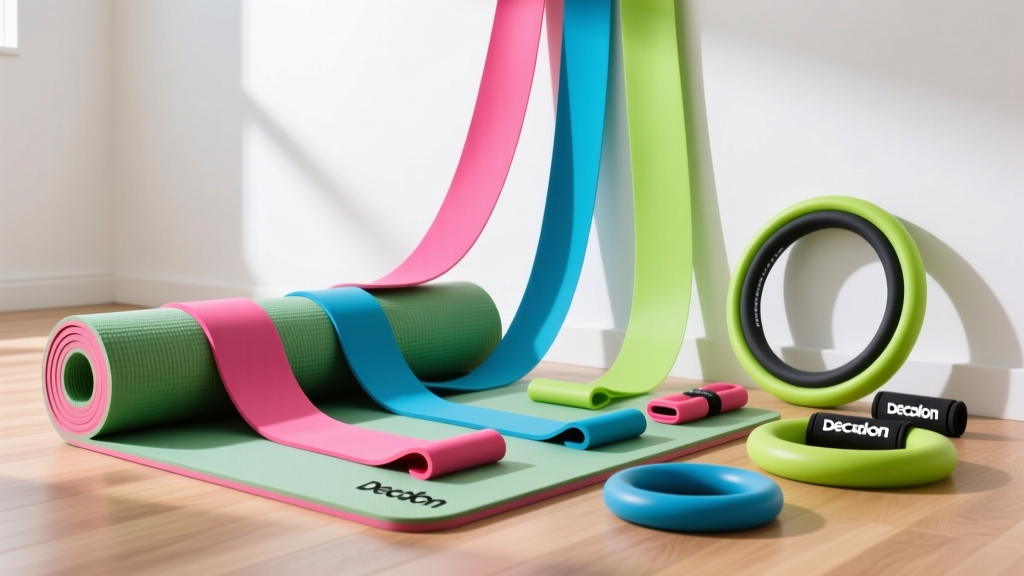
Decathlon Yoga Mat Basic 4mm Reviews & Pilates Accessories Guide
