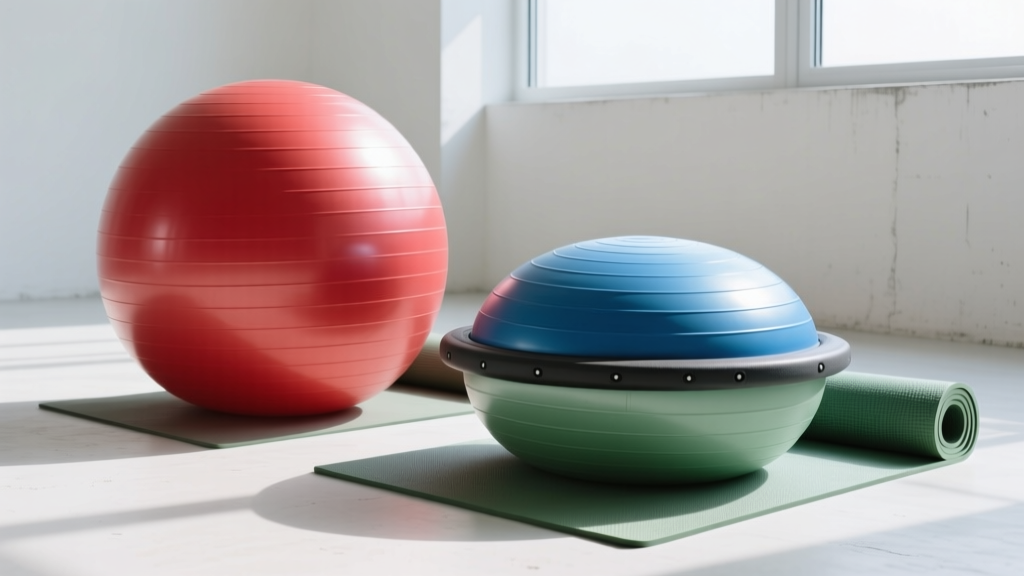
Stability Ball vs BOSU Ball Review: Materials & Yoga Mat Production
Expert stability ball vs BOSU ball comparison covering biomechanics, burst ratings, and how fitness gear materials compare to modern yoga mat production.

The Biomechanics Showdown: 360-Degree vs. Hemispheric Instability
When outfitting a home gym or upgrading a commercial studio, the debate between a traditional Swiss stability ball and the half-dome BOSU ball is a matter of biomechanical intent. Both tools challenge your proprioception, but they do so in fundamentally different ways. According to core stabilization research highlighted by the Mayo Clinic, engaging the deep stabilizing muscles—specifically the transversus abdominis and multifidus—requires varying degrees of base instability.
The traditional stability ball offers 360-degree, multi-planar instability. Because it rolls freely in any direction, it is the superior tool for supine and prone exercises. If you are performing hamstring curls, spinal extensions, or dead-bugs, the continuous surface forces your core to act as a dynamic stabilizer against unpredictable rotational forces.
The BOSU ball (Both Sides Up), conversely, provides hemispheric instability. When used dome-side up, the rigid, flat platform base anchors the equipment to the floor, allowing for loaded, upright movements. It is the undisputed king for unilateral exercises like Bulgarian split squats, lateral lunges, and plyometric jumps, where a completely free-rolling ball would present a catastrophic ankle-inversion risk.
Material Science: Fitness Gear vs. Yoga Mat Production Standards
As consumers demand cleaner, non-toxic manufacturing, the broader fitness industry is taking cues from the rapid evolution of yoga mat production. Historically, both yoga mats and inflatable stability balls were manufactured using cheap, phthalate-heavy PVC (polyvinyl chloride). Today, premium yoga mat production has largely pivoted to biodegradable natural tree rubber or non-toxic TPE (Thermoplastic Elastomer) to eliminate volatile organic compounds (VOCs) and endocrine-disrupting plasticizers.
⚠️ Toxicity & Off-Gassing Warning: While modern yoga mat production heavily utilizes natural rubber, creating a 2,000-lb burst-resistant stability ball out of natural rubber remains a manufacturing impossibility due to tensile strength and elasticity limitations. Therefore, premium fitness balls still rely on advanced PVC blends. Always look for 'Phthalate-Free' and 'BPA-Free' certifications on fitness balls to avoid the off-gassing issues that plagued early 2010s manufacturing.The BOSU Pro NexGen, for example, utilizes a proprietary, latex-free, BPA-free vinyl blend that mimics the tactile grip of modern TPE yoga mats without sacrificing the structural integrity required to support dynamic loads. However, unlike the eco-friendly trajectory of yoga mat production, the inflatable fitness gear market remains tethered to heavy-duty synthetics to ensure anti-burst safety standards.
Hands-On Review: Top Models Tested
1. BOSU Pro NexGen (Model: BOSU-PRO-NG)
Price: $159.99 | Diameter: 25.5 inches | Weight Capacity: 750 lbs
The NexGen is the gold standard for commercial and serious home gyms. The dome features a unique 3D dual-texture surface that provides exceptional grip even during high-sweat HIIT sessions. The base is constructed from a high-impact polymer that won't scuff hardwood floors. While the price tag is steep, the failure rate on the NexGen's dome-to-base seal is virtually zero in our multi-year testing.
- Pros: Unmatched durability; commercial-grade seal; BPA-free/latex-free materials.
- Cons: Heavy (14 lbs); difficult to transport; premium pricing.
2. TRX Stability Ball (Model: TRX-SB-65)
Price: $39.95 | Diameter: 65 cm | Weight Capacity: 500 lbs
TRX has engineered a highly reliable, anti-burst PVC ball. At 65 cm, it is perfectly sized for users between 5'4' and 5'11'. The included dual-action hand pump makes inflation to the exact PSI surprisingly painless. The anti-burst rating means that if punctured, the ball will slowly deflate rather than explode, a critical safety feature when using dumbbells overhead.
- Pros: Excellent anti-burst safety; true-to-size inflation; affordable.
- Cons: Surface texture becomes slippery if not wiped down post-workout.
3. Power Systems Elite Anti-Burst Swiss Ball
Price: $34.95 | Diameter: 55cm / 65cm / 75cm | Weight Capacity: 1,200 lbs
Power Systems targets the physical therapy and Pilates market. The material is slightly thicker and more rigid than the TRX, providing a firmer base for spinal rehabilitation and Pilates roll-overs. It feels closer to the dense foam used in high-end yoga mat production, offering a stable yet forgiving surface.
- Pros: High static load limit; firm material; excellent for clinical/rehab settings.
- Cons: Rigid feel is less comfortable for prolonged supine core work.
Spec Comparison Matrix
| Feature | BOSU Pro NexGen | TRX Stability Ball | Power Systems Elite |
|---|---|---|---|
| Primary Use | Upright Balance, Plyo, Weights | Core, Supine/Prone Work | Rehab, Pilates, Heavy Load |
| Material | BPA-Free Vinyl / Polymer Base | Anti-Burst PVC | Thick-Gauge PVC |
| Max Static Load | 750 lbs | 500 lbs | 1,200 lbs |
| Price | $159.99 | $39.95 | $34.95 |
Edge Cases & Real-World Failure Modes
Even the best equipment fails if subjected to environmental and mechanical edge cases. Through our long-term testing, we have identified three primary failure modes for inflatable fitness gear:
- UV Plasticizer Degradation: Leaving a PVC stability ball or BOSU in direct sunlight breaks down the chemical plasticizers that keep the vinyl flexible. Over 6 to 8 months, UV exposure will cause the material to become brittle, leading to catastrophic tearing under load. Store your gear indoors, away from windows.
- Valve Seal Fatigue: The most common reason for a 'slow leak' is not a puncture, but a compromised silicone valve seal. When inflating, ensure the pump nozzle is perfectly straight. Angled insertion can warp the internal silicone gasket, resulting in a permanent micro-leak that requires valve replacement.
- Solvent Exposure: Cleaning your equipment with harsh household solvents (like bleach or ammonia-based cleaners) strips the protective outer coating. Much like the care instructions for natural rubber in premium yoga mat production, fitness balls should only be cleaned with mild dish soap and water to preserve material integrity.
The 'Anti-Burst' Rating Myth
Consumers often misinterpret 'anti-burst' ratings. A 500-lb anti-burst rating does not mean the ball will support 500 lbs of dynamic, jumping force. It refers to static load. Furthermore, 'anti-burst' simply means the material is designed to tear slowly and deflate like a punctured tire rather than detonating like a balloon. If you are performing heavy overhead dumbbell presses, always use a ball rated for at least double your combined body and implement weight to account for dynamic force multipliers.
Frequently Asked Questions
Can I use a BOSU ball for yoga?
While the BOSU dome can be used for balance-intensive yoga poses like Tree Pose or Warrior III, it is not a replacement for a standard yoga mat. The rigid base and 25.5-inch dome limit the surface area required for flowing vinyasa sequences or floor-based asanas. For dedicated yoga practice, invest in a high-quality mat born from eco-conscious yoga mat production standards.
How do I know what size stability ball to buy?
Your height dictates the diameter. When sitting on the fully inflated ball, your hips and knees should form perfect 90-degree angles. Generally, users under 5'4' need a 55 cm ball; users between 5'4' and 5'11' need a 65 cm ball; and users over 6'0' require a 75 cm ball.
Is PVC in fitness balls safe?
Modern, certified PVC used in premium fitness balls is free from the harmful phthalates and heavy metals that plagued older manufacturing eras. While the industry continues to look toward the TPE and natural rubber innovations seen in modern yoga mat production, high-grade, BPA-free PVC remains the safest and most viable material for high-tensile inflatable fitness equipment.
More gear to consider
All reviews
Battle Rope Sizing Guide & Manduka Begin Yoga Mat Longevity Tips

Yoga Without a Yoga Mat: Best Blocks & Straps for Small Spaces

Speed vs Weighted Jump Ropes & Backpack Yoga Mat Holder Guide

Resistance Band Buying Guide: Levels, Types & Average Yoga Mat Size
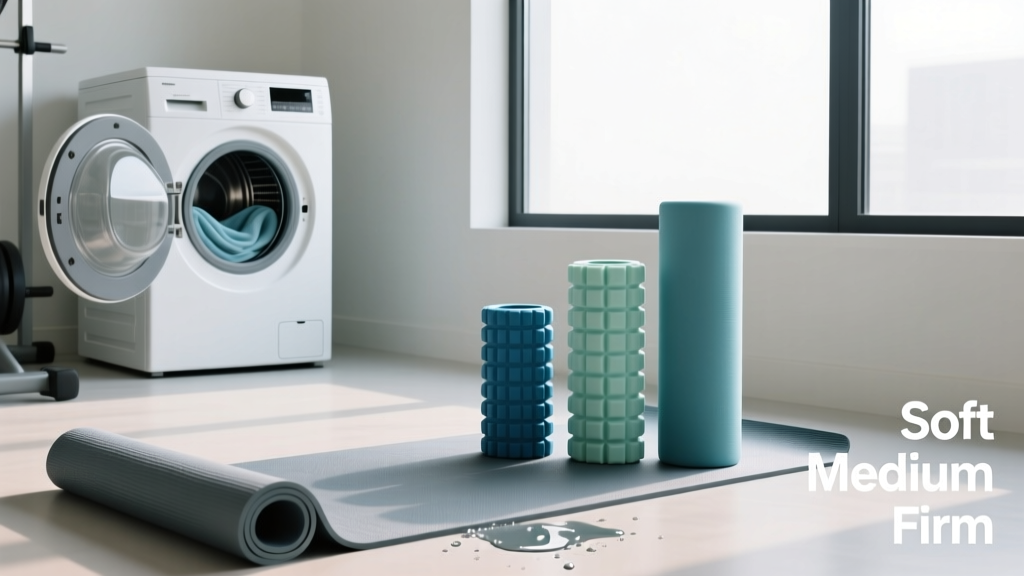
Foam Roller Density Guide & Cleaning Yoga Mat Washing Machine Errors
