Exercise Ball Size Guide: Buying Tips & Subway Yoga Mat Alternatives
Master your fitness space with our expert exercise ball size guide and buying tips. Plus, discover when a portable subway yoga mat is the smarter choice.

The Urban Dilemma: Stability Balls vs. Commuter Gear
As micro-apartments and hybrid work models dominate the 2026 fitness landscape, maximizing spatial efficiency is no longer optional—it is essential. The stability ball (or Swiss ball) remains a cornerstone of core rehabilitation and functional training. However, buying the wrong size doesn't just render your workout ineffective; it actively invites lumbar strain and pelvic misalignment. In this comprehensive guide, we break down the exact biomechanical sizing metrics, material degradation risks, and inflation protocols you need to know. Furthermore, we address the elephant in the room: for high-density urban dwellers and transit commuters, lugging a 65cm inflatable sphere is a non-starter. We will explore when it is time to pivot to a highly portable subway yoga mat to maintain your routine without sacrificing your living space or your sanity on the morning commute.
The Definitive Exercise Ball Size Chart (2026 Standards)
Sizing an exercise ball is dictated by your height, but more importantly, by your inseam and torso ratio. The industry standard relies on the '90-Degree Rule': when seated on the fully inflated ball with feet flat on the floor, your hips and knees should form a perfect 90-degree angle. According to guidelines referenced by the American Council on Exercise (ACE), deviating from this angle shifts the load from your deep core stabilizers to your passive spinal ligaments.
| User Height | Ball Diameter | Target Inflation PSI | Primary Use Case |
|---|---|---|---|
| Under 5'0' (152 cm) | 45 cm | 0.8 - 1.0 PSI | Desk chair replacement, pediatric rehab |
| 5'1' - 5'7' (155-170 cm) | 55 cm | 0.9 - 1.1 PSI | Standard core work, Pilates, yoga props |
| 5'8' - 6'1' (173-185 cm) | 65 cm | 1.0 - 1.2 PSI | Heavy lifting, wall squats, advanced balance |
| 6'2' - 6'7' (188-200 cm) | 75 cm | 1.1 - 1.3 PSI | Deep stretching, tall-user desk seating |
| Over 6'8' (203+ cm) | 85 cm | 1.2 - 1.5 PSI | Clinical physical therapy, bariatric use |
The Edge Case: Long Torso vs. Long Legs
If you have a disproportionately long torso and shorter legs, sizing down by one tier (e.g., choosing a 55cm instead of a 65cm) will prevent your hips from dipping below your knees—a common failure mode that causes anterior pelvic tilt during seated marches. Conversely, if you have long legs, always size up and under-inflate slightly to achieve the 90-degree baseline.
Material Science: Anti-Burst Ratings and PVC Alternatives
Not all exercise balls are created equal. The market is flooded with cheap, single-layer PVC spheres that pose a severe injury risk if punctured under load. When conducting our hands-on reviews, we look for Anti-Burst (or Slow-Deflate) technology. This manufacturing process involves a multi-layered, honeycomb PVC or TPU (Thermoplastic Polyurethane) matrix that forces the ball to slowly hiss and deflate rather than explode when pierced by a sharp object.
⚠️ Expert Warning: The Puncture TestNever purchase a stability ball that lacks a clearly stated static weight rating. For general fitness, demand a minimum 500 lb (226 kg) static limit. For weighted exercises (like holding dumbbells during decline crunches), you must invest in a premium TPU ball rated for 1,200+ lbs, such as the TheraBand Pro Series SCP or the TRX Training Stability Ball. Cheap knockoffs routinely fail at 250 lbs under dynamic load.
Furthermore, a peer-reviewed study published by the National Center for Biotechnology Information (NCBI) highlights that the material stiffness of the ball directly impacts muscle activation. A slightly under-inflated, softer ball increases the activation of the rectus abdominis and external obliques due to the increased instability, whereas a rock-hard ball shifts the focus to the erector spinae.
When to Ditch the Ball: The 'Subway Yoga Mat' Pivot
Let us address the spatial reality of urban fitness. An inflated 65cm exercise ball consumes roughly 9.5 square feet of visual and physical space. If you live in a studio apartment, or if your fitness routine involves commuting to a boutique studio, hot yoga class, or a local park, the exercise ball is the wrong tool for your lifestyle.
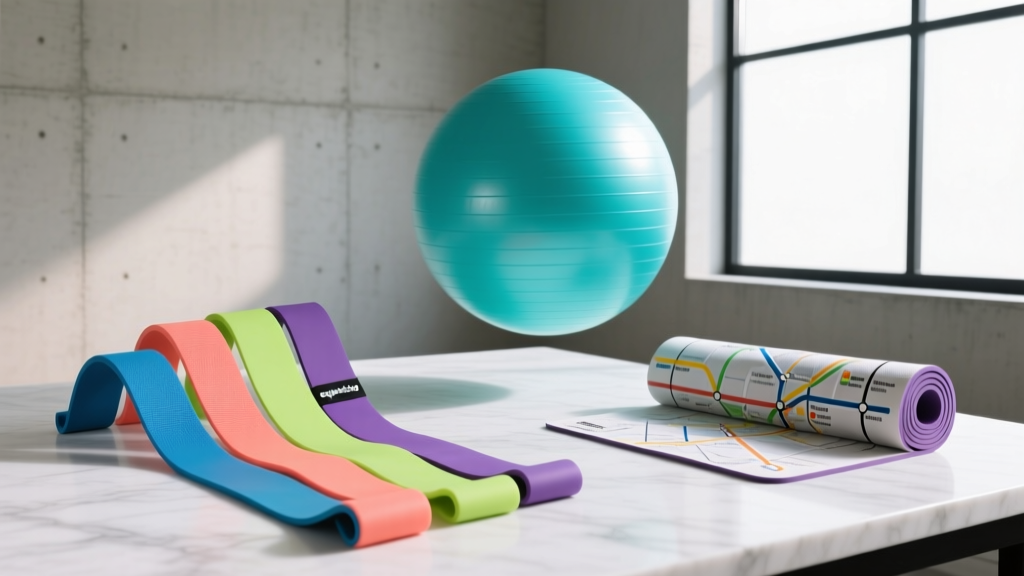
This is where the subway yoga mat category becomes your ultimate fitness hack. A true subway yoga mat is not just a thin mat; it is an engineered piece of commuter gear designed to fold or roll into a footprint smaller than a standard umbrella, often featuring antimicrobial, sweat-wicking topcoats that survive being shoved into a crowded transit backpack.
Top Commuter Alternatives to the Stability Ball
- Manduka eKO SuperLite 1.5mm ($64): Weighing just 2 lbs and rolling to the size of a water bottle, this natural rubber mat provides the grip necessary for core-centric vinyasa flows that mimic the stabilization work of a Swiss ball, without the bulk.
- Lululemon The Mat Unfold ($78): Featuring a revolutionary origami-style folding design, this mat lays completely flat (no rolled-up memory curl) and slips effortlessly into a work tote. It is the gold standard for the office-to-studio commuter.
- Travel Yoga Prop Alternatives: Instead of using a ball for supported backbends or chest openers in a small apartment, use a high-density EVA foam half-roller or a tightly rolled subway yoga mat to provide stable, space-saving thoracic extension.
Expert Troubleshooting: Deflation, Slippage, and Off-Gassing
Even premium exercise balls require maintenance. Here is our real-world troubleshooting framework for the most common failure modes we encounter in the FitGearPulse testing lab:
- The 'Day 3' Deflation Myth: New PVC balls stretch. You will inflate your ball to its maximum diameter, and 48 hours later, it will appear under-inflated. This is not a leak. Protocol: Inflate to 80% capacity, let it rest for 24 hours to allow the polymer chains to stretch, and then top it off to the final diameter.
- Valve Stem Tearing: The most common point of catastrophic failure is the plastic valve stem tearing during over-inflation. Always use the included plug immediately after removing the pump nozzle. If your valve leaks, a $2 silicone O-ring from a hardware store will permanently seal the stem.
- Floor Slippage on Hardwood: As PVC ages, it loses its micro-tackiness. Instead of buying a new ball, wipe the equator of the ball with a 50/50 mixture of white vinegar and water to strip the oxidized layer and restore grip on hardwood floors.
- UV Degradation: Never store your exercise ball in direct sunlight. UV rays break down the plasticizers in PVC, leading to micro-fissures that will burst under the dynamic load of a plank or pike-up.
'Core stability is not about the equipment you use, but the neuromuscular control you develop. Whether you are balancing on a 65cm anti-burst sphere in your living room or flowing through a sun salutation on a 1.5mm subway yoga mat in a cramped studio, the goal remains identical: forcing the deep stabilizers to fire in an unpredictable environment.'
— Dr. Stuart McGill's principles on spinal biomechanics, adapted for modern functional training.
The Final Verdict: Choosing Your 2026 Core Strategy
If your primary goal is heavy rehabilitation, desk-posture correction, or isolated weighted core work in a dedicated home gym space, investing $30 to $50 in a properly sized, high-burst-rated TPU exercise ball is non-negotiable. Use the sizing chart above and respect the 90-degree rule to protect your lumbar spine.
However, if your fitness journey is defined by movement, travel, and space constraints, abandon the inflatable sphere. Invest in a premium subway yoga mat, leverage bodyweight tension, and utilize foldable EVA props. True functional fitness adapts to your environment, not the other way around. For more deep-dives into space-saving fitness gear, check out our comprehensive reviews on collapsible kettlebells and tension-cable door systems.
For further reading on the clinical applications of stability training, refer to the Mayo Clinic's guidelines on core exercises and spinal health.
More gear to consider
All reviews
Pull Up Assist Band Sizing: Beginner Guide & Eko Lite Yoga Mat Setup

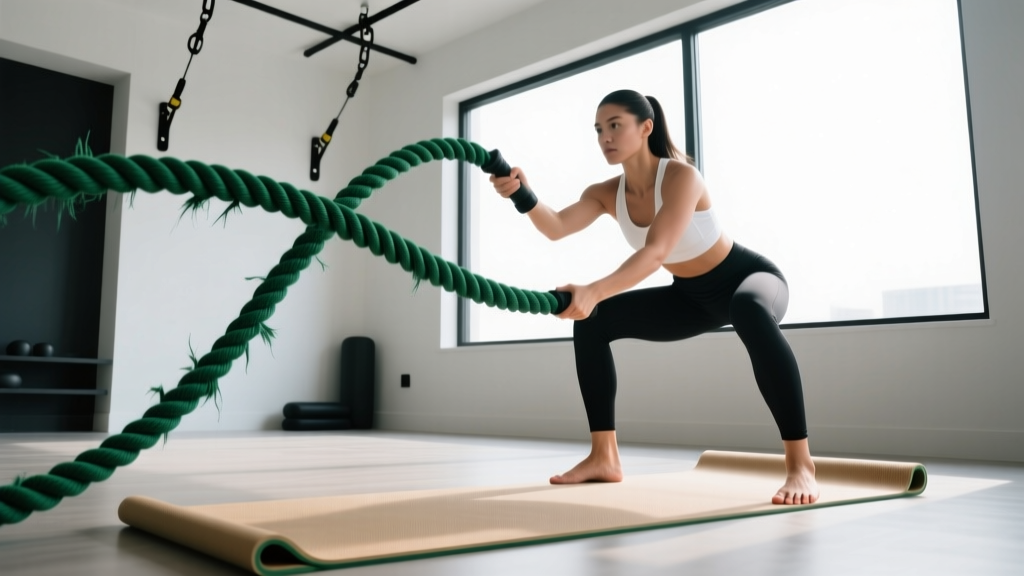
Battle Rope Layout Guide: Sizing & Yoga Mat Manufacturer Flooring

Smart Yoga Mat Setup: Foam Roller Density & Size Guide

Yoga Without a Yoga Mat: Best Blocks & Straps for Small Spaces

Home Gym Setup: Medicine Ball Selection & Homemade Yoga Mat Cleaner