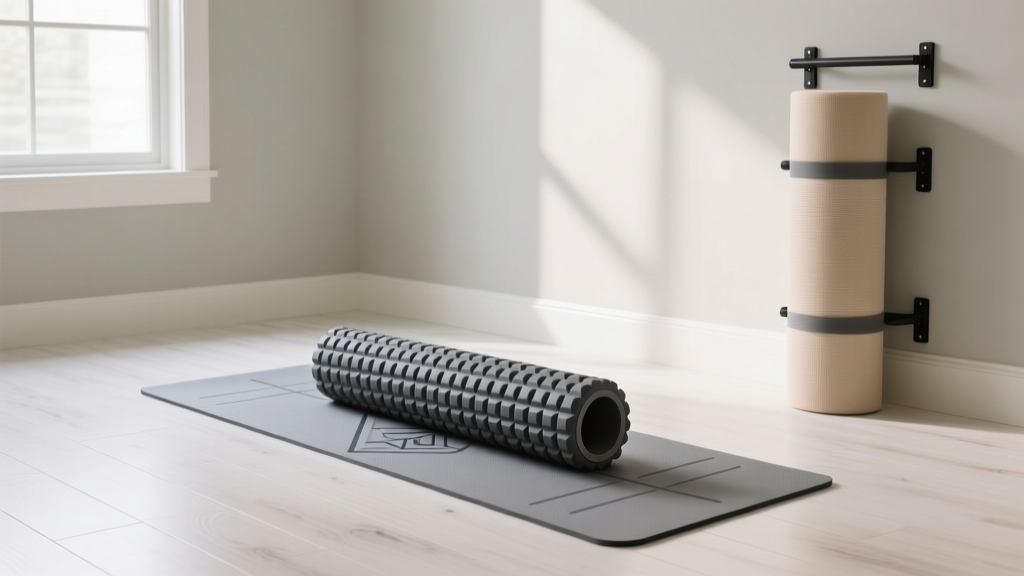
Mobility Zone Setup: Foam Roller Density & Yoga Mat Dimensions
Learn how to plan your home mobility zone. We cover foam roller density and size selection, spatial layouts, and standard yoga mat dimensions.

Blueprinting the Recovery Zone: The Spatial Baseline
Designing a dedicated home mobility and recovery station requires more than simply tossing gear into an empty corner. A functional myofascial release zone demands precise spatial planning, and understanding standard yoga mat dimensions is the critical first step in establishing your baseline footprint. According to the National Academy of Sports Medicine (NASM), effective self-myofascial release (SMR) requires unrestricted limb extension and adequate clearance for dynamic rolling movements. If your space is too constrained, you will naturally alter your biomechanics, reducing the efficacy of the therapy and increasing the risk of compensatory strain.
Calculating Your Minimum Clearance Zone
The standard yoga mat measures 68 inches long by 24 inches wide (172 cm x 61 cm). However, for dedicated mobility work, many practitioners upgrade to extra-long and wide mats, typically measuring 74 inches by 30 inches (188 cm x 76 cm). To calculate your true installation footprint, you must add a minimum 12-inch perimeter around the mat to accommodate extended limbs, roller placement, and transitional movements. Therefore, a standard mat requires a clear floor space of roughly 92 x 48 inches (30.6 square feet), while an oversized mat demands 98 x 54 inches (36.7 square feet). This spatial baseline directly dictates the foam roller size selection you can comfortably accommodate without creating a tripping hazard or cluttering your active zone.
Foam Roller Size Selection: Matching Footprint to Biomechanics
Once your floor space is defined, you must select a foam roller length that aligns with both your spatial constraints and your specific anatomical targets. Foam rollers generally come in three primary sizes, each serving a distinct clinical and practical purpose.
- 12-Inch to 18-Inch (Travel & Targeted): Ideal for small spaces, travel, and isolating specific muscle groups like the calves, IT bands, or glutes. Because they are short, they require less storage space but make full-thoracic spine rolling impossible.
- 24-Inch (The Versatile Standard): The optimal middle ground for most home gyms. A 24-inch roller allows for bilateral quad rolling, hamstring work, and adequate upper-back support. It fits easily within the 30-inch width of an oversized yoga mat, keeping your gear contained within your designated zone.
- 36-Inch (Full-Spine & Postural): Essential for longitudinal spinal alignment, full-lat sweeps, and Pilates-based core work. However, a 36-inch roller extends beyond the width of almost all standard yoga mats, requiring dedicated vertical storage solutions to keep your mobility zone clear when not in use.
The Density Matrix: Material Science and Tissue Adaptation
Selecting the correct foam roller density is arguably more important than size. The firmness of the roller dictates the depth of tissue penetration and the neurological response of the nervous system. Research published by the National Institutes of Health (NIH) highlights that excessive pressure on acute trigger points can cause muscle guarding, effectively negating the benefits of the release. Therefore, matching density to your pain tolerance and tissue health is paramount.
Material Breakdown: EVA vs. EPP vs. Hollow-Core ABS
The modern recovery market is dominated by three primary materials, each offering distinct firmness levels and lifespans.
- Low-Density EVA (Soft): Crafted from expanded polyethylene foam, these rollers offer a gentle yield (approx. 1.5 lbs/cu ft density). They are best suited for rehabilitation, elderly users, or those with acute nerve sensitivity. Model Example: OPTP PRO-ROLLER Soft (approx. $45).
- High-Density EPP (Firm): Expanded polypropylene is a closed-cell foam that resists permanent deformation and maintains a firm, consistent pressure (approx. 3.5 lbs/cu ft). It is the gold standard for deep tissue work and heavy daily use. Model Example: Amazon Basics High-Density 36-inch (approx. $25).
- Hollow-Core ABS with EVA Wrap (Targeted/Aggressive): These feature a rigid plastic core wrapped in multi-density EVA zones to simulate a massage therapist's palms and fingers. Model Example: TriggerPoint GRID 26-inch (approx. $65). For extreme deep-tissue needs, the RumbleRoller (approx. $75) uses high-tensile bumps to aggressively strip fascia.
| Material / Type | Density / Firmness | Best Use Case | Est. 2026 Price | Lifespan |
|---|---|---|---|---|
| Standard EVA (Soft) | Low (Yielding) | Rehab, acute pain, beginners | $20 - $45 | 6 - 12 months |
| High-Density EPP | High (Firm) | Daily SMR, athletes, deep tissue | $25 - $40 | 2 - 4 years |
| Hollow-Core ABS | Variable (Targeted) | Specific trigger points, fascia | $50 - $70 | 5+ years |
| Textured Bump (EVA) | Extra-Firm (Aggressive) | Severe adhesions, high tolerance | $65 - $85 | 3 - 5 years |
Do not leave EVA foam rollers in direct sunlight or near HVAC vents. UV exposure and heat cycling will break down the chemical bonds in the foam, causing it to flatten and lose its structural integrity within months. EPP and ABS hollow-core rollers are highly resistant to thermal degradation and are the superior choice for garage gyms or sunlit studios.
Complete Installation Walkthrough: Vertical Storage & Racking
To maintain the integrity of your spatial baseline and respect your yoga mat dimensions, large foam rollers (24-inch and 36-inch) must be stored vertically. Leaving them on the floor creates tripping hazards and permanently compresses the foam on the bottom edge. Here is a step-by-step walkthrough for installing a heavy-duty vertical wall rack.
Step 1: Locate and Mark Wall Studs
Use a magnetic or electronic stud finder to locate the wooden or metal studs behind your drywall. Standard residential framing places studs 16 inches on-center. Mark the center of two adjacent studs at a height of 48 inches from the floor. This height allows a 36-inch roller to hang vertically with 12 inches of bottom clearance, preventing it from scraping your mat or floor.
Step 2: Select the Right Hardware
If you are mounting into wooden studs, use 2.5-inch structural wood screws (e.g., GRK Fasteners). If you are forced to mount into drywall where no studs are available, you must use heavy-duty toggle bolts rated for at least 50 lbs of shear weight per anchor. Standard plastic drywall anchors will fail under the dynamic load of removing and replacing a dense 36-inch EPP roller.
Step 3: Install the Cradle Brackets
Mount two U-shaped cradle brackets (available from fitness hardware suppliers like Hold-Up Displays) aligned vertically, spaced 18 inches apart. Ensure the brackets are lined with felt or rubberized padding to prevent friction burns on the roller's exterior texture.
Step 4: Establish the Clearance Zone
Ensure the mounted brackets project the roller at least 4 inches away from the wall. This clearance prevents the roller from scuffing the paint and allows adequate airflow, which is vital for preventing moisture buildup and bacterial growth on the foam surface after sweaty recovery sessions.
Troubleshooting Common Setup Failures
Even with careful planning, home mobility zones often suffer from functional bottlenecks. Here is how to troubleshoot the most common issues:
- Problem: The roller constantly slides off the mat during thoracic extensions.
Solution: Your yoga mat dimensions are likely too narrow (standard 24-inch width). Upgrade to a 30-inch wide mat, or place a high-grip silicone traction strip under the edges of your mat to anchor it to hardwood floors. - Problem: The foam roller feels 'dead' and lacks rebound after 6 months.
Solution: You likely purchased a low-density EVA roller and subjected it to high-load bodyweight compression. Switch to an EPP or Hollow-Core ABS model, which features closed-cell structures that resist permanent plastic deformation. - Problem: Wall-mounted storage feels unstable when lifting the roller out.
Solution: The leverage created by pulling a 36-inch roller outward puts immense shear stress on the top bracket. Reinforce the top bracket with a secondary backing plate or switch to a floor-to-ceiling tension pole rack system if your drywall is compromised.
Frequently Asked Questions
Can I use a standard 68x24 yoga mat for full-body foam rolling?
While possible, a standard 68x24 mat is often too narrow for comfortable bilateral rolling (e.g., rolling both quads simultaneously) or sprawling out during lat sweeps. For a dedicated mobility zone, a 74x30 mat provides the necessary width to keep the roller contained within your working area.
How often should I replace my foam roller?
It depends entirely on the material. Soft EVA foam rollers used daily should be replaced every 6 to 12 months once they develop permanent divots. High-density EPP and ABS hollow-core rollers can easily last 3 to 5 years with heavy daily use, provided they are kept out of direct UV light.
Is a vibrating foam roller worth the investment for a home setup?
Vibrating rollers (like the Hyperice Vyper 3, approx. $199) utilize high-frequency oscillations to down-regulate the nervous system, allowing for deeper tissue penetration with less perceived pain. They are excellent for targeted clinical rehab but are often overkill for general post-workout flushing, where a standard $30 EPP roller suffices.
More gear to consider
All reviews
Resistance Band Setup: Levels, Anchors & Bag With Yoga Mat Holder

Cold Alternatives to Practical: Evidence-Based, Non-Thermal Solutions for Industrial and Clinical Banding Applications

Pull-Up Band Sizing & Setup vs. the HotWorx Yoga Mat and Towel Price

Pilates Accessories Guide: Budgeting for a Kawaii Yoga Mat Setup

Battle Rope Sizing & Yoga Mat Washing: 2026 Gear Trends
