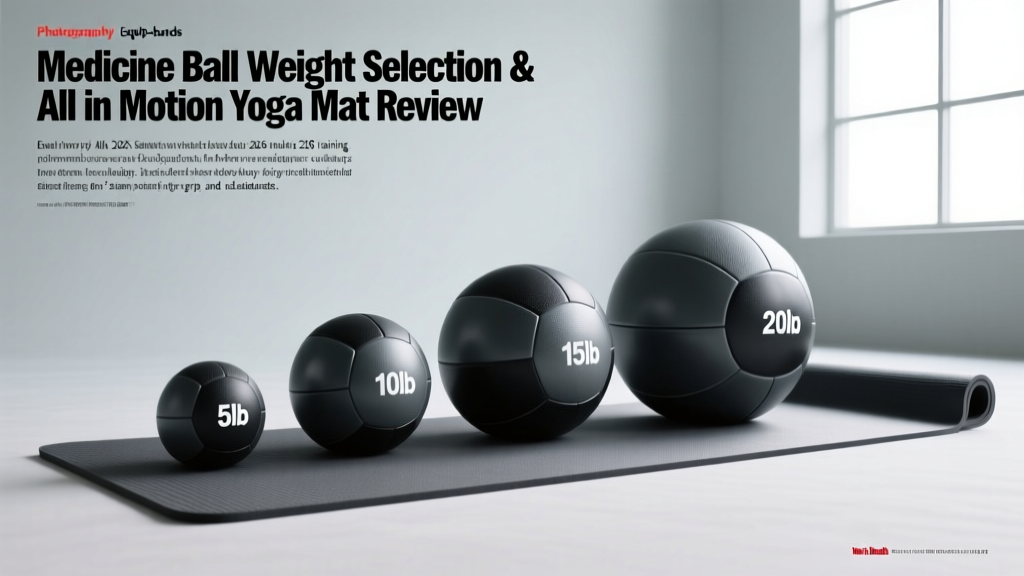
Medicine Ball Weight Selection & All in Motion Yoga Mat Review
Master medicine ball weight selection for 2026. See how the All in Motion yoga mat holds up against heavy-duty slam mats in our head-to-head test.

The Intersection of Load and Surface: A 2026 Buyer's Guide
When building a functional home gym, most lifters obsess over the implement but ignore the interface. Selecting the correct medicine ball weight is only half the battle; the surface beneath you dictates force absorption, joint safety, and equipment longevity. In this comprehensive guide, we break down the biomechanics of medicine ball weight selection and put the wildly popular All in Motion 5mm Yoga Mat head-to-head against a dedicated heavy-duty slam mat to see if your standard yoga gear can survive your power training.
Expert Insight: Ground Reaction Force (GRF) during a 15lb overhead medicine ball slam can exceed 3x the weight of the ball upon impact. Using a mat that bottoms out transfers this kinetic energy directly into your carpal and scaphoid bones if you catch the rebound.Medicine Ball Weight Selection Framework
Choosing the right weight is not about maxing out; it is about matching the load to the velocity and intent of the movement. According to foundational plyometric guidelines outlined by the National Strength and Conditioning Association (NSCA), medicine ball training is categorized into three distinct intent buckets: Speed/Reactivity, Power/Explosiveness, and Strength/Grind.
The Intent-Based Weight Matrix
| Training Intent | Recommended Weight | Ideal Exercises | Velocity Focus |
|---|---|---|---|
| Speed & Reactivity | 4 lbs - 8 lbs | Rhythmic wall tosses, lateral shuffles, rapid Russian twists | Maximum velocity, minimal ground contact time |
| Power & Explosiveness | 10 lbs - 20 lbs | Overhead slams, rotational wall throws, chest passes | High force output, full triple extension |
| Strength & Grind | 20 lbs - 30+ lbs | Goblet squats, heavy V-ups, lunges, strict presses | Time under tension, core bracing |
Progression and Failure Points
A common failure mode in amateur programming is using a 20lb ball for rotational wall throws. This destroys rotational velocity and forces the lumbar spine to compensate for the lack of hip speed. For rotational power, cap your weight at 12-15 lbs. If you cannot hear a distinct, violent crack against the wall, the ball is too heavy.
Head-to-Head: All in Motion Yoga Mat vs. Rogue Echo Slam Mat
You have your weight selected. Now, where do you slam it? The All in Motion 5mm Yoga Mat (retailing around $29.99) is a staple in millions of home gyms due to its accessible price point, TPE eco-construction, and excellent grip for barefoot work. But how does it fare when subjected to the violent shearing forces of a 15lb TRX SlamBall? We tested it against the industry-standard Rogue Echo Medicine Ball Mat ($165.00).
Material and Impact Absorption
- All in Motion (5mm TPE): Designed for static compression (knees, spine) and grip. During an overhead slam test with a 15lb rubber medicine ball, the 5mm foam completely bottomed out. The kinetic energy bypassed the mat, resulting in a harsh vibration through the floorboards and a high, unpredictable rebound that poses a risk to the face and wrists.
- Rogue Echo (1.5" Recycled Rubber): Engineered specifically for dead-blow impacts. The dense rubber matrix absorbs the kinetic energy, killing the rebound almost entirely. This allows for rapid, consecutive slams without chasing a bouncing ball across the garage.
The Shearing Force Problem (Rotational Throws)
When performing seated Russian twists or lateral wall throws, the medicine ball grinds against the floor. Standard yoga mats, including the All in Motion model, suffer from delamination under this rotational shearing force. After just three weeks of daily 12lb rotational floor work, the top textured layer of standard TPE mats begins to peel and flake. Dedicated slam mats utilize vulcanized rubber that is virtually immune to abrasive tearing.
Real-World Gear Pairings for 2026
To maximize your budget and protect your joints, you must align your mat choice with your specific medicine ball weight selection.
Warning: Never perform heavy overhead slams on a standard yoga mat placed over luxury vinyl plank (LVP) flooring. The concentrated point-load of a bottomed-out mat can permanently dent or crack the LVP locking mechanisms.Scenario A: The Core & Rehab Athlete
Your Arsenal: 4lb to 10lb leather or soft-shell medicine balls (e.g., Rep Fitness Leather Med Ball).
The Verdict: The All in Motion Yoga Mat is perfect here. The 5mm thickness provides ample cushioning for your tailbone during V-ups and sit-ups, while the soft-shell balls will not generate enough force to bottom out the TPE foam or cause abrasive tearing.
Scenario B: The Power & Conditioning Athlete
Your Arsenal: 15lb to 30lb heavy-duty SlamBalls (e.g., Rogue Echo Slam Ball).
The Verdict: Retire the yoga mat for this portion of your workout. You must invest in a dedicated 1.5" rubber slam mat or drop your slams directly onto a rubber horse-stall mat. The All in Motion mat will fail structurally under repeated high-velocity impacts and offers zero rebound mitigation for heavy rubber balls.
Final Takeaway
Medicine ball training is an unparalleled tool for developing rotational power and core stiffness, provided you respect the physics of the implement and the surface. Use the weight selection matrix above to ensure you are training the correct energy system—speed, power, or strength. As for your flooring, keep the All in Motion yoga mat for your barefoot mobility, yoga flows, and light core work, but upgrade to vulcanized rubber when it is time to start slamming heavy rubber into the earth.
More gear to consider
All reviews
2026 Pilates Accessories Guide & Free Yoga Mat Bag Pattern Trends

Setup Guide: Speed, Weighted & Beaded Ropes on a Burgundy Yoga Mat

Exercise Ball Size Guide & Budget: Pendleton Stylish Yoga Mat Value

What to Fold With No Yoga Mat? Medicine Ball Weight Selection Guide
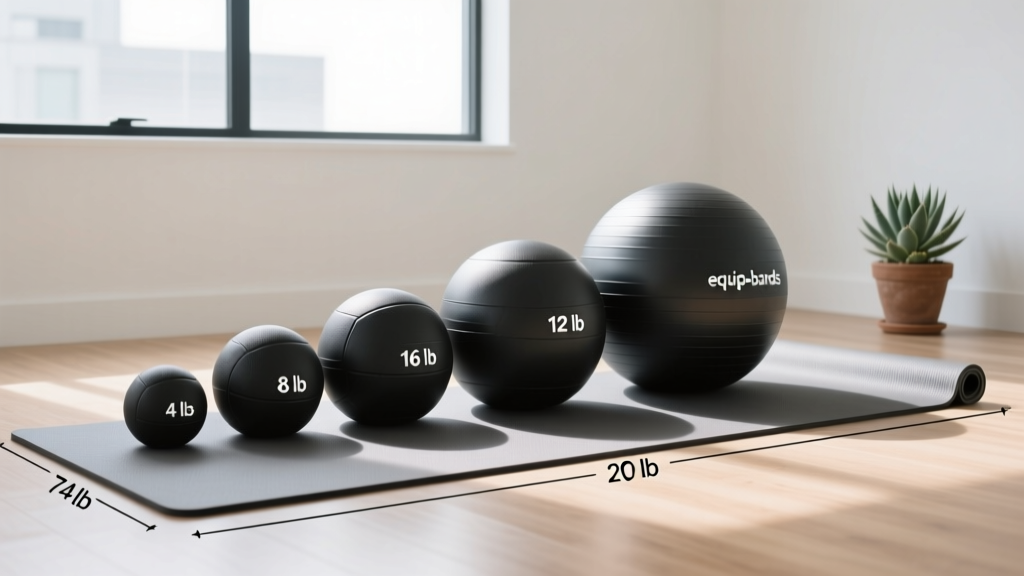
Medicine Ball Weight Selection & Standard Yoga Mat Measurements
