Foam Roller Density Selection & Can You Wash Yoga Mats in the Washer?
Master foam roller density and size selection for optimal recovery. Plus, we answer if you can wash yoga mats in the washer and fix gear maintenance mistakes.

Recovery is the silent multiplier of any training program. Whether you are a powerlifter managing CNS fatigue or a yogi improving thoracic mobility, the tools you use to manipulate fascia and blood flow dictate your readiness for the next session. However, the market is saturated with poorly engineered foam rollers and misunderstood maintenance protocols. As of 2026, the sports science community has moved past the 'one-size-fits-all' approach to myofascial release. Selecting the correct foam roller density and size is a precise science, and maintaining your recovery ecosystem requires avoiding catastrophic cleaning mistakes.
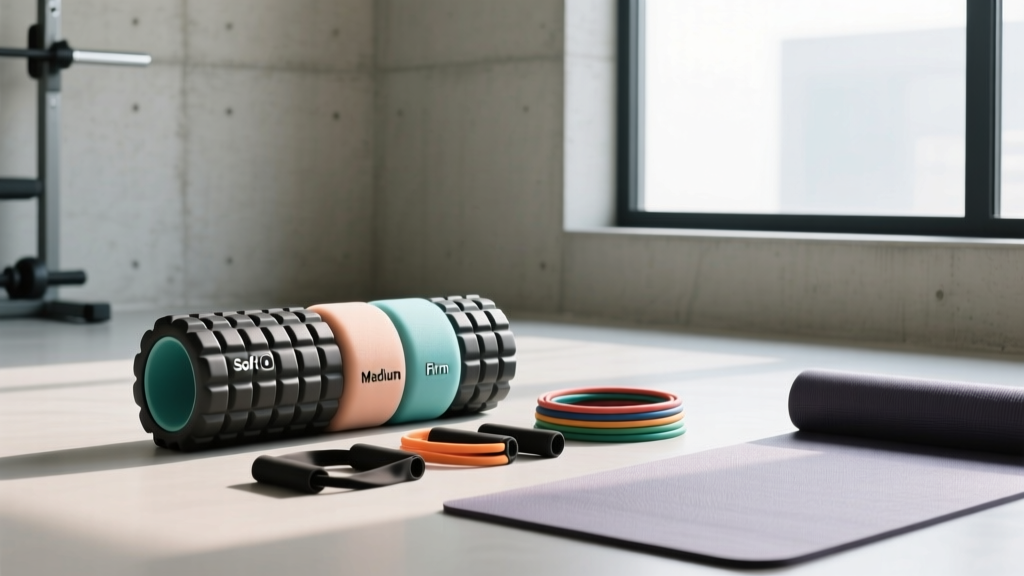
The Physics of Foam: Decoding Density Ratings
The most common mistake consumers make is purchasing a foam roller based solely on color or brand marketing, ignoring the material density. Foam density is measured in kilograms per cubic meter (kg/m³) and directly correlates to the compressive force applied to your tissue. Using a density that is too high triggers the stretch reflex (muscle guarding), while a density that is too low fails to deform the fascial adhesions.
Material Breakdown and Durometer Metrics
| Material Type | Density (kg/m³) | Firmness Profile | Best Use Case | Market Price Range (2026) |
|---|---|---|---|---|
| Low-Density EVA (Ethylene-Vinyl Acetate) | 30 - 45 | Soft / Yielding | Rehab, Pilates, acute pain sensitivity | $15 - $25 |
| Standard EVA / Grid-Wrapped | 45 - 60 | Medium | General fitness, daily warm-ups | $25 - $45 |
| EPP (Expanded Polypropylene) | 60 - 90 | Firm / Unyielding | Heavy lifters, deep tissue trigger points | $30 - $50 |
| PU Core w/ EVA Shell (Hollow) | N/A (Hybrid) | Variable (Zoned) | Targeted fascial manipulation | $40 - $75 |
If you experience sharp pain or notice bruising after rolling your IT bands or quads, you are likely using an EPP roller (80+ kg/m³) on inflamed tissue. According to research published by the National Center for Biotechnology Information, excessive compressive force on the IT band does not 'break up' scar tissue; it merely compresses the highly innervated fat pad between the fascia and the femur, causing micro-trauma. Downgrade to a 45 kg/m³ EVA roller immediately.
Dimensional Geometry: Selecting the Right Size and Diameter
Density is only half the equation; the physical dimensions of the roller dictate your biomechanical leverage and stability. The standard diameter for most mobility work is 5 to 6 inches. This height provides enough clearance to allow the spine or limbs to drop into extension without the floor interrupting the range of motion.
- 12-Inch Length: Ideal for travel or isolated limb work (calves, forearms). It lacks the surface area to safely stabilize the torso during thoracic extensions.
- 18-Inch Length: The versatile standard. Wide enough to accommodate shoulder-width stances for back work, yet compact enough to store in a standard gym bag.
- 24 to 36-Inch Length: Mandatory for full-spinal extension, Pilates reformer integration, and longitudinal rolling (lying vertically along the roller to open the chest and correct kyphotic posture).
The Mini-Roller Edge Case
Mini rollers (3 to 4 inches in diameter, often 4 to 6 inches long) are frequently misused. They are not meant for broad sweeping motions. Their small contact patch creates high localized pressure, making them exceptional for targeting the suboccipital muscles at the base of the skull, the plantar fascia, or the brachioradialis. Using a mini-roller on the lats will result in painful rib-head irritation.
Common Foam Rolling Mistakes & Troubleshooting
Even with the perfect 36-inch, 50 kg/m³ EVA roller, poor technique renders the tool useless. The Mayo Clinic notes that myofascial release requires sustained pressure, not friction. Here are the top three technique failures we troubleshoot:
- The 'Paint Roller' Pace: Rolling rapidly back and forth over a muscle belly increases blood flow but does nothing for fascial restriction. Fix: Find a trigger point, stop moving, and apply static pressure for 30 to 60 seconds while practicing diaphragmatic breathing to down-regulate the nervous system.
- Rolling the Lumbar Spine: The lower back lacks the rib cage structure that protects the thoracic spine. Rolling directly on the lumbar vertebrae forces the muscles to spasm in defense. Fix: Use a lacrosse ball or a specialized peanut-shaped massage ball to target the erector spinae muscles adjacent to the spine, avoiding the bony prominences.
- Ignoring Joint Proximity: Rolling directly over the knee joint or the greater trochanter (hip bone) causes bursitis. Fix: Stop rolling 2 inches above or below any major joint capsule.
Recovery Gear Maintenance: Cleaning Protocols & The Washer Dilemma
While selecting your roller is half the battle, maintaining your recovery ecosystem is where most athletes fail. Sweat, dead skin cells, and gym-floor bacteria accumulate rapidly on porous EVA and TPE surfaces. A surprisingly frequent question we receive in our troubleshooting queue is: can you wash yoga mats in the washer?
The short answer is a resounding no, and the underlying material science explains why this mistake ruins millions of dollars of recovery gear annually. This rule applies equally to your foam rollers, mobility balls, and yoga mats.
Why the Washing Machine Destroys Recovery Gear
Most modern yoga mats and soft foam rollers are constructed from open-cell TPE (Thermoplastic Elastomer) or PVC. When submerged in a washing machine, the open-cell structure acts like a sponge, absorbing gallons of water. The mechanical torque of a top-load agitator (often exceeding 200 RPM) will physically tear the polymer matrix, causing edge delamination. Furthermore, the heat from the dryer breaks down the plasticizers in PVC, causing the mat to become brittle, flake, and lose its structural integrity. As detailed by material care guides from Yoga Journal, machine washing voids virtually all manufacturer warranties and creates an internal breeding ground for mildew that cannot be dried out.
✅ The Correct 3-Step Sanitization Protocol- Step 1 (Daily): Wipe down foam rollers and mats with a microfiber cloth dampened with a 50/50 mix of distilled water and white vinegar. The mild acidity kills surface bacteria without degrading EVA or TPE.
- Step 2 (Weekly Deep Clean): Mix 3 drops of mild, unscented dish soap (like Dawn Free & Clear) into a spray bottle of warm water. Mist the roller or mat, gently scrub with a soft-bristle brush in circular motions, and wipe clean.
- Step 3 (Drying): Never dry gear in direct sunlight. UV radiation degrades the foam's cellular structure, causing it to chalk and crumble. Dry indoors in a well-ventilated area, hanging mats vertically to prevent moisture pooling.
Expert Decision Framework: Matching Your Profile to the Gear
To eliminate buyer's remorse, use this rapid decision matrix before purchasing your next piece of recovery equipment:
Profile A: The Desk-Bound Professional (High Stress, Low Tissue Tolerance)
Prescription: 36-inch Low-Density EVA (30 kg/m³). Focus on longitudinal thoracic extensions and gentle chest opening. Avoid aggressive grid patterns.
Profile B: The Heavy Strength Athlete (High Tissue Density, CNS Fatigue)
Prescription: 18-inch EPP (75 kg/m³) or Hollow PU-Core Grid. Focus on localized trigger point release on the glutes, TFL, and upper traps. Requires sustained 60-second holds.
Profile C: The Traveling Competitor (Space-Constrained)
Prescription: 12-inch Medium EVA paired with a high-density lacrosse ball. The roller handles the quads and lats; the ball handles the deep, localized glute and foot work that a small roller cannot achieve.
Ultimately, optimizing your recovery requires respecting both human physiology and material science. By matching your tissue tolerance to the correct foam density, utilizing the proper geometric dimensions, and strictly avoiding the washing machine for your mats and rollers, you ensure your gear survives as long as your training career.
More gear to consider
All reviews
What to Use Instead of a Yoga Mat: Foam Roller Size & Density

Stability Ball vs BOSU Ball: Yoga Mat Frog & Core Training

Exercise Ball Size Guide & Care: Match Your Stackt Yoga Mat

Resistance Band Levels & Thickness of Yoga Mats Guide

How To Match Market With Beyond: A Practical Framework for Strategic Alignment
